Gay Mormon Dad by Chad Anderson & Remy Burke

I have been super bad at properly commemorating celebration months this year so far, but better late than never I suppose, so Happy Pride! I tend to read a lot of books with queer characters and themes yet, oddly, feel like Chad Anderson and Remy Burke’s Gay Mormon Dad is the only one I’ve read for June so far.
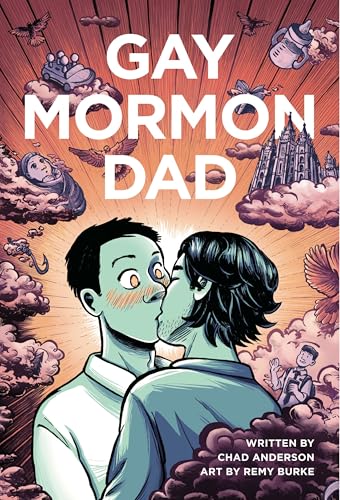
But what a way to start! This is a deeply personal, achingly vulnerable memoir of what it was like to grow up gay and Mormon at the end of the 20th century, and how Mr Anderson eventually came out and began to live life on his own terms. It was not an easy journey, but his honesty and courage give readers hope that they too can overcome the obstacles in their path on the way to existing as free and honest people.

Beginning from a childhood marked by abuse, Chad sought comfort in the church his mother devoutly believed in. Since church elders told him he could pray the gay away, he tried his best to do exactly that, even getting married and having two kids before deciding that he couldn’t live like he was suffocating any more. Unsurprisingly, it was a hard road forward, but he persevered until he achieved a life he could be, well, proud of.

As someone who spent a large part of my youth in a conservative religious society, I felt immediately familiar with so much of his struggle. What was new to me were the details of the Mormon church and practices, which I found fascinating. I didn’t expect learn so much about the faith in this book but definitely appreciate the greater sociological understanding I came away with.
Continue reading

Permanent link to this article: https://www.thefrumiousconsortium.net/2026/06/15/gay-mormon-dad-by-chad-anderson-remy-burke/

Hugo Awards 2026: Best Short Story

True to form, two of this year’s finalists in the category of Best Short Story are listicle stories. I guess by now they’re just another variation in the form, rather than an innovation. The strength in the variation is that it allows an author to show numerous different perspectives or aspects of a situation within a compressed space. The corresponding weakness is that it enables an author to merely gesture in the direction of a story, expecting the reader to fill in the rest, without actually using the form to expand storytelling possibilities or to actually tell a single story through the listicle format. It’s devilishly tricky to do, and it seems to me that authors often exhaust their creative energy for that particular story with the format, rather than using it to its fullest extent.

Here are brief notes on the 2026 finalists for Best Short Story, in ascending order of my preference.

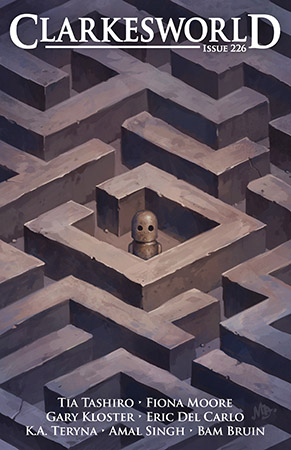
Missing Helen - Clarkesworld

“In My Country” by Thomas Ha is not a listicle story. The first-person narrator addresses the reader directly about his country, which is one marked by surveillance, censorship and oppression. The moral landscape of the narrator’s country was very familiar to me as someone who has studied Nazism in Germany and communism throughout Central and Eastern Europe. It will be familiar in its contours, if not in the direct actions of the secret police, by people who have lived in societies in which existing hierarchies are backed by state or private violence. Ha strips down the shape of oppression to its bare basics. “Listen to what I say. Listen to what I don’t say.” The oppressors have trouble with ambiguity. The secret police can take you away, and say that everything is fine, and people have to demonstrate they believe it.

I am sure the story is very heartfelt, and it might even have a big effect on a reader who has not encountered this sort of thing before. But I’ve read how Milosz did it, I’ve read how Solzhenitsyn did it, I’ve read how Grossman did it, I’ve read Havel’s essays and Michnik’s tactics for beating it and Konrad’s search for an escape from politics. In my countries, I’ve seen the problems presented in this story many, many times; I’ve lived among folks who still know what their neighbors did during the war; I’ve seen how the kinds of forces that Ha is grasping to describe have shaped lives, and so none of this was new enough to pique much of my interest.

Continue reading

Permanent link to this article: https://www.thefrumiousconsortium.net/2026/06/14/hugo-awards-2026-best-short-story/

Hugo Awards 2026: Best Graphic Story or Comic

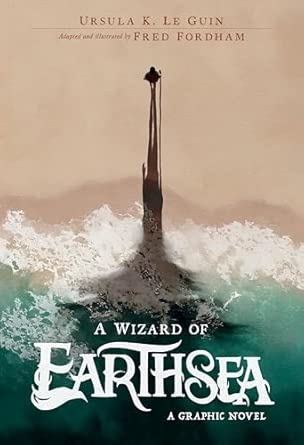
This year’s list of Hugo Award finalists in the category of Best Graphic Story of Comic is unusual in that for the first time since 2016 neither Saga nor Monstress is among them. The balance between one-offs and continuing characters/series is a little more usual, with three volumes from each. The ongoing series are a little unusual, in that one is the start of a new continuity, one is part of a long-running webcomic, and only one — the Wonder Woman book — features a familiar character from a traditional comics publisher. The three stand-alones are a children’s book that is almost entirely art, a graphic novel, and an adaptation of a beloved fantasy classic. I vastly preferred the stand-alone works, as will become clear from these notes on the finalists, in ascending order of my preference.

A Wizard of Earthsea — Graphic Novel

The Power Fantasy Volume 1: The Superpowers starts a story about superpowered beings in the post-WWII era, a story that will presumably run for a considerable number of additional issues. Doreen reviewed it here, and liked it much more than I did. I did not make it to the end of volume 1. A psionic massacre in the White House and, I think, across the US government is where I noped out. Under Trump 2.0, friends have had careers destroyed; the personal intervention of Elon Musk and his DOGE boys sparked gratuitous waste on an epic scale, and will cause many, many thousands of needless deaths. Friends who have stayed in public service have had their work made needlessly more difficult, just to stroke the overweening egos of rotten men. Others I was once close to but have not kept up with may have had their careers destroyed simply because it was their time to rotate back to the States instead of staying in the field. One friend was personally hounded out of an ambassadorial posting in a war zone because she would not tell egregious and easily disproven lies on Trump’s behalf. Though it was not a literal massacre like the one depicted in the book, it was close enough that I did not want to read more, not least because the prologue and couple dozen pages that served as an introduction did not have me invested enough in the characters to go along on a ride of cosmic destruction. The art was striking, but it did not induce me to care what happened to those people.

Continue reading

Permanent link to this article: https://www.thefrumiousconsortium.net/2026/06/13/hugo-awards-2026-best-graphic-story-or-comic/

Tantalizing Tales — June 2026 — Part Two

Happy Men’s World Cup season, dear readers! I do not, alas, have any books related to the beautiful game in this week’s tantalizing pile but I do have several that could tempt me to look away from my TV screen for a second… or more likely fill the empty time between these already wonderful and infuriating matches!

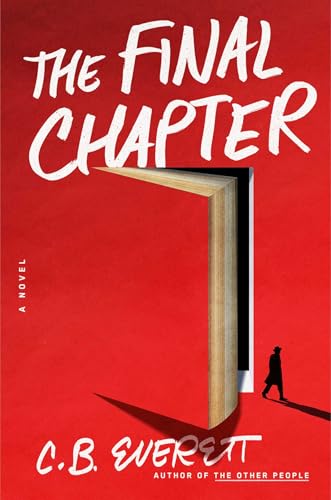
First up, we have C B Everett’s The Final Chapter, a metafictional book-within-a-book thriller that’s certain to delight fans of both puzzles and high concept mysteries like myself!

A decade ago, a bestselling, critically acclaimed author suddenly disappeared. Now, a manuscript purporting to be his final novel has unexpectedly resurfaced. Trouble is, it’s nothing like his other books. Instead of a moving work of literary genius, this new novel is an espionage thriller filled with seemingly stereotypical James-Bond-esque characters and situations.

Bewildered, his publisher calls in the author’s best friend for help contextualizing the novel in the missing writer’s larger oeuvre. C B Everett (!) is also an author, but he’s just as baffled by this strange book as everyone else is. The more he reads, however, the more he begins to recognize details from the life that he and his missing friend had actually shared. Could his friend have coded real world secrets into the manuscript before abruptly disappearing? Soon, C B will be wondering how well we can really know our friends — and even ourselves — as he’s plunged into a life-threatening web of intrigue.

Continue reading

Permanent link to this article: https://www.thefrumiousconsortium.net/2026/06/12/tantalizing-tales-june-2026-part-two/

The Mystery Of The Stolen World Cup Trophy by Angela Cervantes

Men’s World Cup season has officially begun! Ever since 1998, this has been THE most exciting global sporting event for me, and even tho this year’s promises to be the worst run and most corrupt tournament of all time, not even that can dampen my love of the sport and the community who actually care about the beautiful game.

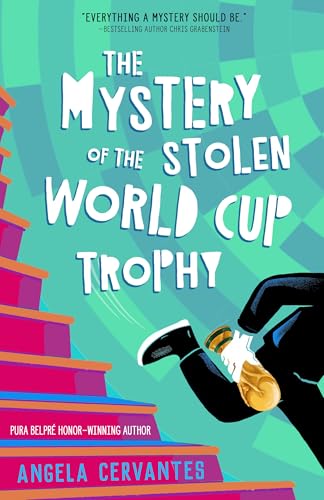
With that in mind, I was super happy to dive into Angela Cervantes’ The Mystery of The Stolen World Cup Trophy as part of my preparations/celebrations. I am very pro anything that spreads the joy of the tournament to as many people as possible, and am still a little bitter at all the years I missed out on of this in my youth. This middle grade mystery series definitely transmits that excitement and hopefully entices more than a few bookish kids into finding out more about the beautiful game. Conversely, I hope it also introduces some sports-mad kids to the joys of a good mystery novel, which this definitely is (tho not without certain reservations that I’ll discuss later in this review.)

The story itself revolves around sixth grader Diez Espada, who’s inherited his love of football — tho not, unfortunately, commensurate skill — from his dad and his love of detection from his recently deceased librarian mom. When he and his dad receive exclusive tickets to a party where the actual World Cup trophy will be displayed in Miami, ahead of the 2026 World Cup final, it feels like a dream come true.

Disaster strikes, however, when the trophy is stolen by the international thief known as La Lechuza. Diez is certain that he’ll be able to figure out whodunnit and get the trophy back, with the help of his crush Rio and the actual detective on the case, the world-famous Detective Enzo. But there’ll be more than one tricky conundrum in his path as he figures out how to navigate a surprisingly treacherous field.

Continue reading

Permanent link to this article: https://www.thefrumiousconsortium.net/2026/06/11/the-mystery-of-the-stolen-world-cup-trophy-by-angela-cervantes/

Murder Summer!

Here in the northern hemisphere, as temperatures get hotter and hotter, and vacations get (hopefully) more and more imminent, don’t we all just want to relax with a cold beverage and a book in which people die at the hand of another? It can’t just be me. Luckily, publishers know we want this, and there is a delightful lineup of murder books this season, to help us while away the hot days of summer.

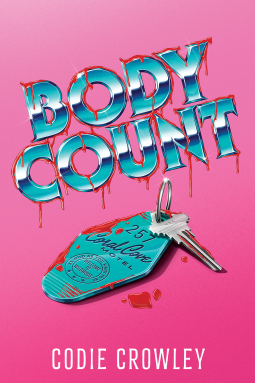
a hotel key is dipped in blood on the cover of Body Count by Codie CrowleyIf you’re in the mood for a politically progressive teen slasher, go for Body Count, by Codie Crowley. If you want a self-referential portal fantasy (with murders), Sarah Rees Brennan’s All Hail Chaos is perfect for you. And if your summer calls for a combo classic mystery and romance that takes place in the golden era of British mystery novels, The Cloak and Dagger Club by Jackie McMahon will satisfy that craving.

All of these books are genre-savvy, commenting enjoyably on the tropes and potential pitfalls of their respective genres, which is exactly my jam.

Body Count came out from Disney Hyperion on May 5th. Don’t let the Disney publisher lead you astray. There are no princesses with animal sidekicks here. I loved Codie Crowley’s first book, Here Lies a Vengeful Bitch, so I was extremely excited for Body Count. In Body Count, Sundae is a cheerleader prom queen on the Jersey Shore for Prom Weekend, when a supernatural entity starts targeting her and everyone around her. A classic set up for a teen slasher story, but this one upends several genre expectations.

Continue reading

Permanent link to this article: https://www.thefrumiousconsortium.net/2026/06/10/murder-summer/

Hugo Awards 2026: Best Short Story Nominees

Getting a much earlier start with this year’s slate of Hugo nominees than I did last year’s, go me! And, as with last year’s short story slate, my favorite comes from Isabel J Kim, with her diabolical Wire Mother.

Perhaps diabolical isn’t the best description, but after reading the bland obviousness of most of the other nominees, it was nice to get into a story that’s messy and mean and thoroughly believable.

Our prickly young heroine Cassie has been diagnosed with Emotional Contagion Deficit, a condition where she has trouble bonding with digital people. This includes her digital mother Amy, to the chagrin of her fully biological father. As Cassie sometimes wants to tells him, while he could build Amy to love him and the things he loves, he couldn’t build Cassie to do the same, so stop trying to make them bond already.

I really don’t want to say too much else about this story because it’s full of sharp surprises, but I very much appreciated the skepticism with which Ms Kim addresses the idea of AI personhood under circumstances which are essentially a realistic extrapolation from where we are as a society today, both technologically and emotionally. I also appreciated how she underscores the complexity of the matter, in the persons of both Rina and Oliver. WM is both a clever interrogation of the happy clappy idea that chatbots are actually people and a warning against the trouble inherent in conflating the two.

Continue reading

Permanent link to this article: https://www.thefrumiousconsortium.net/2026/06/09/hugo-awards-2026-best-short-story-nominees/

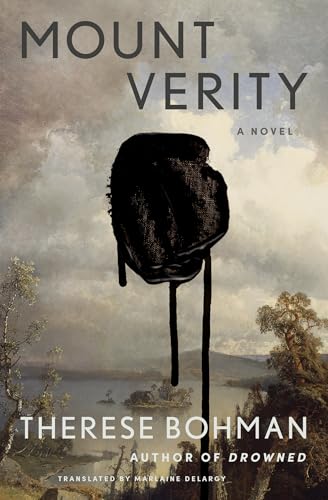
Mount Verity by Therese Bohman

translated from the original Swedish by Marlaine Delargy.

I’m going to be so for real here and admit that the main reason I picked up this book off my TBR pile was because it’s Swedish like my beloved Viktor Gyokeres. When you’ve come out of Etsy Witch retirement to support a guy, it’s hard not to feel emotionally invested, if not outright entangled, in his fortunes and interests and background, especially when the rewards have been so enriching (or maybe that’s just my delulu talking again, lol.)

But yes, I felt energetically obligated to read this short novel, and would like to thank the cosmos for bringing it my way. Mount Verity is the story of Hanna Hallman, from her youth in the Kolmarden, through attempts to establish herself as an artist in Gothenburg, then to her forties in Stockholm. Her relationships with two men anchor the narrative, as she’s repeatedly drawn back to the village where she grew up. One is her best friend: calm, handsome Marcus, who can’t wait to leave Krokek for a big city like Malmo, where his absent father lives. The other is her older brother Erik, who abruptly disappears in the wee hours of Easter morning, after midnight mass.

According to Erik’s friends, they had decided to bike to mass together for one of their obligatory pre-confirmation attendances. They’d had a few beers beforehand, then changed their minds about going back to one of the boy’s houses to continue drinking. Instead, they went up to Mount Verity, a nearby peak with a spooky legend attached to one of its caves. Allegedly, the cave was used during seventeenth century witch trials to “test” suspected witches. The accused were lowered into the cave and asked if they were witches. If they admitted it, they were pulled back up and punished. If they denied it, they were left to be swallowed by a cave said to devour liars.

Continue reading

Permanent link to this article: https://www.thefrumiousconsortium.net/2026/06/08/mount-verity-by-therese-bohman/

Hugo Awards 2026: Best Related Work

The 2026 Hugo Award for Best Related Work — which isn’t called the Hugo Award for Everything Else but at this stage in its evolution maybe should be — hews closer to its bookish roots this time around. Four of six finalists are books, or at least very book-like, with a podcast and a spreadsheet rounding out the list. This inverts the 2025 shares, which had two books, three reports in various formats and a Bingo Reading Challenge.

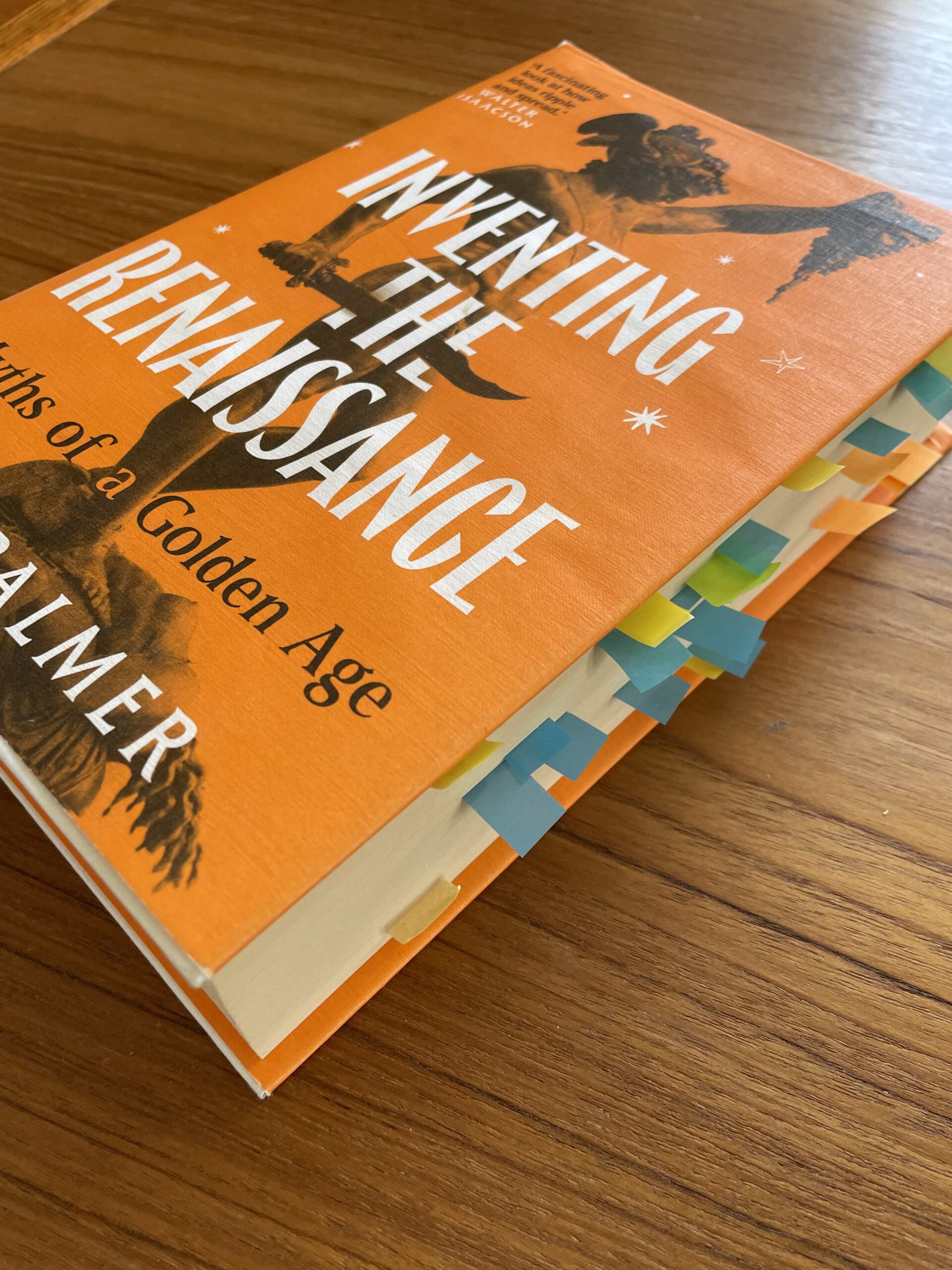
A thoroughly flagged copy of Inventing the Renaissance by Ada Palmer

I expect the back and forth to continue, as it speaks to a fundamental tension in the category: Will the non-fiction books for which the category was originally created get crowded out by more topical, more controversial and more glancingly engageable works? Hugo nominators and voters are having a multi-year conversation about what they, we, consider deserving of the field’s top honors. Inevitably, there will be proposals to split the category into book and non-book categories. Unless books somehow wind up getting crowded out year after year, I hope that the present inelegant compromise will be maintained. Category proliferation is a one-way ratchet, and as much as I have rolled my eyes at some nominations (and ranked them below No Award), establishing Best Related Non-Book Work would likely be the source of much more.

This year seems to have struck a good balance, though my views will become obvious as I make a few notes about each finalist in ascending order of preference.

“Ragnarök vs the Long Night” is an episode of the History of Westeros Podcast, released in August 2025. I presume that the whole project is close enough to a professional podcast that it was ineligible in the Fancast category. The episode concerns connections between apocalypses, especially from Nordic mythology, and “The Long Night,” the third episode of the final season of Game of Thrones, originally broadcast in May 2019, and the first episode that I didn’t watch. The production of the podcast, which I encountered as a YouTube video, is high quality, and obviously a labor of love. It’s also two and a half hours long about a show I had fallen out of love with and stopped watching at precisely the episode the hosts discuss in great detail. There’s obviously an appreciative audience for this sort of thing. I’m just not part of it.

Continue reading

Permanent link to this article: https://www.thefrumiousconsortium.net/2026/06/07/hugo-awards-2026-best-related-work/

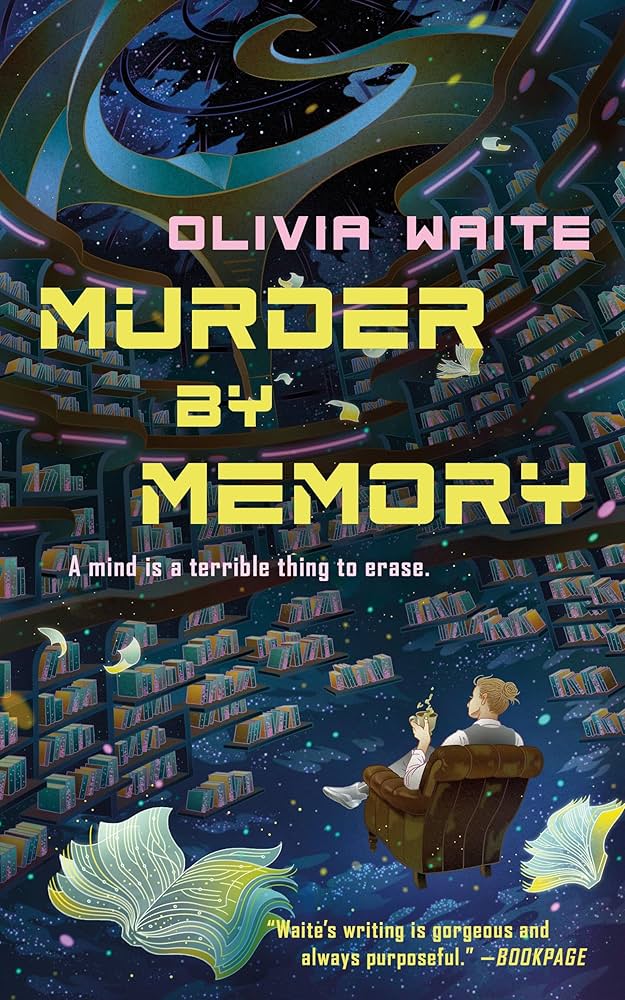
Murder by Memory by Olivia Waite

A detective on a generation starship is an interesting premise. Olivia Waite has taken the venerable concept of a slower-than-light spaceship, the Fairweather, taking humans to another star system and given it several new aspects. She has moved the launch date into a medium-distant future. The people on the ship are not desperate refugees fleeing any catastrophe recognizable to contemporary readers, nor are they intrepid explorers of the unknown. Humans of this future have mastered closed-circle ecology to the extent that they were capable of building a vessel designed for a voyage lasting more than a thousand years; indeed, as Murder by Memory they have been underway for more than 300 years. Biological sciences have advanced far enough that recording all of a person’s memories is a routine procedure. New human bodies can be produced in two days, rather than the customary nine months, and in this future it is done without requiring another human to do the producing. The ship’s computer is a genuine AI, though content to just run the ship and in fairness to Waite, she shows the computer mostly in the unusual circumstances produced by an interstellar magnetic storm. I think the story also implies that humans have mastered gravity sufficiently to generate it on the ship without a need for rotation or similar techniques.

Murder by Memory by Olivia Waite

Waite is not interested in the workings of a generation ship generally, or even in the specifics that she has set up; she is interested in arranging them so that she can tell the story of a detective clearing up a mystery. The ship has no police as such. As Waite describes the background, “From launch, the Fairweather’s Community Charter had been very clear that police were considered largely unnecessary. We had a small security force Ferry could deploy as needed—glorified bouncers, really—and a wealth of social workers in various fields; these two groups managed most everyday crises that arose.” (p. 19) So the society that built the Fairweather has not only solved gravity, it has apparently solved all of the human problems that give rise to sudden violence or to slower forms of cruelty. That’s not entirely accurate; Waite gestures toward the situations that call for the presence of ship’s detectives. “For more complex situations—your elaborate hoaxes, your sudden deaths, your inexplicable accidents and incidents in which witness statements vastly differed—there were the ship’s detectives. We had no power to arrest or enforce: our duty was strictly to sort out the truth from the lies and report them to the Crime Committee, which would arrange for any necessary punishments or reparations.” (p. 19) The very list implies a society bereft of abusers, sadists and assholes.

Continue reading

Permanent link to this article: https://www.thefrumiousconsortium.net/2026/06/06/murder-by-memory-by-olivia-waite/