 Woof, living with autoimmune disease is tough. At least I’m starting to recognize when I’m having a bad day early on, so I don’t collapse halfway through my scheduled activities and take even longer to recover. It’s been particularly brutal to me in that it’s also affecting my reading and writing — I sleep A LOT more these days — but at least there are a bunch of awesome books to keep me interested and entertained when I am awake and energized.
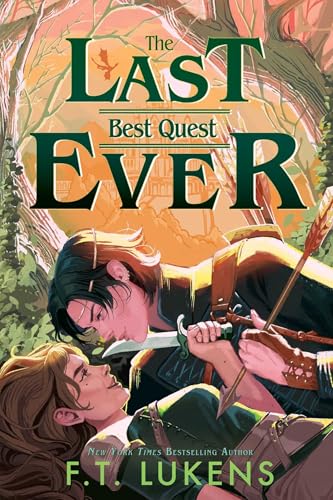
Such as F T Lukens’ upcoming speculative YA novel, The Last Best Quest Ever. This charming romantasy revolves around seventeen year-old Ellinore, who is the best quester her kingdom has ever seen, better even than her brooding royal rival Aven. So when she announces her retirement at a royal feast, the entire kingdom is shooketh.
Her twin brother Zig, however, is so confident in her abilities (and willingness to get back in the game) that he bets his very life on her ability to retrieve the horn of the mythical Elder Beast, a creature no one knows for sure is even real. In order to save him, Ellinore has to return to the spotlight, embarking on one last quest with Zig, Aven and a ragtag crew of other questers looking for fortune and glory.
Trouble is, Ellinore’s a fraud. All her kills were staged and her quest rewards planted. She quit because she couldn’t take the pressure of lying any more… and now her idiot brother’s life is on the line. Will Ellinore be able to save him, and maybe save her own soul in the process?

 Al Singh
 Doug Merrill
 Doreen Sheridan
 Emily Lauer
 John Pitzel
 Lars N. Goldschlager
 Laura Eilers
 Professor X
 Robert Maedgen
 Sylvere Ap Leanan
 The Shire