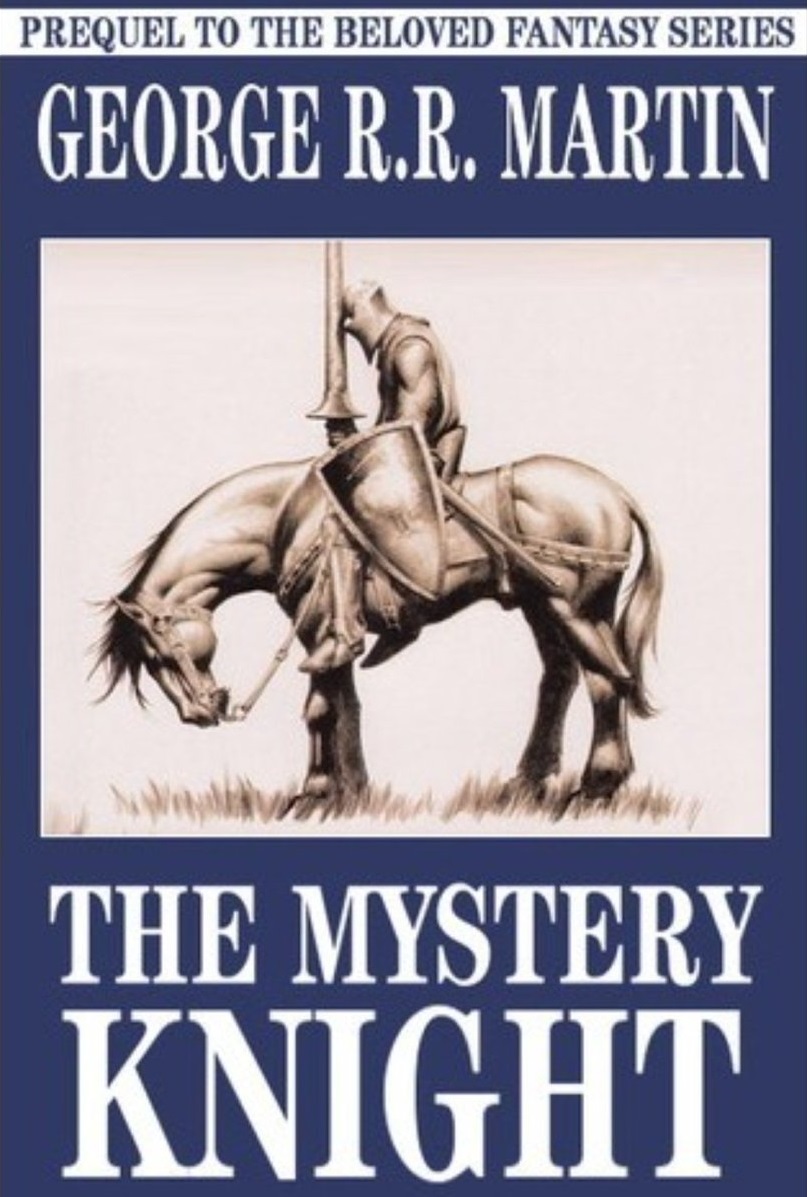
The Mystery Knight was originally published in 2010, some seven years after the first appearance of The Sworn Sword. I think I would have liked the third Dunk and Egg novella a bit more if the gap between them in my reading had been, if not quite the full seven years, more than the week or so that it was in practice. The Mystery Knight is a perfectly cromulent adventure story in Martin’s Westeros with some moments of lovely storytelling, but reading all three novellas close together struck me as a less enjoyable experience than reading them with considerable separation would have been. This is not Martin’s fault, exactly; he wrote them as opportunity, time and inspiration arose. That meant that he wrote them years apart. The publisher, sensibly, has collected them into a single volume so that readers don’t have to hunt down three small books.
The problem for me was that things that should be rare occurrences keep happening. In the first novella, Martin reveals that Egg is more than just a stable boy with a completist fan’s knowledge of the heraldry of the Seven Kingdoms. At the end of The Hedge Knight he is given an item that will prove his true identity, but he is commanded not to reveal it except under the most pressing of circumstances. Dunk knows his secret as well. In one of the few ways that Egg shows typical behavior of a pre-adolescent boy, he suggests “using his boot” on regular basis. The problem is that he does in fact use it in both of the novellas set in the time after he receives it. If there were half a dozen more Dunk and Egg stories where the two of them escaped from scrapes without resorting to this last resort, then its use really would carry weight because readers would be aware of how dire the situation had become. But when Martin is two for two in calling up what is supposedly an emergency escape, the impression he creates is that it’s not such a big deal.
Likewise with trial by combat. In Westerosi culture, trials by combat are theoretically available as a way for the gods to settle the disputes of humans. In Martin’s descriptions of how the Seven Kingdoms work, they are rare compared to judgements rendered by lords within the feudal hierarchy, or other court procedures. They figure in the resolution of all three Dunk and Egg novellas. There’s nothing wrong with invoking an ancient right to solve a problem, and a battle for high stakes can certainly make for tension-filled storytelling. When it keeps happening, though, it’s no longer a surprise. This was probably more of a problem for me, reading the third novella some seven days after the second, than it was for Martin, writing seven years later. Other readers may want to take a bit of a break between stories so that the twists and turns appear to have more novelty.
Apart from these structural quibbles, I thought The Mystery Knight was an enjoyable adventure within Westeros. Dunk and Egg have begun to make their way north, where they hope to take service at Winterfell and eventually to see the Wall. At the opening of the story, though, they are still well in the middle lands of the Seven Kingdoms. Dunk has heard of a tournament being held in honor of wealthy Lord Butterwell’s wedding, and he thinks to take his chances and earn some money to help finance their journey. Egg advises against it, reminding the tall knight of how long it has been since he practiced jousting with any regularity. A loss could mean that Dunk’s horse, sword and armor are forfeit to the winner, which would put much more of a crimp in their plans than a mere shortage of silver. Dunk is still very young himself and headstrong to boot, so he dismisses his squire’s sensible advice.
People are coming from far and wide to the tournament, and there are good scenes of encounters on the road, with Martin showing his ability to sketch personalities quickly and bring some drama into even smaller parts of his overall story. These incidents also serve as reminders that knights are a touchy lot, some quite quick to take offense, while others try to assert their status above their station, while still others are keen to remind everyone around of their standing. Westeros is seldom a live-and-let-live kind of place. On the other hand, when Dunk and Egg are stranded on one side of a lake because the ferryman takes higher-status passengers first, they make the acquaintance of several other hedge knights and share the camaraderie of the lowly. Or at least the lowly among the gentry; the smallfolk do not count for much in this story either.
The scenes at the wedding feast are good fun, too, with cheer, some drunkenness and the odd bit of debauchery revealing the character of Dunk’s tablemates among the lower-ranking knights. He frets about Egg, separate among the squires, almost all of whom are older and larger than he is, and some of whom are grown men who never made the jump to knighthood. Dunk, by virtue of his great size, gets selected for an important role in the nuptials, and along the way he hears things that make him think that this tournament is more than just a wedding celebration. Martin spools out the details slowly, linking chance events and interplay among the knights that he has introduced to plots bigger than the low-level jostling seen in The Hedge Knight and The Sworn Sword. Like Dunk, though, I did not feel particularly invested in the doings of the great lords, except as they made exchanges even more dangerous for him and his squire.
The endgame comes after twists and turns, and some narrow escapes, and the aforementioned trial by combat. In the aftermath, the two are set to continue their travels — and Egg his education as a squire with a view of life across the Seven Kingdoms. As the stories progress, though, it seems less and less likely that the two of them will be able to continue their relative anonymity.
If there are more Dunk and Egg stories to come, I am sure I will have fun with them, though I hope that there are no trials by combat, and that Egg does not reveal his identity yet again.
+++
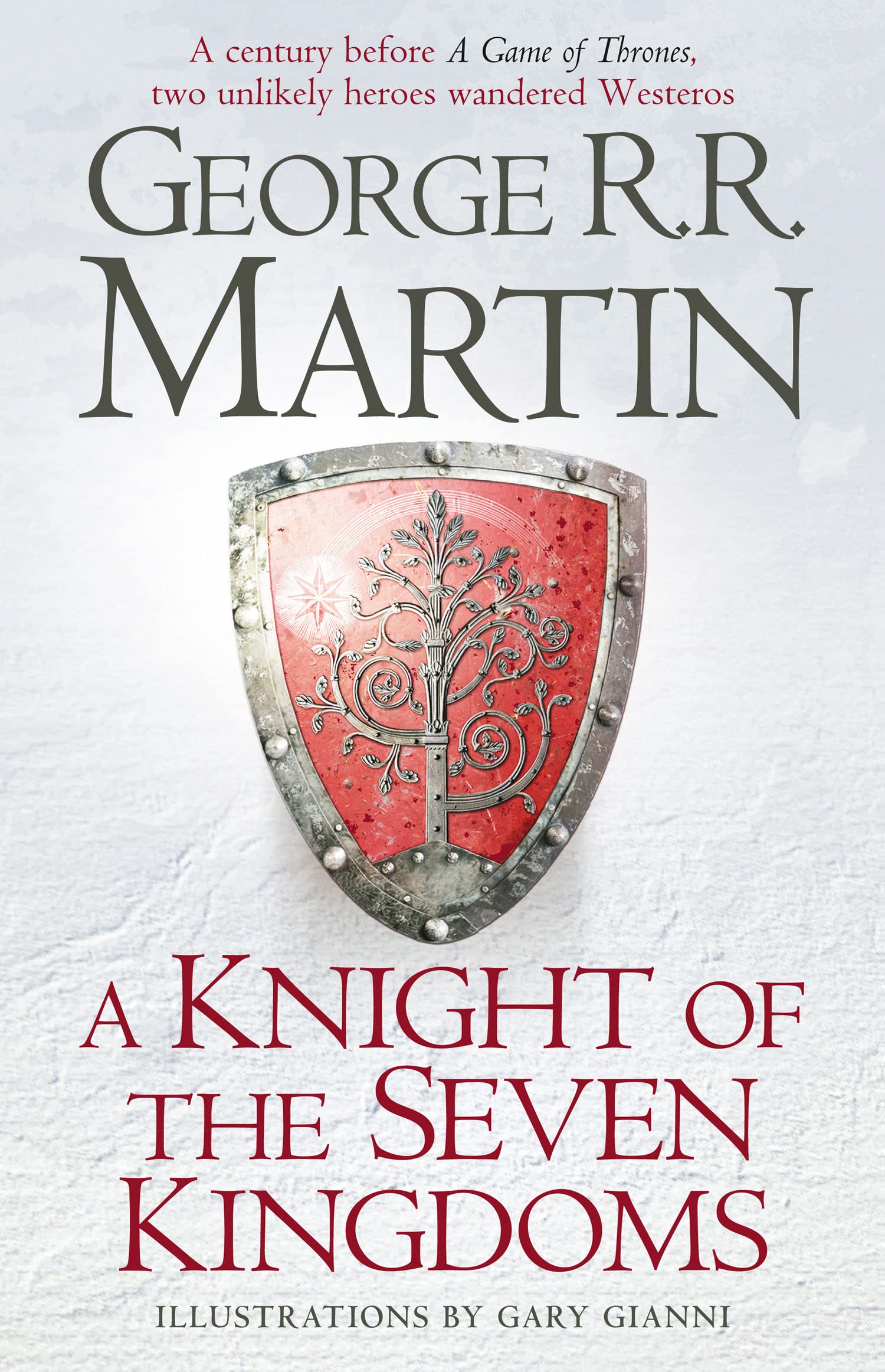
Because I am late to the game, I read The Mystery Knight as part of the compilation volume A Knight of the Seven Kingdoms, which is much easier to find these days.

 Al Singh
 Doug Merrill
 Doreen Sheridan
 Emily Lauer
 John Pitzel
 Lars N. Goldschlager
 Laura Eilers
 Professor X
 Robert Maedgen
 Sylvere Ap Leanan
 The Shire