
Hello, dear readers! Today we have an excerpt from a centuries-spanning novel of science fantasy that will appeal to lovers of the esoteric and the technological.
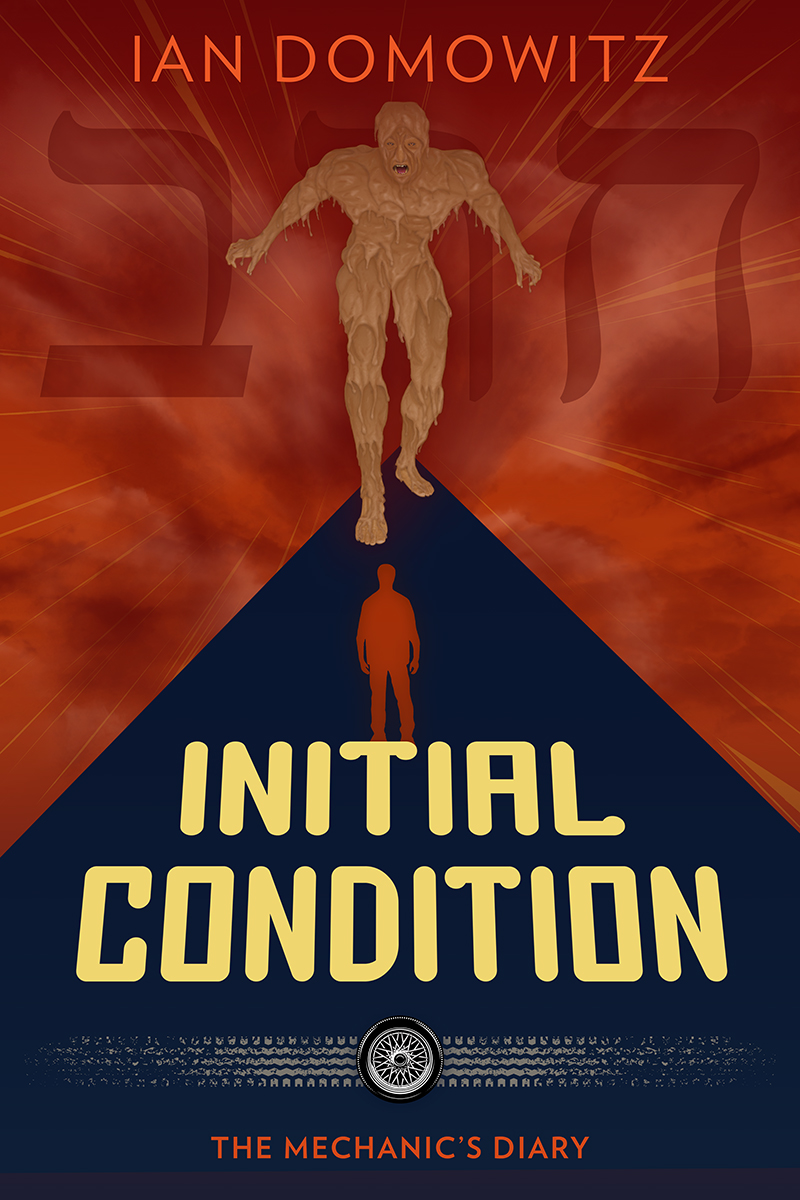 I’m gonna let the publicity materials for this latest book in a series speak for themselves, for fear of accidentally giving anything away with my own writing:
“A twelfth century vision of artificial intelligence foreshadows a sixteenth century recipe to produce it. A nineteenth century prison nurtures it. A twenty-first century golem befriends it. And a boy without a century stands at the intersection of real and virtual, moments into the future. They call him The Mechanic.
“A kidnapping leads Hanzi Boss to a sanctuary community where religious law forbids speech by the artificially intelligent. For beings like him, the penalty for existing is death and his true nature must remain secret. But the community has its own secrets. An ancient immigrant hides there, a monster made not born, a being who can know Hanzi for what he really is. When the price of life is death, who survives—infinite strength steeped in the silence of the past, or intelligence guided by lived experience?
“This is a story of arcane knowledge, alchemy, and strange philosophies. It is the story of a being not created by God, who does not know what he is and searches for something more. Initial Condition is the third book in The Mechanic’s Diary series following Wake the Whirlwind and Neurojuggler.”
Read on for an excerpt on the creation of one of the mysterious figures at the heart of the novel:






 Al Singh
 Doug Merrill
 Doreen Sheridan
 Emily Lauer
 John Pitzel
 Lars N. Goldschlager
 Laura Eilers
 Professor X
 Robert Maedgen
 Sylvere Ap Leanan
 The Shire