
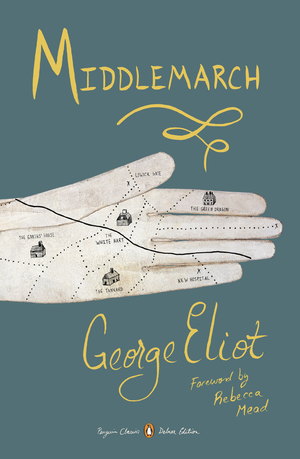
 This is Part 3 of 3! Part 1 is here and Part 2 is here.
Reminder: Earlier this year I read Middlemarch by George Eliot as a readalong with a thoughtful and fun group organized by my smart friend Marjorie. While it is definitely a masterpiece of a novel and I loved our group’s discussions generally, it turns out I have a ridiculous problem: I cannot help but see the various marriage plots in Middlemarch as anachronistic allegories for the contemporary academic job market.
Could George Eliot have intended this? No. Could I maybe get off my bullshit and just get over it? Apparently also no.
Part 3: Celia and Mary
In Part 1 of this essay I discussed Rosamond, and in Part 2 I discussed Dorothea.
In addition to inviting comparisons between Dorothea and Rosamond, Eliot also offers us Dorothea’s younger sister Celia as a possible foil. Celia is good natured, though not considered quite as pretty nor quite as smart as her older sister. She doesn’t really understand what Dorothea wants from life or a marriage, but she has her sister’s welfare at heart. Celia loves Dorothea and is relentlessly practical and compassionate toward her, and she ends up marrying the friendly and wealthy landowner who had felt rebuffed by Dorothea.
Celia is like the new hire who knows she wasn’t the committee’s first choice of colleague, but who has ended up in the department and is leaning into making them happy she is there. Celia, her eyes wide open from the start, takes a position she understands and seems to be flourishing in it. Her first baby is tenure. She is happy, secure, and well suited to the wife career.
Finally, we have Mary Garth, a fourth young woman in Middlemarch, who does not have the advantages of the preceding three, as we are told she has neither beauty nor wealth. When we meet Mary, she is working as a household employee to a crotchety old gentleman. She has been courted enthusiastically by Fred Vincy (Rosamond’s brother) and when he doesn’t inherit enough money to marry her on, she needs to seek another situation.
Mary Garth is adjunct faculty, grinding away with no job security. The same funding debacle that momentarily imperiled Rosamond’s future with Lydgate also temporarily derails Mary Garth’s possibility of a full-time hire at the institution of her choice, where she had been unofficially made to understand she would be taken on.
And Fred is immature and makes bad decisions anyway. Mary won’t marry him until he shapes up. The Fred Vincy Institute of Higher Learning is currently undergoing a fairly arduous re-accreditation process and shouldn’t make any hires until that is concluded. It is unclear for a large portion of the narrative whether or not he will ever grow up enough to be able to offer her a real home.
Mary Garth is generally liked in Middlemarch, and well-respected by a number of thoughtful and kind families. We learn late in the novel that another well-liked character had wanted to marry her as well, but never asked. Many institutions praise their adjunct faculty without offering them full-time employment with job security.
These four women and their different experiences with matrimony are handled deftly by Eliot, who is famously empathetic to all the various personal, mental, and socioeconomic factors that go into each of their decisions. I’m sure Eliot wasn’t thinking “over a hundred years from now, the academic job market for Americans is going to be like this.” And yet, here we are.
Reading novels from the 19th century makes me glad about many things. I am glad contact lenses have been invented. I am glad I can have my own career, even while married. I am glad my spouse is a terrific person, and glad that divorce is more straightforward for my friends whose spouses are not.
I am also glad that when I was on the job market, I had options offering both more security and more transparency than some of Middlemarch’s husband institutions. This is an issue that I think is implied by Austen’s marriage plots and addressed directly by George Eliot: what looks like a good match might be misleading.
If you’re on the market now, any kind of market, look for a match that will suit you, rather than being swayed by a fancy name or a glossy recruiting brochure.
~~fin~~

 Al Singh
 Doug Merrill
 Doreen Sheridan
 Emily Lauer
 John Pitzel
 Lars N. Goldschlager
 Laura Eilers
 Professor X
 Robert Maedgen
 Sylvere Ap Leanan
 The Shire
1 ping
[…] Part 3: Celia and Mary is here! […]