Very excited to have gotten away with not publishing my first round-up post of the month till today, the twelfth of December! We have three books that have only recently published for you this week, as well as three books from earlier in the year that I’ve been meaning very much to get to but likely won’t for the foreseeable future, alas.
 We start with Peg Cochran’s Where The Bodies Are Berried, which has such a beautiful, seasonally appropriate cover. I actually picked up this latest Cranberry Cove mystery thinking that there’d be recipes included, due to several misleading reviews over on NetGalley as well as the fact that all her prior books featured yummy, cranberry-themed recipes. I was thus surprised to learn that this is the first book in which she’d omitted them, meaning that I couldn’t add this to my cooking column over at Criminal Element (and definitely not to my review schedule there, which is currently booked solid through May 12th!) This did mean, however, that I could feature this book and its gorgeous cover art right here at The Frumious Consortium!
Monica Albertson and her half-brother Jeff are happy to host a fundraiser for a local animal shelter at their cranberry farm. Sassamanash Farm provides the perfect wintry backdrop for people who want to take Santa photos with their pets, for a modest fee that goes directly to the charity, ofc. The event proves popular and goes off with barely a hitch. But Monica makes a gruesome discovery shortly afterwards: the corpse of one of the shelter’s biggest donors out by the barn. In order to clear the farm’s name, Monica will have to investigate a man who’s largesse was mostly for show, and who had far more people who benefited from his death than she’d ever imagined.
Continue reading
Permanent link to this article: https://www.thefrumiousconsortium.net/2025/12/12/tantalizing-tales-december-2025-part-one/
It’s so unusual, and yet so sweet, to find a book where the title character may or may not actually be the main character, despite absolutely being the hero of the piece. I suppose one could argue semantics — Rabbit is the main active participant in the story, after all — but I’m really not that kind of book critic, lol.
 What I can tell you is that this children’s picture book was tremendously entertaining, and reminded me of theatre in the best way, while also being a powerful example of how to be a good neighbor.
So Rabbit doesn’t actually get any dialog in these pages. That honor goes to the couple, after a fashion, at its heart: Boulder and Cactus. Cactus lives on the desert floor, and Boulder perches on a nearby cliff. The two often talk to one another longingly about being closer together — a seeming impossibility given their lack of mobility.
Rabbit and Butterfly can’t help but overhear these conversations during their own nocturnal peregrinations. And so, one day, Rabbit decides to make Boulder and Cactus’ wish come true.
Given how Rabbit and Butterfly have no dialog in this book, it’s unsurprising that Boulder and Cactus never know who their mysterious benefactors are. This makes the former duo’s actions especially moving, because it’s clear that they did it for no material gain to themselves, but merely for the pleasure of bringing joy to others. It’s kinda how people fulfill the requests of needy kids on those Angel Trees set up by the otherwise terrible Salvation Army. You give without expecting thanks in return: in other words, the true definition of charity.
Continue reading
Permanent link to this article: https://www.thefrumiousconsortium.net/2025/12/11/rabbits-feat-by-barney-saltzberg/
Being a dyed-in-the-wool nerd, I first learned of Simon Stålenhag from the role-playing game adaptation of his first book, Tales From The Loop (still haven’t played it tho, as is tradition.) I also haven’t had a chance to watch the TV version despite having a crush on Rebecca Ferguson, and will likely never choose to watch the Netflix version of Mr Stålenhag’s The Electric State, due to my aversion to the current incarnation of Crisp Rat.
 So it was a bit of a surprise to learn that the latest art book from Mr Stålenhag is actually his wordiest yet. I still haven’t been able to read any of the earlier volumes but between the comments and, perhaps more quantitatively, the audiobook run times, Sunset At Zero Point would seem to have a lot more story than prior books, which were primarily art with snippets of narrative. The reason why becomes clear the further along you go in the story.
Let’s talk about the art first tho! Mr Stålenhag’s impressive photorealistic style features an alternate universe Sweden where developments strange to our reality are commonplace. He juxtaposes the surreal with the bucolic and the exotic with the everyday, for a vibe that’s only mildly unsettling due to its Uncanny Valley-ness. There is a bit of repetitiveness in some of the paintings depicting winter highways and abandoned machinery in the barrens, but that only serves to underscore the cyclical nature of the story.
As to that story! In SaZP, a collaboration between the US and Swedish militaries resulted in a catastrophic accident in the 1980s. A powerful explosion created an exclusion zone in a sparsely inhabited region of Sweden. The negative effects seem to be gradually wearing off with time, so that when the narrative picks up at the turn of the century, the existence of the EZ outside the small town of Torsvik is commonplace, even if it’s certainly extracted its toll on the residents there already.
Continue reading
Permanent link to this article: https://www.thefrumiousconsortium.net/2025/12/10/sunset-at-zero-point-by-simon-stalenhag/
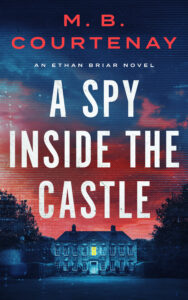 We have a terrific excerpt for you today, dear readers, from a debut novelist who isn’t afraid to explore the bleeding edge of espionage!
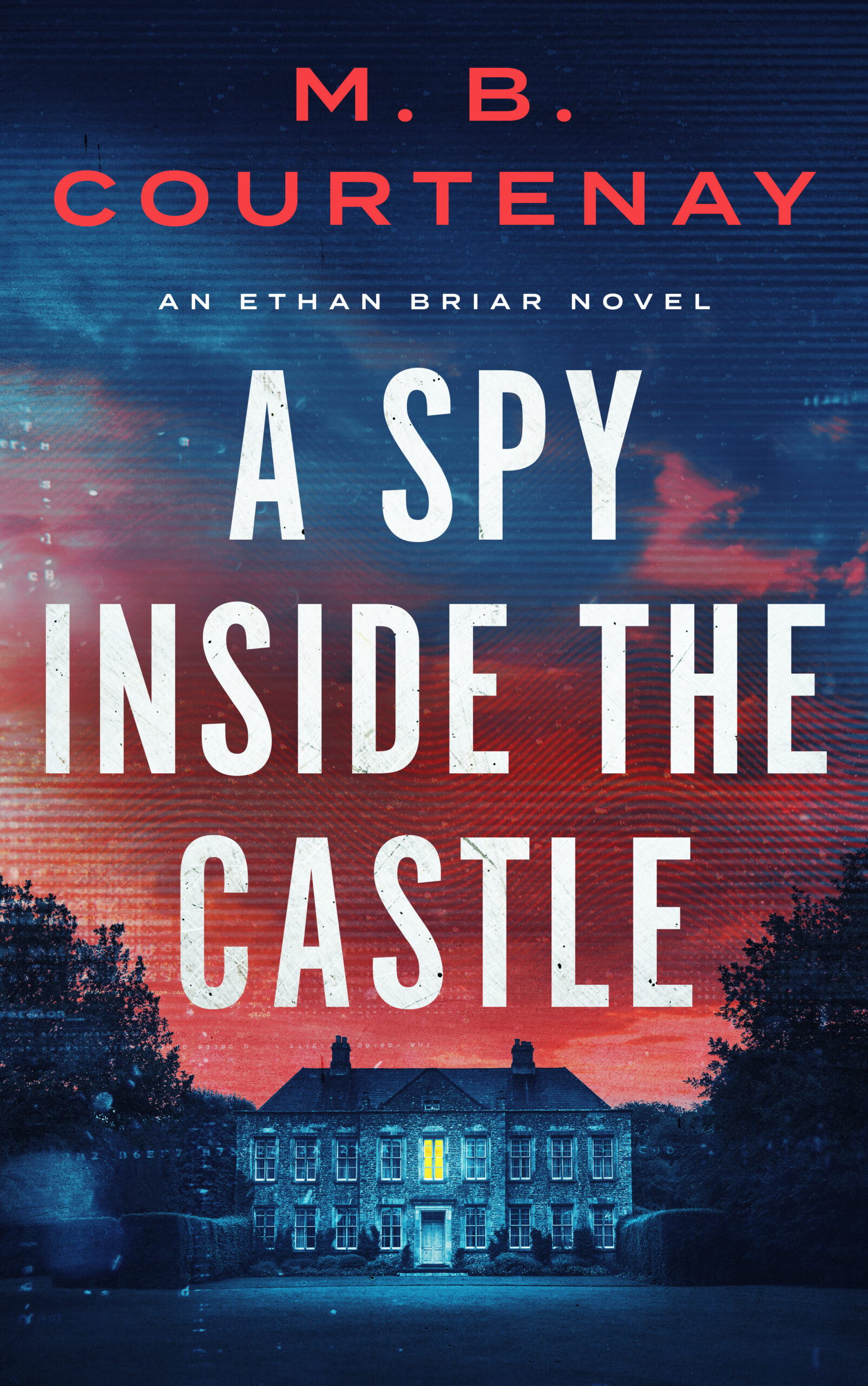
Long-time readers will know that I’m a sucker for a mythological retelling, especially in a new and unexpected genre. M B Courtenay’s A Spy Inside The Castle riffs off the myth of the Minotaur in its Labyrinth, to present a compelling drama of politics and spycraft as a reluctant analyst is thrust into the cutthroat world of operations.
Ethan Briar’s ability to analyze and predict risks definitely does not mean that he’s happy to actually take them himself. But after receiving a cryptic message warning of a hidden war, he finds himself pulled into the shadowy halls of Castlemartin Manor, a decaying stronghold with the quantum supercomputer ARCLIGHT at its heart. Built to predict the future, ARCLIGHT has since been used to manipulate global events. Ethan’s task is to unmask a mole whose betrayal could take down the US government… or worse.
Read on for a perhaps surprisingly sexy excerpt, as Ethan gets ready to be introduced to ARCLIGHT:
Continue reading
Permanent link to this article: https://www.thefrumiousconsortium.net/2025/12/09/a-spy-inside-the-castle-by-m-b-courtenay-excerpt/
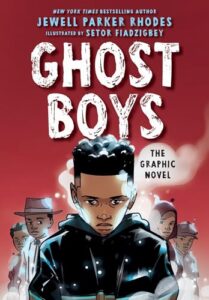 adapted from the bestselling novel of the same name.
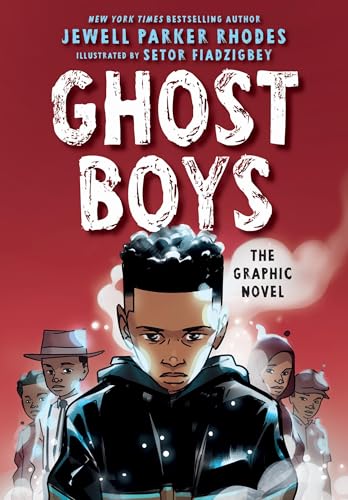
I love that this powerful middle grade story was adapted to the graphic novel format because that feels so much more accessible to a wider variety of readers, not only to kids with short attention spans but also to adults with less time on our hands (and also for adults with shorter attention spans, lol, because who am I kidding?) Making this important story more available to all level of readers — without, presumably, sacrificing any of the nuance of the original novel — is unequivocally a good thing.
The story itself revolves around 12 year-old Jerome Rogers. He lives in the Chicago projects, where safety is never a certainty despite the best efforts of his loving parents and grandmother. One day, he decides to go play outside by himself, in one of the few open spaces in his neighborhood, with a toy gun. Someone calls the police. A cop shoots him twice in the back, killing him.
Jerome’s spirit can’t move on. As he tries to make sense of what happened to him, he connects with not only another ghost boy done dirty by a racist society, but also with the daughter of the white cop who shot him. The three of them try to figure out how to make peace with what happened to Jerome, and how to make society better so that it won’t happen again.
Continue reading
Permanent link to this article: https://www.thefrumiousconsortium.net/2025/12/08/ghost-boys-the-graphic-novel-by-jewell-parker-rhodes-setor-fiadzigbey/
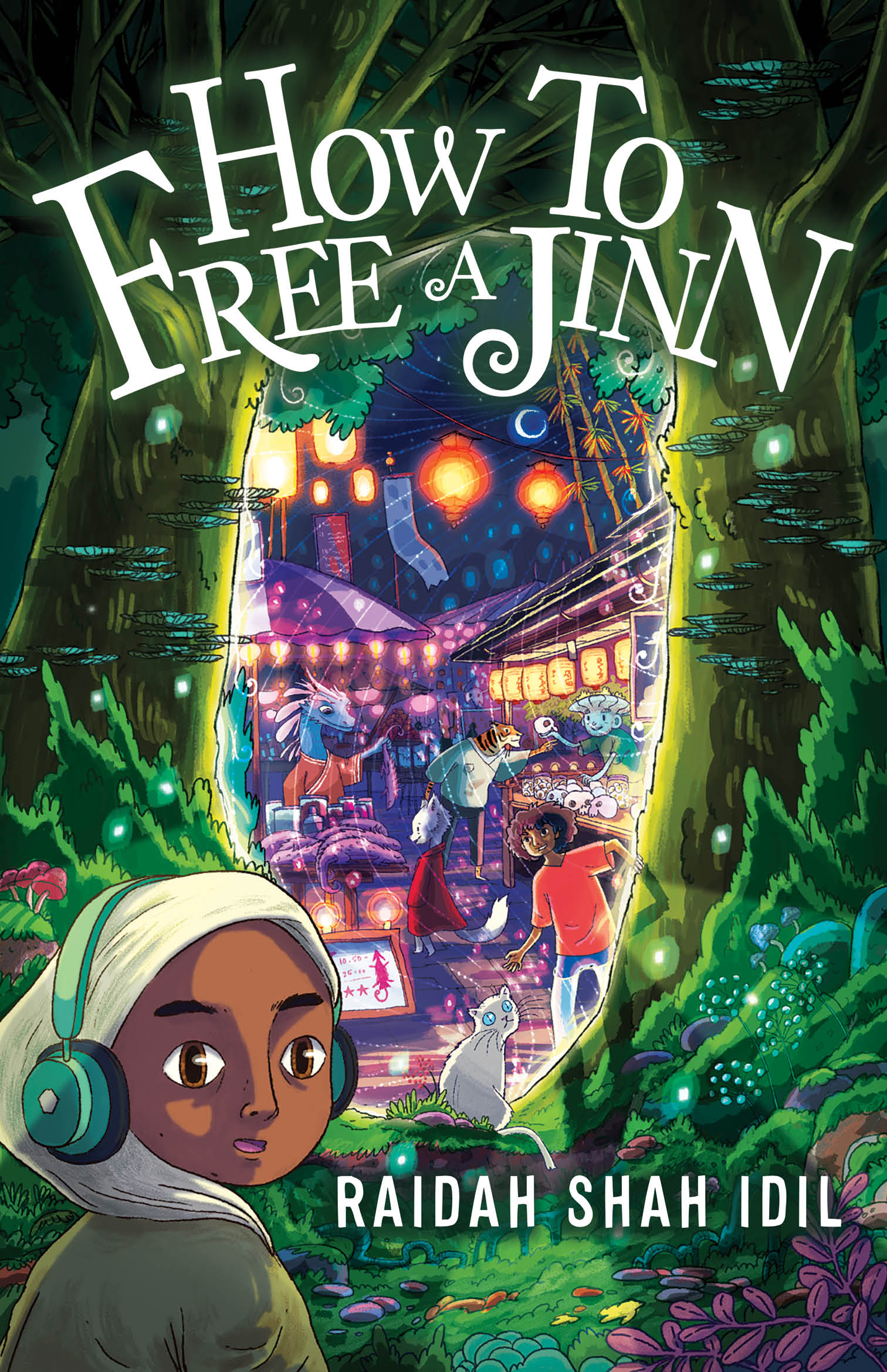
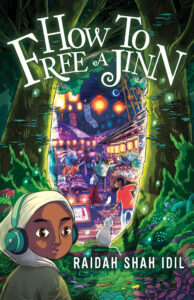 Hello, readers! Today, I’m super thrilled to be able to bring you a guest post from debut author Raidah Shah Idil, whose middle grade novel How To Free A Jinn was only recently published this past November.
Like myself, Pn Raidah is a member of the Malay diaspora. In her guest post, she talks about her background and upbringing, and how those informed her writing. Her debut novel centers on young Insyirah, whose calm, orderly world in Australia is thrown into chaos when news reaches her family that her grandmother has suffered a bad fall. While Nenek could easily hire someone to look after her, she wants Insyirah and her mother to move back to Malaysia and stay with her instead.
Their new home would be a struggle for anxious Insyirah to adapt to even before she learns her family’s secret: the women of her line can control powerful jungle spirits called jinn. One day, Insyirah will inherit a jinn of her own… if she can survive the evil spirit that haunts her new school and seems determined to drive her out of the country. She’ll have to dig deep into her own resilience and courage if she’s going to successfully navigate all the challenges of both the seen and unseen worlds around her.
I can’t wait to dive into this book, especially after reading Pn Raidah’s illuminating essay below:
Continue reading
Permanent link to this article: https://www.thefrumiousconsortium.net/2025/12/05/how-to-free-a-jinn-by-raidah-shah-idil-guest-post/
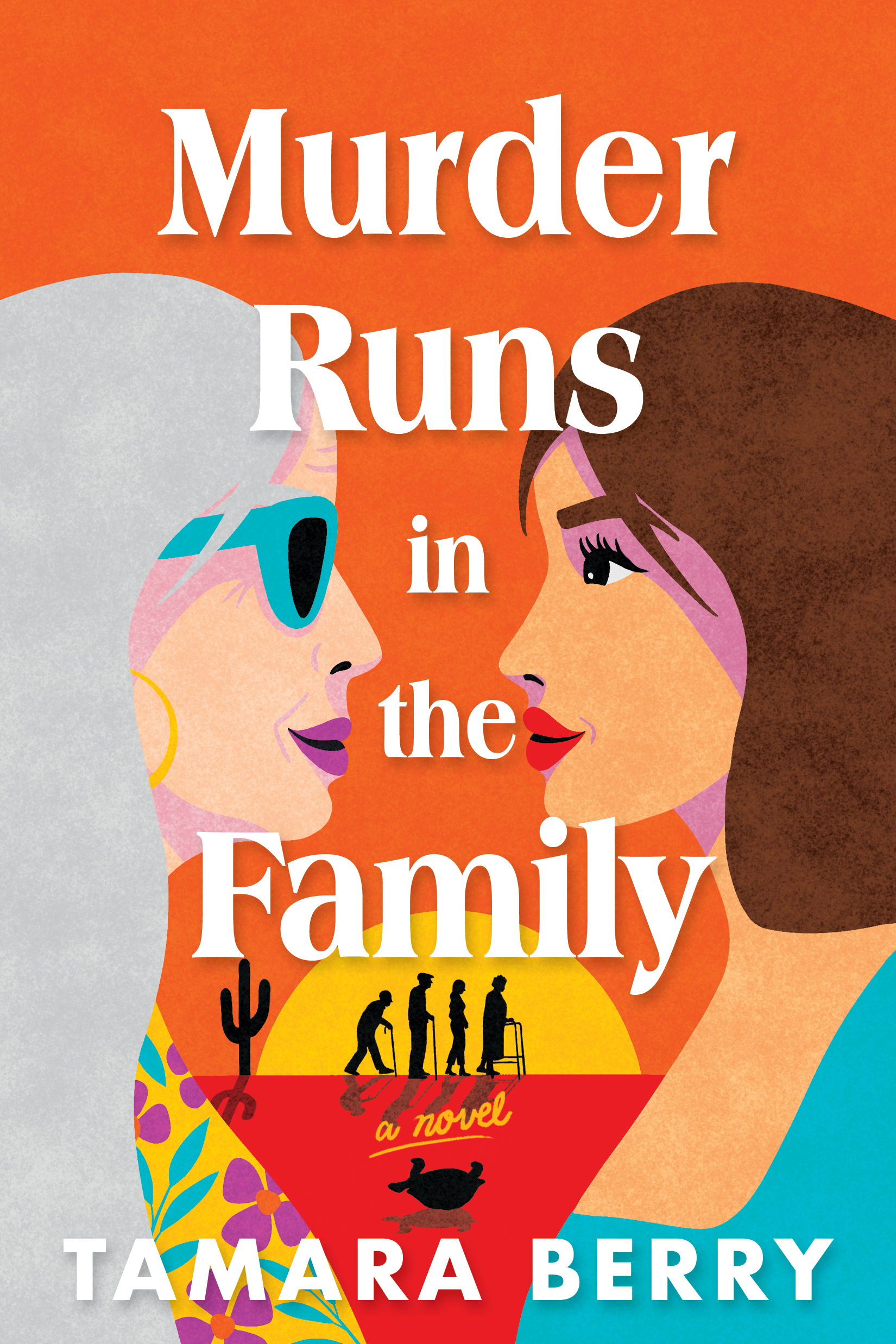
Honestly, every new Tamara Berry book is a treat, and I’m so glad I could finally get to this one! I’ve read all of her other mystery novels save one, and it was so disappointing to learn that her publishers aren’t picking up more of either of her prior series, both of which are excellently written and tremendous fun.
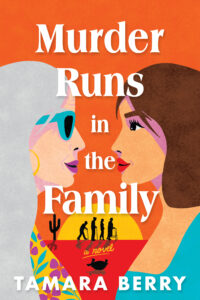 Which makes it feel churlish for me to say that Murder Runs In The Family was definitely not my favorite of her books so far. It starts off really well but the ending is surprisingly muddled, both in terms of what actually happened and in the heroine’s emotions. While that’s understandable in the latter instance — she goes through A Lot over the course of this novel — the many warring emotions and especially the neat resolution of same feel a little shoehorned in. It’s stuff I would expect to deal with in the next novel of what’s hopefully a series — tho given how Ms Barry’s publishers have been doing her dirty, maybe she thought it best to resolve everything while she still could!
Anyway, the story revolves around Amber Winslow, who breaks up with her private investigator boyfriend up in Seattle and heads to Arizona, in hopes that the grandmother whom she’s never met will give her a place to stay. Amber has always felt like a misfit in her straitlaced immediate family, and is relieved when Jade McCallan turns out to be as much of a shrewd nonconformist as she herself is. In fact, Jade and Amber hit it off so well that Jade insists that Amber stay with her at Seven Ponds, the luxury retirement community where Jade is pretty much Queen Bee.
For Amber, it’s like walking into a modern day fairytale with a loving grandmother who, with the help of her friends, anticipates her every need. But then one of those friends is found dead, and Jade becomes the main suspect. Good thing she has a PI-in-training for a granddaughter!
Continue reading
Permanent link to this article: https://www.thefrumiousconsortium.net/2025/12/04/murder-runs-in-the-family-by-tamara-berry/
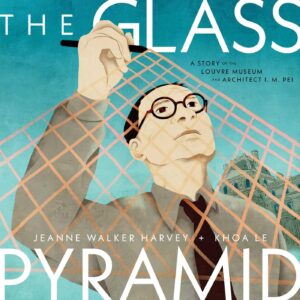 subtitled A Story of the Louvre Museum and Architect I.M. Pei.
I had no idea that the glass pyramid of the Louvre was only built in 1989! For some reason, I thought it was far more modern, tho perhaps I just wasn’t paying much attention at the time. After all, I’d visited the Louvre a mere handful of years prior and had been, to my own surprise, thoroughly bored by it all. Paris was nasty back then, and while the crowds weren’t too overwhelming, I was singularly unimpressed by the Mona Lisa. Forgive me, I was only eight years old: my tastes in art hadn’t yet developed, tho my appreciation for useable urban spaces was clearly already well defined (plus also I was in love with the Nike of Samothrace and Gericault’s The Raft Of The Medusa, both significantly louder pieces that stood up to the crowds better than da Vinci’s smaller, more subtle portrait of the Gioconda.)
And in keeping with my still-developing tastes, I wasn’t much impressed with I M Pei’s glass pyramid when I first heard of it. Like many others, I found it incongruous that such a modern interpretation of an ancient monument should be plonked front and center of such an iconic building. Certainly tho, I was never as stridently opposed to the project as some, so found this children’s picture book on the subject extremely enlightening on the entire concept and controversy.
Continue reading
Permanent link to this article: https://www.thefrumiousconsortium.net/2025/12/03/the-glass-pyramid-by-jeanne-walker-harvey-khoa-le/
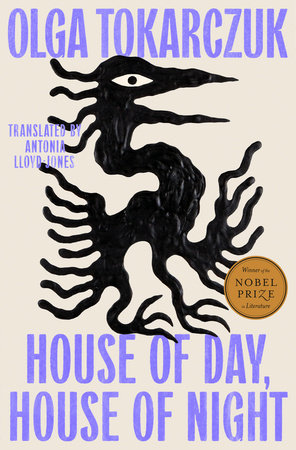
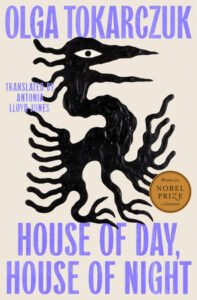 A new edition of Olga Tokarczuk’s 1998 novel, House of Day, House of Night is out today from Riverhead Books! Translated from Polish by Antonia Lloyd-Jones, House of Day, House of Night offers a series of vignettes that slowly grow the reader’s sense of a town with traumatic history.
Olga Tokarczuk is squarely in the category of literary fiction, especially after winning the Nobel Prize for Literature in 2018, but her work also fits in the category of weird fiction with other luminaries like Carmen Maria Machado and Kelly Link, as her writing slips between the banal details of everyday life and possibly supernatural or otherworldly occurrences.
In House of Day, House of Night, some of the stories are in the first person. Those ones are about interacting with a neighbor and a significant other in this small town, and they are interwoven with stories from the town’s history, including a local saint and the monk who chronicled her. The novel presents various perspectives on the town’s liminal status as the borders of Poland were shifted and people were displaced after the end of the second world war. As she often does, Tokarczuk interrogates the idea of borders and how arbitrary they are.
House of Day, House of Night is what Tokarczuk calls a “constellation novel” with seemingly disparate stories and anecdotes coming together as chapters to form an overall nuanced picture. It looks to me as though House of Day, House of Night was actually Torkarczuk’s first work translated into English back in 2002.
Continue reading
Permanent link to this article: https://www.thefrumiousconsortium.net/2025/12/02/house-of-day-house-of-night-by-olga-tokarczuk/
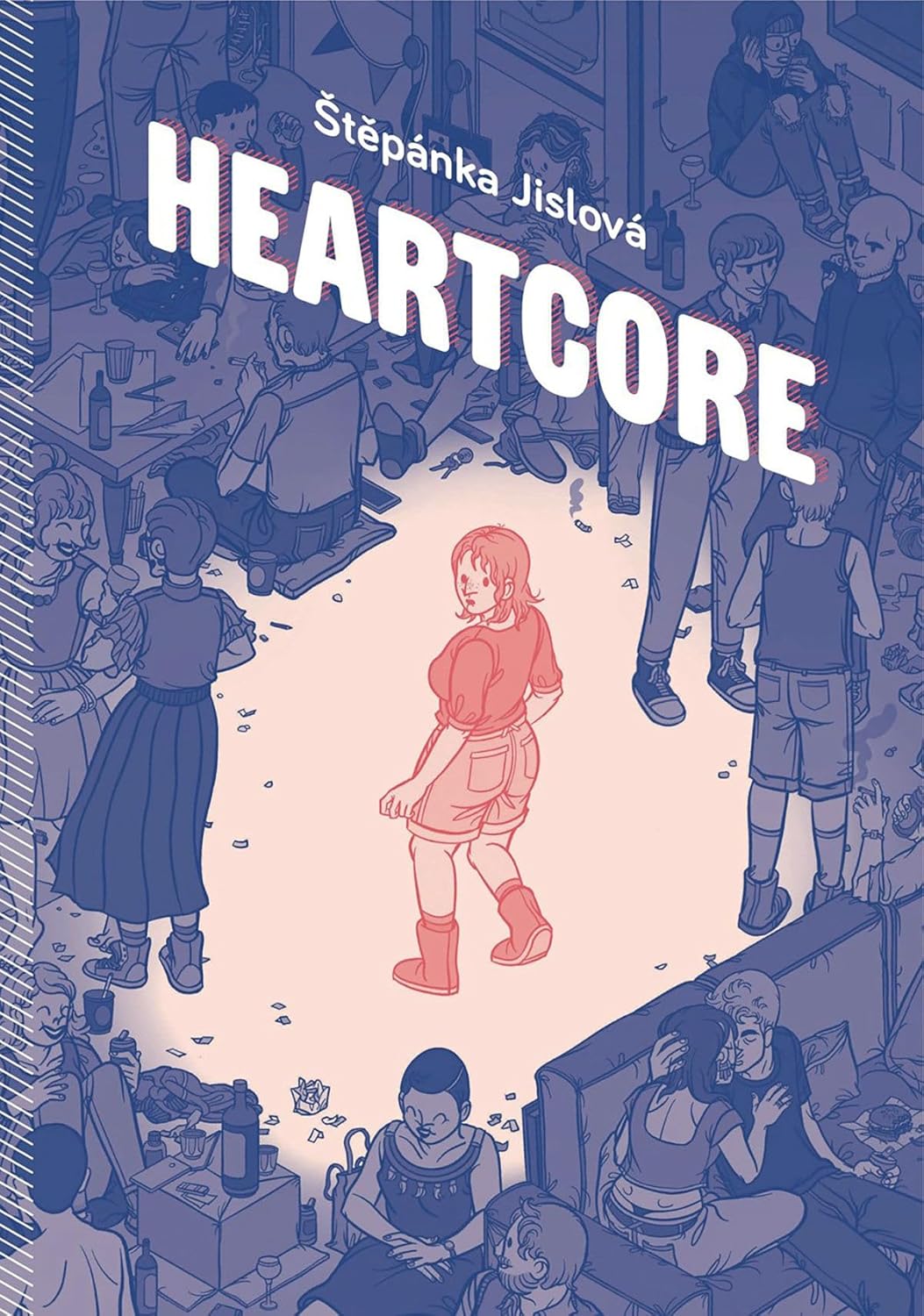
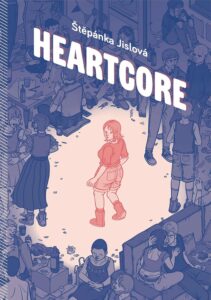 translated from the original Czech by Martha Kuhlman.
Part of the problem with preferring to go in blind to books after I initially say yes to them (usually months and months ago) as a professional book critic is that I’m sometimes blindsided by topics that I didn’t think a book would cover to the extent that it does. Heartcore is a great example even tho, in fairness, the blurb makes it sound as if sexual violence is only tangential to Štěpánka Jislová’s story. It’s not. While a large part of the book talks about the author’s pursuit of love, the chapter of her life where she survived an unthinkable betrayal of trust is central to understanding her relationship with seeking a partner.
And I get it, it’s hard to talk about sexual assault. And no one wants to make that the centerpiece of a memoir, especially one that’s supposed to revolve around love. Ms Jislová admits in the first few pages that the structure of this story is non-linear: it isn’t hard to see that that’s a necessary defense mechanism common to non-fiction books like this one. I think it works well, honestly, particularly in the graphic novel format, with one significant exception which I’ll get to momentarily.
Continue reading
Permanent link to this article: https://www.thefrumiousconsortium.net/2025/12/01/heartcore-by-stepanka-jislova/
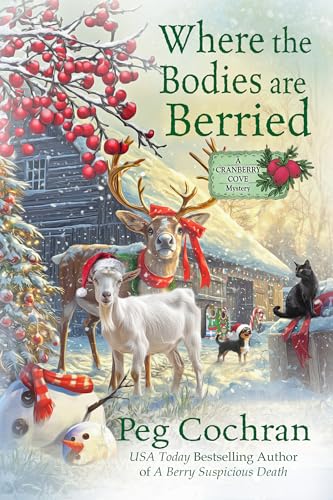 We start with Peg Cochran’s Where The Bodies Are Berried, which has such a beautiful, seasonally appropriate cover. I actually picked up this latest Cranberry Cove mystery thinking that there’d be recipes included, due to several misleading reviews over on NetGalley as well as the fact that all her prior books featured yummy, cranberry-themed recipes. I was thus surprised to learn that this is the first book in which she’d omitted them, meaning that I couldn’t add this to my cooking column over at Criminal Element (and definitely not to my review schedule there, which is currently booked solid through May 12th!) This did mean, however, that I could feature this book and its gorgeous cover art right here at The Frumious Consortium!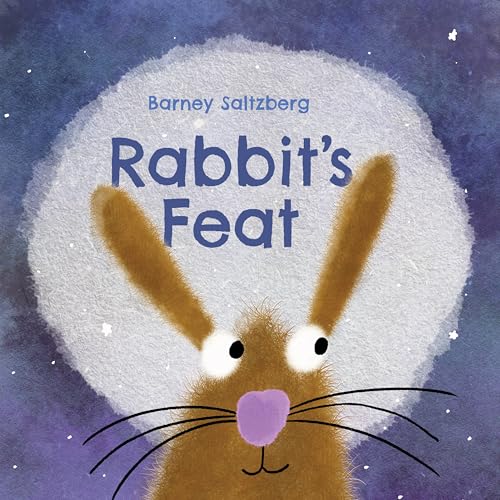


 Al Singh
 Doug Merrill
 Doreen Sheridan
 Emily Lauer
 John Pitzel
 Lars N. Goldschlager
 Laura Eilers
 Professor X
 Robert Maedgen
 Sylvere Ap Leanan
 The Shire