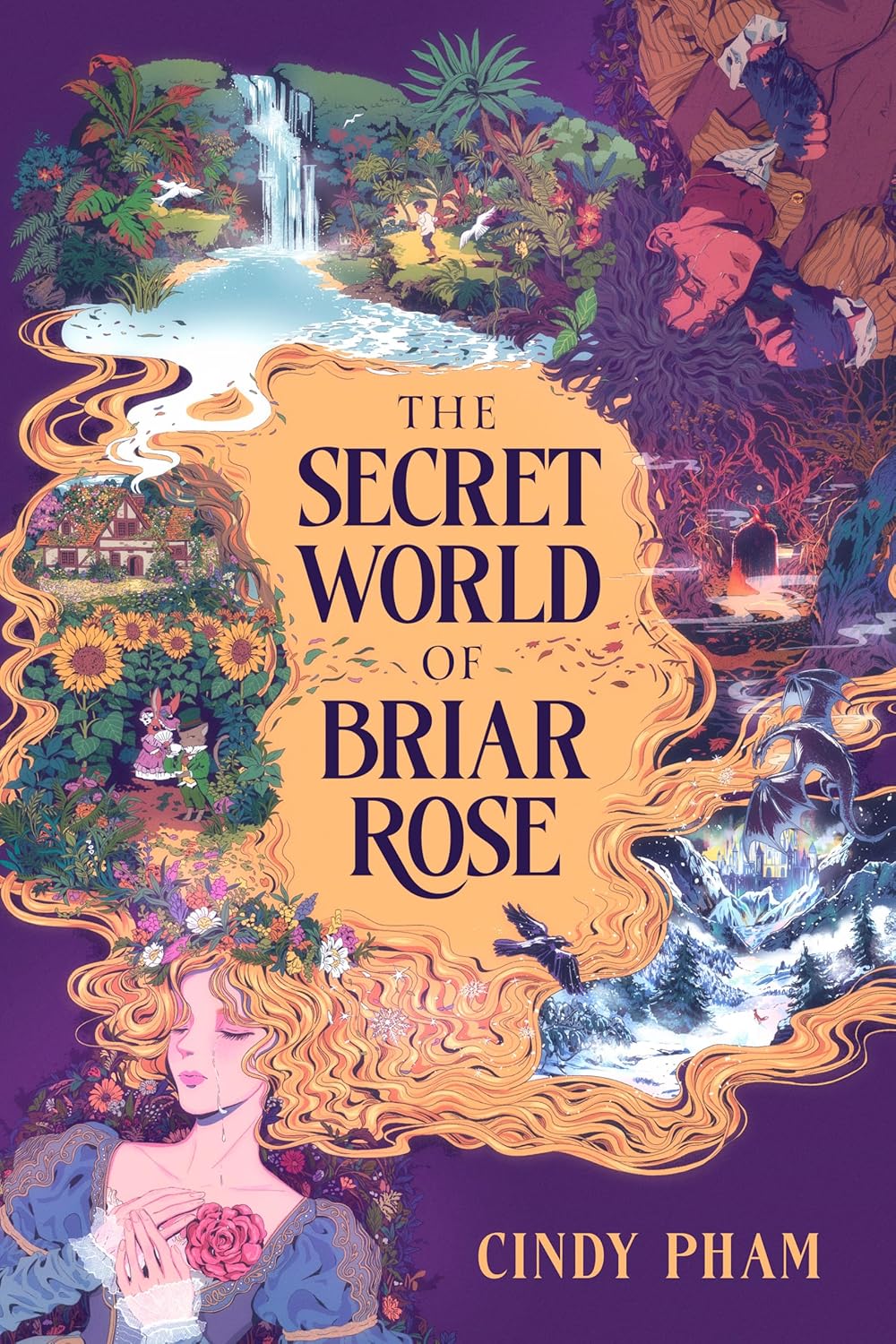
This would have been way more successful for me were it the overly wordy storyboard for an anime — most likely a repetitively depressing one like Berserk — than an actual book.
 And look, I get it. Depression sucks. It’s a legit mental illness that you can’t just will yourself out of. But that doesn’t mean that it automatically makes for interesting fiction. Reading this book was like listening to a depressed person drone on and on about their dreams. You have to really care about the speaker to do more than smile and nod and wait with increasing desperation for the monologue to be over. And I say this as someone who usually loves dissecting dreams, my own and others! But the experience of reading this book felt unfortunately like unpaid labor, which is not at all what I seek out or enjoy, especially from the YA fantasy genre.
The plot itself isn’t terrible. It’s sort of a dual timeline story of an eighteen year-old girl trying to survive in a war-torn landscape, and the mythical princess who lived there a century earlier. Corin is a petty thief whose focus on survival drives away everyone around her, including Elly, the younger sister she both adores and wishes she wasn’t saddled with. Elly is a twelve year-old who believes in the fairy tale that says that their kingdom will be restored once they find the hidden Princess Amelia and wake her. The princess’ royal blood is promised to bring Gyldan back to peace and prosperity. Corin doesn’t have time to believe in any of that, but chases after Elly when the younger girl goes off in search of the princess, eventually finding a portal into a completely unexpected place.
Meanwhile, the sleeping Amelia has retreated to the dream world she was cursed to fall into on her eighteenth birthday. As Amelia and Corin’s paths collide, will they be able to find the strength to overcome their own refusal to deal with the harsh truths of reality, and somehow find purpose?
Which leads to my first issue with this book. Despite the fact that it’s very accepting of mental illness, it kinda bugs me that the resolution depends on the young women finding a reason to live instead of perpetually running away from their problems, which leans too uncomfortably close to “can’t you just pull yourself together and TRY” territory for me. Like, yeah you have to want to be better in order to get better but unless the princess is also a metaphor for medication and therapy, this book leans into platitudes that I feel are ultimately damaging towards mental health advocacy. I feel like the book wants to talk about how important it is to confront the past and figure out a way to process it so you can move forward (which is awesome and correct,) but the writing is so tropey that it eschews the sensible “one day at a time” method/mindset for romantic melodrama instead.
I also REALLY didn’t care for the way that the author papers over shitty Asian parenting with the whole “love shows itself in different ways for different people” thing. Abusive behavior is still abusive behavior, no matter how well-intentioned. We no longer tolerate people being all “I hit my kid for their own good.” Why should we tolerate “I mentally abuse my kid because I care”? If a parent or parental figure really wanted the best for their loved ones, they’d fix their own shit instead of projecting on to the people they’re supposed to be raising. I get that Corin is damaged and has been unfairly parentified but a lot of the time, she also just sucks.
All that said, the worst crime of this book is that it is excruciatingly dull. Self-loathing could be made interesting if the author had any sense of pacing, but this book is so self-indulgently written that everything feels like one long droning spiel. Some overly elaborate descriptions are clearly the product of hyperfixation (eg the scenery, the endless drowning metaphors) while more important things (like any character outside of Corin and Amelia) are treated like wallpaper, with about as much depth. The lack of halfway decent characterization pulled all the emotion out of any of the twists. I was so bored by the writing that my main reaction any time something actually interesting happened was little more than an “oh, that’s cool” before struggling to keep going with the book. I suppose that if you’ve never been depressed, the numbing effect of the prose here is a pretty good simulacrum.
I really wanted to like this. It wasn’t even directly pitched to me: I was sent a publicist’s catalog and was super intrigued by the description, because I love fairy tale retellings and always want to champion people who, like the author, spread the love of reading to others. But this book was so badly written despite the promise of the premise. It needed editors who would push back hard against the self-consciously aesthetic quality of the writing. At least the ending was decent, and not just because I was relieved that this interminable book was finally over. I’m sure that there will be lots of people who will enjoy this novel and have a good time reading it — tons of people also love Berserk, which I consistently fell asleep to whenever my then-boyfriend tried to get me to watch it! — but I was definitely not a fan, which is disappointing because I really wanted to be.
The Secret World Of Briar Rose by Cindy Pham was published June 2 2026 by Kokila and is available from all good booksellers, including

 Al Singh
 Doug Merrill
 Doreen Sheridan
 Emily Lauer
 John Pitzel
 Lars N. Goldschlager
 Laura Eilers
 Professor X
 Robert Maedgen
 Sylvere Ap Leanan
 The Shire