I feel kinda bad for the people charged with writing the back cover copy for Villain, Natalie Zina Walschots’ sequel to Hench. That novel showed a world with superheroes and supervillains, told from the perspective of a disposable henchperson. But Anna Tomedlov was her own person, center of her own world, and did not feel disposable at all. So when a superhero tosses her aside and shatters her femur, she decides to do something about it. Hench is the story of how Anna became The Auditor, tallying up the damage that superheroes did to regular people and the world around them. She did considerable damage to their public standing and got plenty of people wondering who the good guys were. Then the world’s most feared villain, Leviathan, brought her on board, extending her capabilities with the resources of his organization. Which turns out to be warm and supportive, and everything the heroes’ organization isn’t.
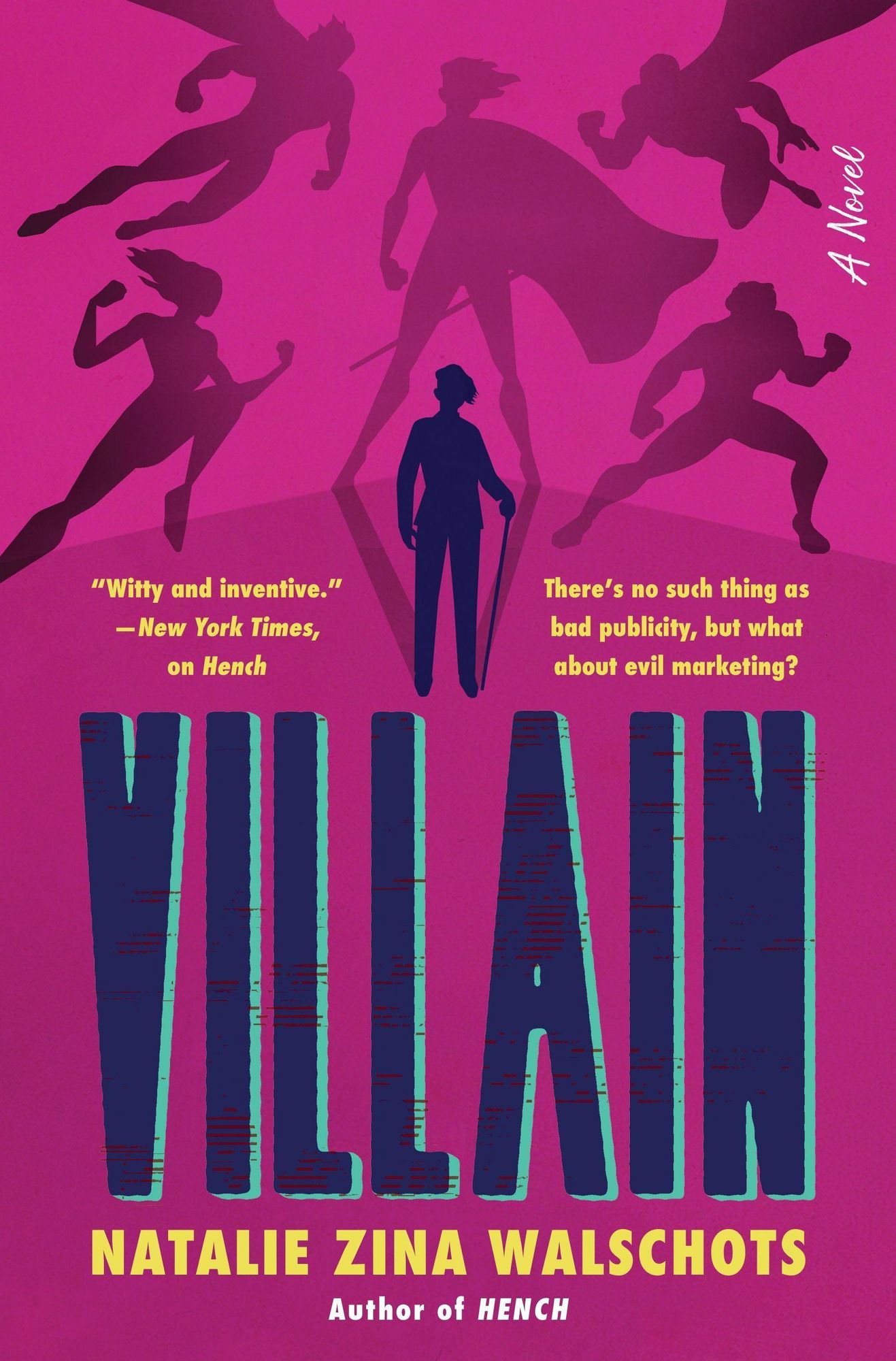
At heart, Hench is a dark satire of the working world, and having the supervillain’s organization be open and humanistic is part and parcel of the schtick. The back cover copy for Villain needed to convince people that the second book was darkly funny but ultimately light-hearted. It isn’t. It’s a compelling book that I sped through because I kept wanting to find out what happened next, and it is also the story of Anna T. finally and completely becoming The Auditor. In Hench there is a sense that the villains are contributing to the greater good of regular people by exposing just how much damage the superheroes are doing and how little accountability exists for them. That continues to an extent in Villain with more revelations about the Draft, the organization that spots, trains and promotes superheroes. Their internal machinations are as soulless as any corporation’s, and their rising star is a smiling, smarmy, vacuous schemer who can’t see that the Draft ever does anything seriously wrong, and doesn’t believe in oversight by anyone outside of the Draft. However much the Draft may resemble private equity with superpowers, this book is not about doing good things behind a black mask. It’s about Anna’s conscious choice of villainy, about what that entails and what she is willing to do to continue on that path.
It’s also about her relationship with Leviathan, a pas de deux of power, control, obsession, vulnerability, change, devotion, and, yes, villainy. Here is an early scene in that dance. It’s part of the funeral for a major superhero, where custom demands that Leviathan put in an appearance, and a truce between heroes and villains holds while all pay their respects.
The huge antechamber that held [the] body was buzzing as we [Leviathan, Anna, and two other attendants] walked in, but as soon as Leviathan’s presence was noticed, it grew quieter and quieter in waves rippling out from the door. It was a strange sensation, to have so much attention fixed in my direction, even by proxy; but while I felt its weight, the concentrated focus of everyone in the room pressing like a physical force, it was another thing to watch Leviathan react to it. He was like a black hole, all that energy just vanishing into him, and whether it was feeding him or just vanishing into the void it was impossible to tell. It felt like being in a submarine, in the deepest trench in the ocean; without his presence holding back the weight all around me I would have been crushed. But inside his orbit, I was safe.
There may as well have been no one else in the room then, for all the other visitors mattered. There was only Leviathan and the body. I felt real only in that I was close to him, as though his presence made me solid at the same time it turned everyone on the periphery to a pale shade. (p. 184 of the large print edition, because that is what I could find in Germany)
Further along, Anna’s reaction when someone with superpowers reveals that she had been offered a return to respectability if she killed Leviathan. Anna realizes that not only could this person have done it, she is probably the only super who could. Among the reasons she chose not to:
“I knew that if I did, you would hound me for the rest of my life. You’d spend every minute of every day gouging out your revenge. It would be your new purpose.”
I let myself feel, just for a moment, that imagined grief and betrayal. At finding him gone and knowing exactly who had done it. It was almost enough to choke me, the billowing ash that was belched up into the atmosphere of my soul just thinking about it, like the fallout from a volcanic eruption. I would become a nuclear winter, a permafrost, a sunless traumatic ice age. There would be nowhere she could hide.
“You’re right,” I rasped, the ash still clinging to my throat.
She nodded. “So. I’d have to kill you, too.” (pp. 281–82)
Over the course of the novel, Auditor and Leviathan are bound together, life and death, plan and deed. At times it is deeply uncomfortable reading, intimacy in the darkness that is more than just literal. Earlier in the book, a villain everyone had thought long retired to Antarctica, told Anna what lay ahead of her:
He looked at me with deep pity, then. “Young lady. The devil’s rates have never changed: everything you have, for everything you want. It’s the fairest bargain there is, and anyone who says otherwise either expected to be able to cheat or never understood the deal to begin with.”
I felt a chill come over me, as though I was surrounded by ghosts. I huddled down and tried not to visibly shiver.
He picked up my hand, like it was a small creature all on its own, and held it in both of his. His hands were thin and damp, and the skin had an odd fragility to it, like he might tear. “You have paid dearly. I am sure of that. But you have so much more to give, and to earn in exchange. In these rare moments when our contracts might be canceled, just be sure this is still the bargain that you want.” (p. 177)
Villain is the story of accepting that bargain in full.

 Al Singh
 Doug Merrill
 Doreen Sheridan
 Emily Lauer
 John Pitzel
 Lars N. Goldschlager
 Laura Eilers
 Professor X
 Robert Maedgen
 Sylvere Ap Leanan
 The Shire