As someone who has spent a patently absurd amount of time playing Legend Of The Five Rings, a role-playing game heavily inspired by Far Eastern cultures, it’s always fascinating to me to see how lacking my knowledge of Japan actually is. Books like this one gently correct my misperceptions, in the most interesting way possible.
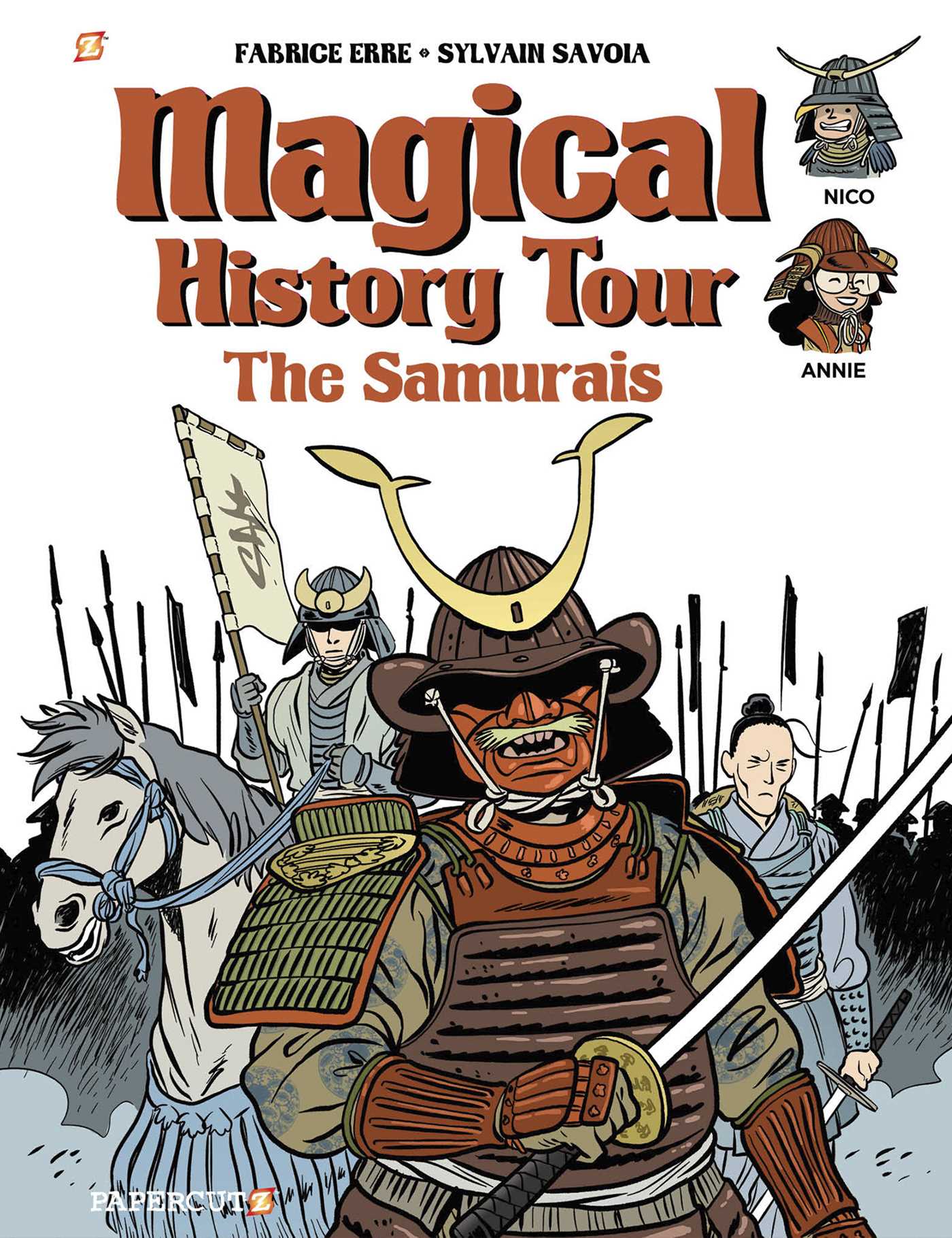 Regular readers will know I’m a big fan of the Magical History Tour series which, while written for kids, is full of thought-provoking information for curious minds of all ages. This twelfth installment focuses specifically on Japan’s samurai: who they were; how they came about, came to power and declined, and the hold they continue to have on the world’s imagination. It’s a wholly absorbing book that presents its information clearly and without prejudice, and is honestly an essential primer for anyone who doesn’t know much — or who wants to know more — about this topic.
The seriousness of the subject matter is greatly leavened by the presence of Annie and Nico, our young present-day narrators. The story actually begins when Nico continually loses his cool while they’re playing a game of badminton. Annie suggests that staying calm will help him focus, much like the samurai believed. Nico, ofc, has no idea who they are, launching the two on their magical tour through history. Our narrative duo are perpetually charming, even if I, like Annie, feel that Nico maybe shouldn’t be trusted with sharp blades quite yet.




 Al Singh
 Doug Merrill
 Doreen Sheridan
 Emily Lauer
 John Pitzel
 Lars N. Goldschlager
 Laura Eilers
 Professor X
 Robert Maedgen
 Sylvere Ap Leanan
 The Shire