Well, for the most part it’s by Joséphine Topolanski. I feel like a number of liberties have been taken in the English translation by Johanna McCalmont, but as I don’t have the full text of the original French to compare it with, I’ll mostly have to make educated guesses as to what survived translation.
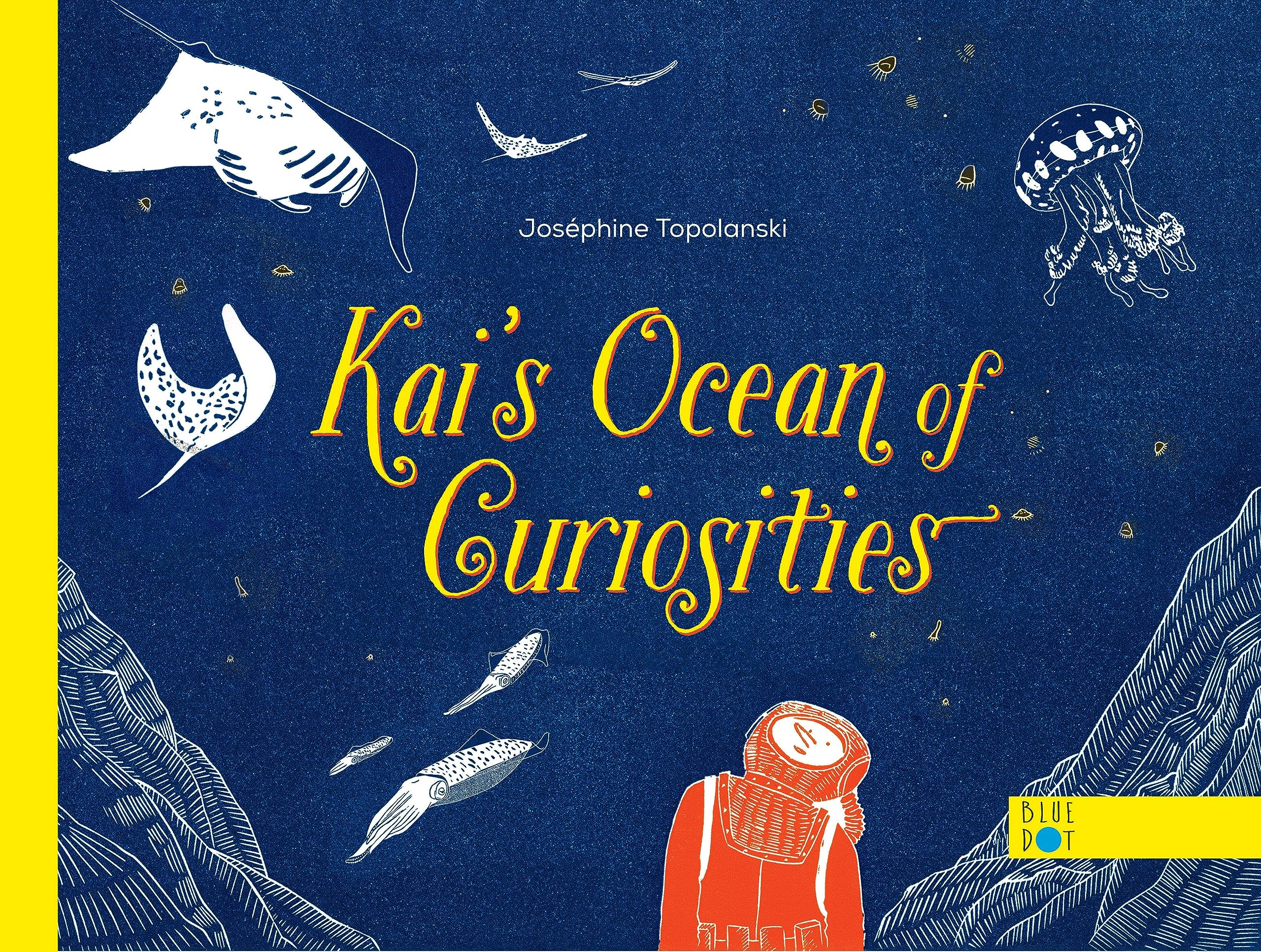 The art definitely did, tho, which is awesome because the art is a huge selling point of this gorgeous kid’s book. Ms Topolanski specializes in print-making, and the linocut-inspired art throughout the book is a wonderful example of this. Most of the underwater scenes are done in blue and white, with the occasional yellow or red highlight, usually for Kai’s equipment or for Kai herself. There’s a double-page spread of marine biology at the back that is just magnificent, and includes a list of each plant and creature’s common name.
The story itself revolves around Kai, a young girl who likes exploring the ocean floor. This exploration sometimes feels more fanciful than scientifically rigorous, even if one accepts the conceit of Kai being able to pilot underwater alone. Which, to be clear, I was happy to do! Sometimes, the best way to teach scientific fact is with a framing of scientific fiction. But the bit about shoals of fish shying away from her red protective suit made me raise an eyebrow, and I absolutely cringed when she reached out to touch the coral. Aside from harming yourself — and cuts from coral are notorious for taking weeks, even months to heal — you could harm a fragile ecosystem. Far better to just admire by looking, or even taking a picture.



 Al Singh
 Doug Merrill
 Doreen Sheridan
 Emily Lauer
 John Pitzel
 Lars N. Goldschlager
 Laura Eilers
 Professor X
 Robert Maedgen
 Sylvere Ap Leanan
 The Shire