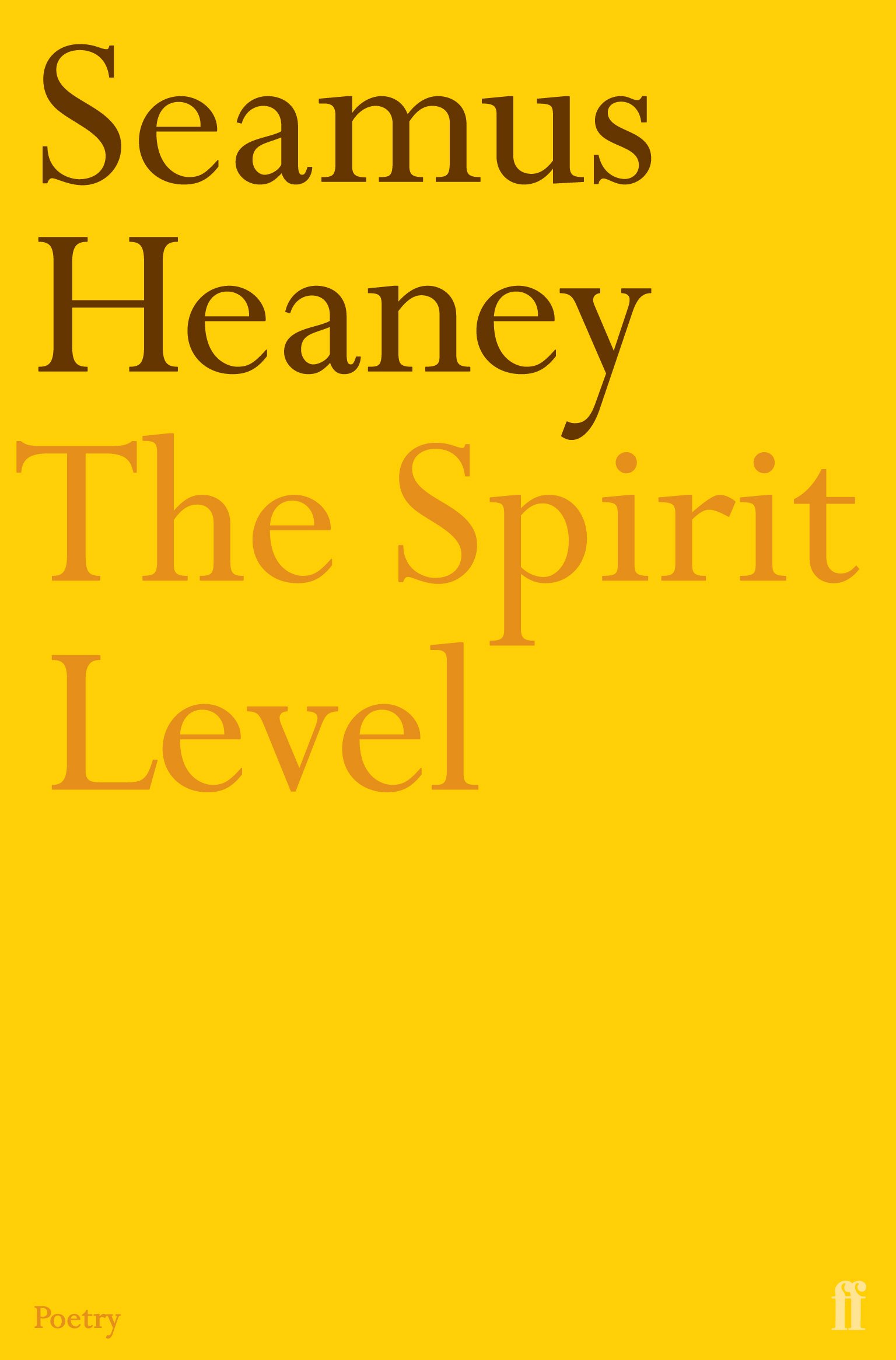
At age 62, some 35 years after publishing his first book-length collection, six years after winning the Nobel Prize for Literature, Seamus Heaney might have settled into a particular style of poetry. In Electric Light, though, Heaney forges onward. The volume features at least three eclogues (a short, pastoral poem, often in dialogue; I had to look it up), one of them a translation of Virgil. There are “little canticles,” a sonnet sequence, and at the end of the first part, “The Fragment,” a poem (or part of one?) that opens up to much more. Its final lines: “‘Since when,’ he asked/’Are the first and last line of any poem/Where the poem begins and ends?'”
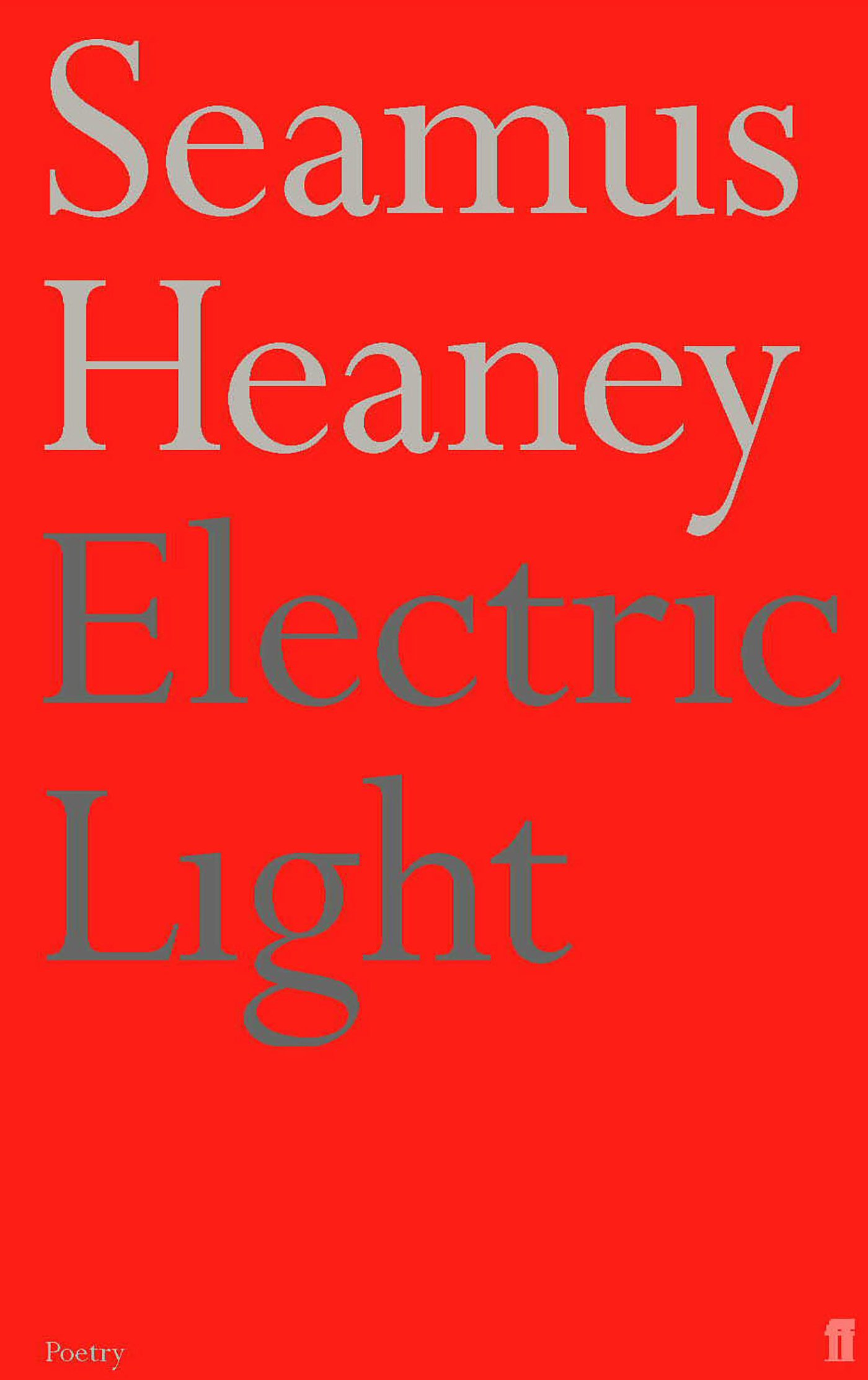
Sixty-two is also an age when many mentors have long since passed, and peers are starting to become fewer. Five of the second part’s eleven poems are explicitly for someone who had died, named either in a dedication or in the title itself. “On His Work in the English Tongue” is for Ted Hughes; “Audenesque” for Joseph Brodsky; “To the Shade of Zbigniew Herbert” is obvious; “Clonmany to Ahascragh” is dedicated to Rory Kavanagh (the son of a long-time friend of Heaney); and “Sruth” is in memory of Mary O Muirithe. The memorialized were friends and fellow poets, people he knew well, people he admired without having met. Most of the poems in this section that are not directly dedicated are still related to death, mourning and facing life’s end. “‘Would They Had Stay’d'” is true of so many. In “Late in the Day” Heaney recalls “The glee of boyhood still alive and kicking/In the tattered stick-man I would meet and read/A lifetime later.” His friend is still “taking it all in/And glad of another chance to believe his luck.” Heaney had another dozen years of chances to believe his luck, no small span, and yet less than one-fifth of what he had lived through then. I wonder how often it seemed late in the day to him. “Bodies and Souls” and “Seeing the Sick” continue the theme, with the latter recalling his father’s last days. “Electric Light,” the poem that ends the collection is not explicitly about death, but it is written in three-line stanzas that suggest Dante’s terza rima and an encounter with the afterlife, coming after so many elegies.
But there is plenty of life throughout Electric Light. Among the “Sonnets from Hellas,” for example, the speaker of “Castalian Spring” finds the way barred and says “Well then, to hell with that,/And to hell with all who’d stop me” but feels differently after storming onward, “with this useless/Anger draining away, on terraces/Where I bowed and mouthed in sweetness and defiance.” Another sonnet, “The Gaeltacht,” finds Heaney reminiscing and wishing “that it was again nineteen-sixty/And Barlow was alive.” The whole next stanza is more people he wishes were there, thinking “it would be great too/If we could see ourselves, if the people we are now/Could hear what we were saying, and if this sonnet … Could be the wildtrack of our gabble above the sea.”
Probably my favorite poem in the collection, “Known World,” recounts an adventurous gathering of poets in southern Yugoslavia in 1978. Heaney sketches participants and walk-on players, from the Macedonian taxi driver to Hans Magnus Enzensberger, “Sharp in a panama hat,/Pressed-to-a-T cream linen suit.” He finds common ground (bogs, actually) with “a soothsaying Dane/Of the avant-garde.” They all miss a reading that they “were meant to give/At a cement factory in the mountains” — this was socialist Yugoslavia after all — and wind up amidst a procession to a mountaintop church, celebrating the “workers’ day in memory/Of [the] General Strike. Also Greek Orthodox/Madonna’s Day.” The whirlwind ends with a Lufthansa departure: “Nema problema. Ja. All systems go.”
 Al Singh
 Doug Merrill
 Doreen Sheridan
 Emily Lauer
 John Pitzel
 Lars N. Goldschlager
 Laura Eilers
 Professor X
 Robert Maedgen
 Sylvere Ap Leanan
 The Shire