Lizard Boy #2: The Most Perfect Summer Ever by Jonathan Hill

Readers who’ve already enjoyed Book 1 will likely warm up to this quicker than I did, but once I realized this wasn’t just escapist (sub)urban fantasy, I was all in!
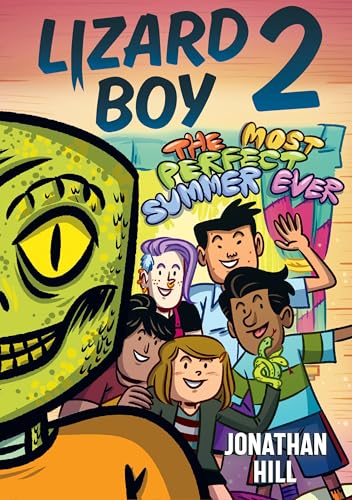
The Lizard Boy series revolves around the titular middle schooler, Tommy Tomkins, who fled with his mom and older sister Tiffany from the underground realm of Elberon. Assuming human guise, they settled in Eagle Valley, building new lives for themselves. Tommy eventually became close friends with five other kids, all of whom are outsiders for one reason or another. There’s alt/hippie Scarlett, one of two humans in their group, along with the other human, Dung, whose family is from Vietnam. There’s Sara the robot, Greg the Sasquatch, and Allie whose body is composed entirely of snakes. All of the non-humans pass easily as human, having learned how to shapeshift long ago.

Alas for the friends, Dung is about to move with his family back to Vietnam. Scarlett is particularly upset by this, and vows to make this last summer they all have together absolutely perfect. Things get off to a pretty good start when Greg shows the others the cool treehouse his older brothers built in the woods but have since outgrown. Using that as their headquarters, the friends plan the perfect summer shenanigans. Only trouble is, the outside world has a big way of intruding.
Continue reading

Permanent link to this article: https://www.thefrumiousconsortium.net/2025/09/29/lizard-boy-2-the-most-perfect-summer-ever-by-jonathan-hill/

They Were Found Wanting by Miklos Banffy

After introducing readers to the lost world of Hungarian nobility before the Great War in They Were Counted, Miklós Bánffy continues their stories toward the great catastrophe that is coming, that only a very few of them can see looming on the horizon. These two books, along with They Were Divided form Bánffy’s Transylvanian Trilogy, sometimes called The Writing on the Wall. Though it is split into three volumes, it is essentially one long tale. When he began the work, the world he wrote about was already lost in the calamity of the Great War, which blew the Austro-Hungarian Empire into its constituent parts, and whose peace settlement gave Transylvania to Romania, suddenly putting lands that the Hungarian nobility he wrote about had ruled for centuries into a foreign country. By the time that Bánffy finished the work in 1940, Hungary was again fighting in a world war, again on the losing side, as Bánffy, who had been foreign minister in the early 1920s, surely recognized. After the war, a short-lived republic gave way, under Soviet occupation, to a Communist dictatorship. These authorities had no interest in a work about a lost aristocracy, and so Bánffy’s brilliant work languished for decades.

They Were Found Wanting by Miklos Banffy

The trilogy was translated into English in 1999, and into German in 2012. I don’t know if it’s been translated into other major languages yet; I hope that it gradually finds the vast and admiring audience it deserves. Patrick Leigh Fermor found it a remarkable work and wrote a foreword to the edition that I have. During his 1933–34 walk from the Hook of Holland to Istanbul, Fermor encountered Transylvania while Banffy was writing, and offers this perspective:

It was in the heart of Transylvania — in the old princely capital then called Koloszvar (now Cluj-Napoca) that I first came across the name of Banffy. It was impossible not to. Their palace was the most splendid in the city, just as Bonczhida was the pride of the country and both of them triumphs of the baroque style. Ever since the arrival of the Magyars [Hungarians] ten centuries ago, the family had been foremost among the magnates who conducted Hungarian and Transylvanian affairs …
Banffy is a born storyteller. There are plots, intrigues, a murder, political imbroglios and passionate love affairs, and though this particular counterpoint of town and country may sound like the stock-in-trade of melodrama … it is nothing of the sort. But it is, beyond question, dramatic. (pp. xviii–xix)

Continue reading

Permanent link to this article: https://www.thefrumiousconsortium.net/2025/09/28/they-were-found-wanting-by-miklos-banffy/

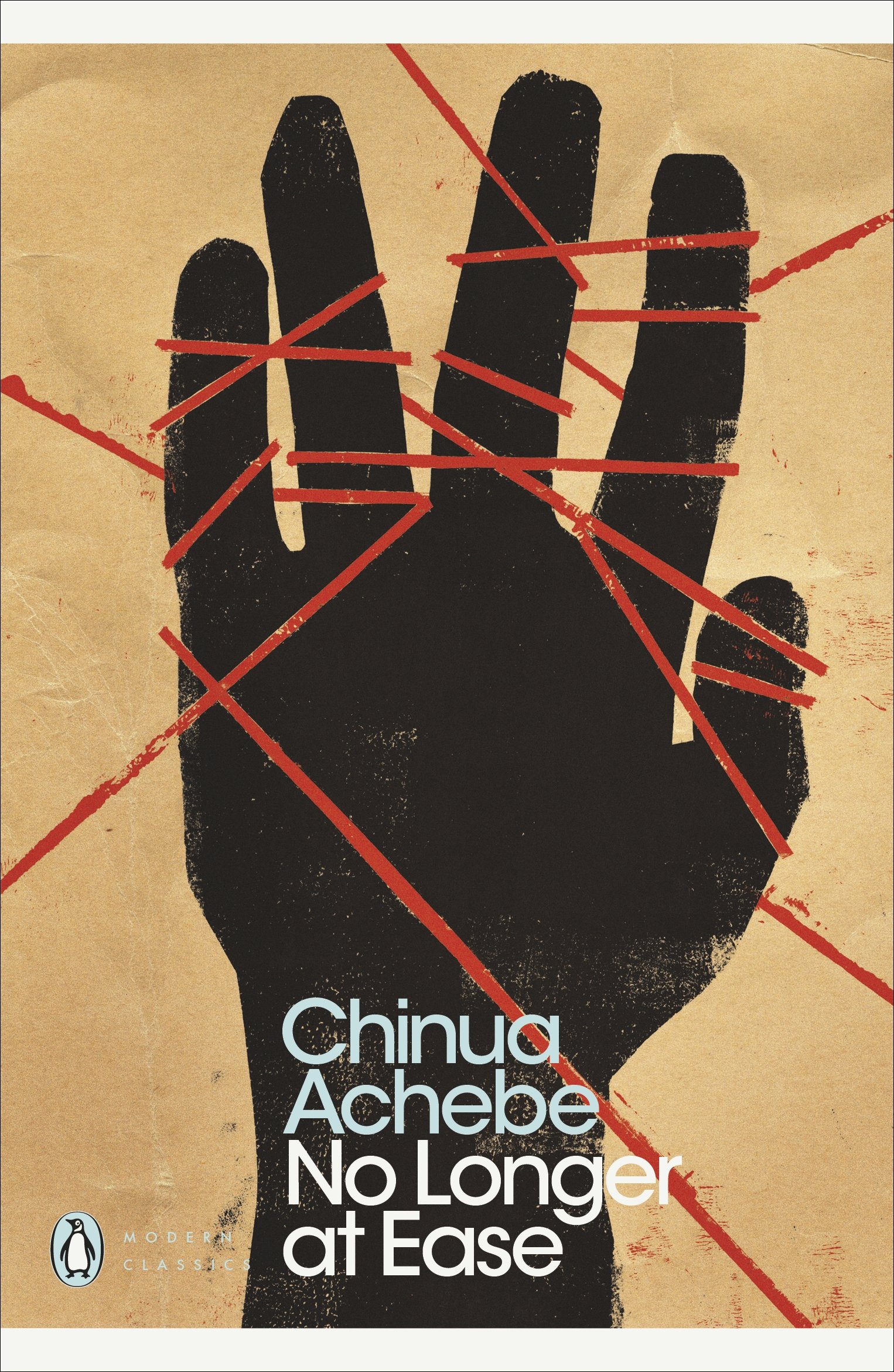
No Longer at Ease by Chinua Achebe

No Longer at Ease follow Things Fall Apart a generation later, although that is not immediately apparent. What is immediately apparent is that Obi Okonkwo is in a heap of trouble. He is in the dock, on trial in a case that has been the talk of Lagos for weeks, and the only thing remaining in the trial is the judgement. Achebe soon relates that Obi is on trial for taking bribes. To illustrate how unusual a trial is and how pervasive corruption is, on the very first page right after noting that the case is the talk of the town he adds “anyone who could possibly leave his job was there to hear the judgement. Some Civil Servants paid as much as ten shillings and sixpence to obtain a doctor’s certificate of illness for the day.” (p. 1)

No Longer at Ease by Chinua Achebe

It’s clear that the trial will not end well for Obi, and although Achebe does not spell out the sentence at the beginning of the book, the judge says “I cannot comprehend how a young man of your education and brilliant promise could have done this.” (p. 2) In the next paragraph Achebe heaps further woes upon Obi: his mother has recently died, and Clara has gone out of his life. A reader has no way to know who Clara was, but the context implies that she was important to Obi. From the outset, Obi’s fate is clear. The book is about how all of this came to pass. Telling the story in flashback in No Longer at Ease did not annoy me quite as much as it did with The Kite Runner, but it did not endear the book to me either.

Achebe makes his authorial view even clearer about a third of the way through the book:
Continue reading

Permanent link to this article: https://www.thefrumiousconsortium.net/2025/09/27/no-longer-at-ease-by-chinua-achebe/

Tantalizing Tales — September 2025 — Part Four

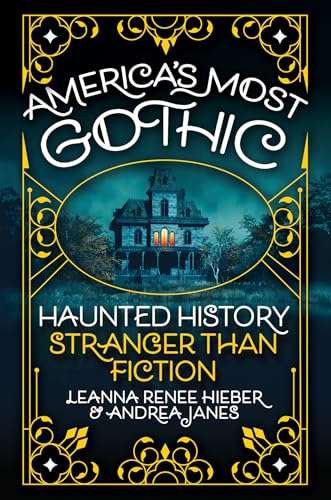
Hello, dear readers! We’ve officially entered that time of year where it’s chilly in the morning but sweltering in the afternoon, at least over here in Maryland. So what better time to check out other mystifying North American scenarios such as those brought to us in Leanna Renee Hieber and Andrea Janes’ upcoming America’s Most Gothic!

Subtitled Haunted History Stranger Than Fiction, this nonfiction title explores some of the most hauntingly Gothic episodes of American history. And I do mean literally haunting, as ghosts abound in these folk tales and legends that all share the hallmarks of creepy Gothic fiction but are all very much rooted in real lives and tragedies.

Included here is the case of teenager Mercy Brown: was she a victim of Rhode Island’s vampire hysteria of the 1890s, or a predator? “Mad” Lucy Ludwell was an eighteenth century socialite who fell on hard times, but none so hard as her internment in the insane asylum where she died. Her ghost continues to haunt the Virginia estate that should have been her final home. The spirit of Helen Peabody still watches over the women’s college, now part of Ohio’s Miami University, where she was once a president who strenuously opposed coeduction. Meanwhile, the spirits of the many workers who died while building the Hoosac Tunnel aren’t the only ones haunting it till this very day. Further north and further back in time, French noblewoman Marguerite de la Rocque was condemned for “sexual crimes” and exiled to Canada’s phantasmic Isle of Demons, in a shocking story of death and, against all odds, survival.

Rich with little-known episodes of history that still reverberate with the flavor of Gothic literature, this collection is a can’t miss for fans of spooky Americana!

Continue reading

Permanent link to this article: https://www.thefrumiousconsortium.net/2025/09/26/tantalizing-tales-september-2025-part-four/

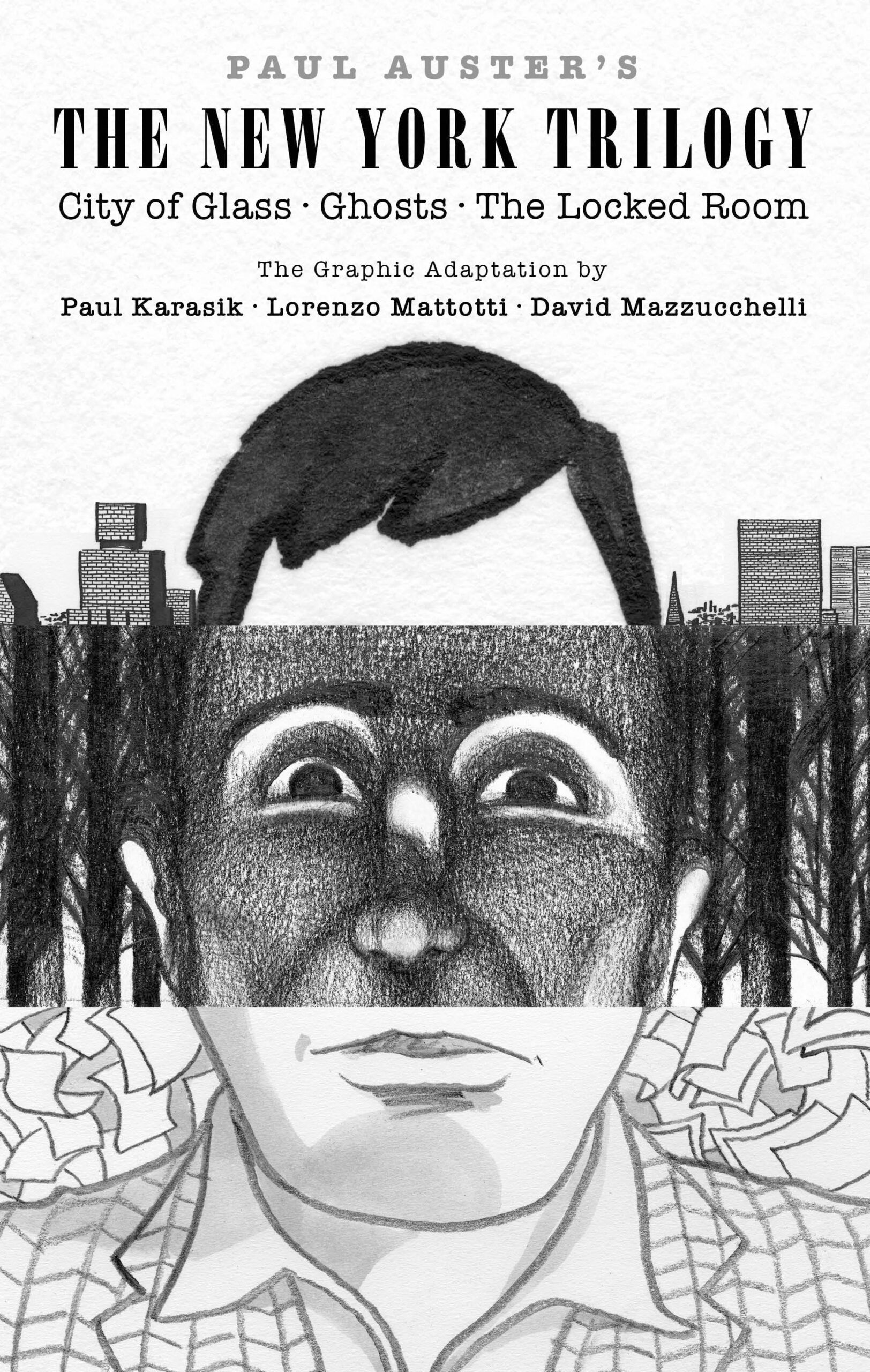
Paul Auster’s The New York Trilogy by Paul Karasik, Lorenzo Mattotti & David Mazzucchelli

Containing graphic adaptations of City of Glass, Ghosts and The Locked Room.

When I was in my 20s, I dated a guy who loved Haruki Murakami and Paul Auster. Those weren’t the reasons I dumped him, but they should have been signs. And it’s not like I didn’t try my darnedest either! I did get some enjoyment out of the Murakami I read, but bounced right off of Paul Auster’s pretentious ass. And you know what, pretentious isn’t the worst thing in the world. Trouble is, Mr Auster’s fiction was guilty of a far greater crime, IMO: being clinically boring. With so many books and so little time, I was pretty sure I wasn’t missing out by skipping any more of his work after City of Glass.

Smash cut to the present, where I’m contemplating a graphic novel version of the three books in Paul Auster’s The New York trilogy. I’d recently read and deeply enjoyed Manu Larcenet’s graphic novel adaptation of a book I loathed, Cormac McCarthy’s The Road. Could the acclaimed trio of illustrators here do the same for my opinion of Mr Auster’s works?

Continue reading

Permanent link to this article: https://www.thefrumiousconsortium.net/2025/09/25/paul-austers-the-new-york-trilogy-by-paul-karasik-lorenzo-mattotti-david-mazzucchelli/

Spotlight On Ariana Grande & Spotlight On Cynthia Erivo by Elizabeth Dennis, Hunter M Green & Ruth Burrows

or some (honestly quite excellent) combination of the three.

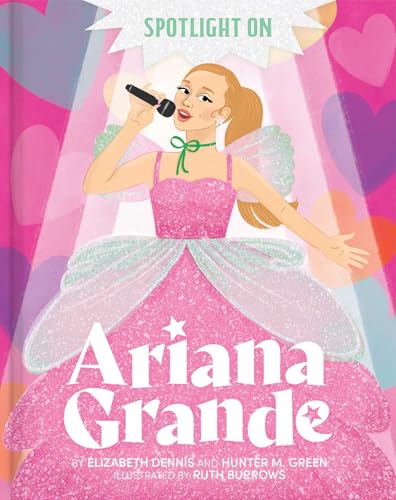
Listen, I read a lot of gossip and entertainment magazines. It’s a running joke in my trivia circles that I get the vast majority of my news from Us Weekly and Variety. So, as an adult, I am tamping down all the salacious details I know of both Cynthia Erivo and Ariana Grande’s personal lives to check out these Wicked movie franchise tie-in picture books for kids.

And honestly? They’re as delightful and charming as both actresses can be, and showcase them at their best, in exactly the way that the movies inspire viewers to be their best, too.

It starts with the sparkly covers, where each entertainer’s outfit glitters with an eye-catching combination of pink, green and their gradients. Ruth Burrows’ illustrations throughout recognizably evoke each woman while placing her in scenes that feel, if not outright familiar, then entirely rooted in reality. I loved both the connecting color schemes, as well as the way that the thematic hearts for Ariana and stars for Cynthia make cameos in the other’s book.

Continue reading

Permanent link to this article: https://www.thefrumiousconsortium.net/2025/09/24/spotlight-on-ariana-grande-spotlight-on-cynthia-erivo-by-elizabeth-dennis-hunter-m-green-ruth-burrows/

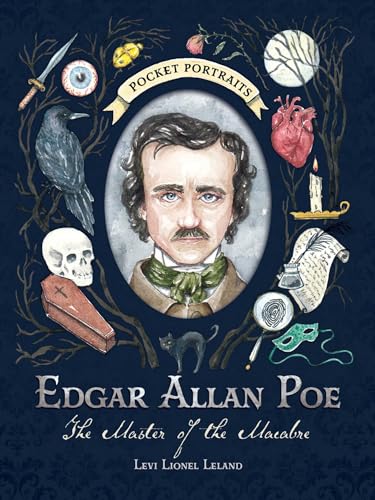
Edgar Allan Poe: The Master Of The Macabre by Levi Lionel Leland

Hunh, I think Edgar Allan Poe might be the one writer — if not one person outright — of whom I’ve read the most biographies.

And certainly, what a wealth of material and mystery there is surrounding one of the most famous writers to ever live! From a life marked with more than its fair share of drama and scandal, to a death people still can’t quite figure out, Poe has been talked about almost incessantly since the day he was born. His genius and creativity, however, left a legacy that still resonates today.

Levi Lionel Leland takes on the great man in this Pocket Portrait biography, that serves as an excellent, digestible introduction to the Master of the Macabre and, coincidentally, the Father of the Detective Story (the awards handed out by the Mystery Writers of America are named after him for a reason!) Each chapter is brief and punctuated with a fascinating bit of trivia. Excerpts of Poe’s work also dot the text, often as they’re referenced and usually around the point of their creation. There’s a useful index included, as well as a list of suggested Further Reading towards the end.

Mr Leland’s accounting of Poe is highly readable, setting down all the facts of his life and legacy, acknowledging all the controversies, and relating the inspirations behind Poe’s prolific output. While clearly sympathetic to his subject, he doesn’t spend an excessive amount of time attempting to excuse him. Perhaps this was why I realized, while reading this biography, that Poe was likely an insufferable person to be around.

Continue reading

Permanent link to this article: https://www.thefrumiousconsortium.net/2025/09/23/edgar-allan-poe-the-master-of-the-macabre-by-levi-lionel-leland/

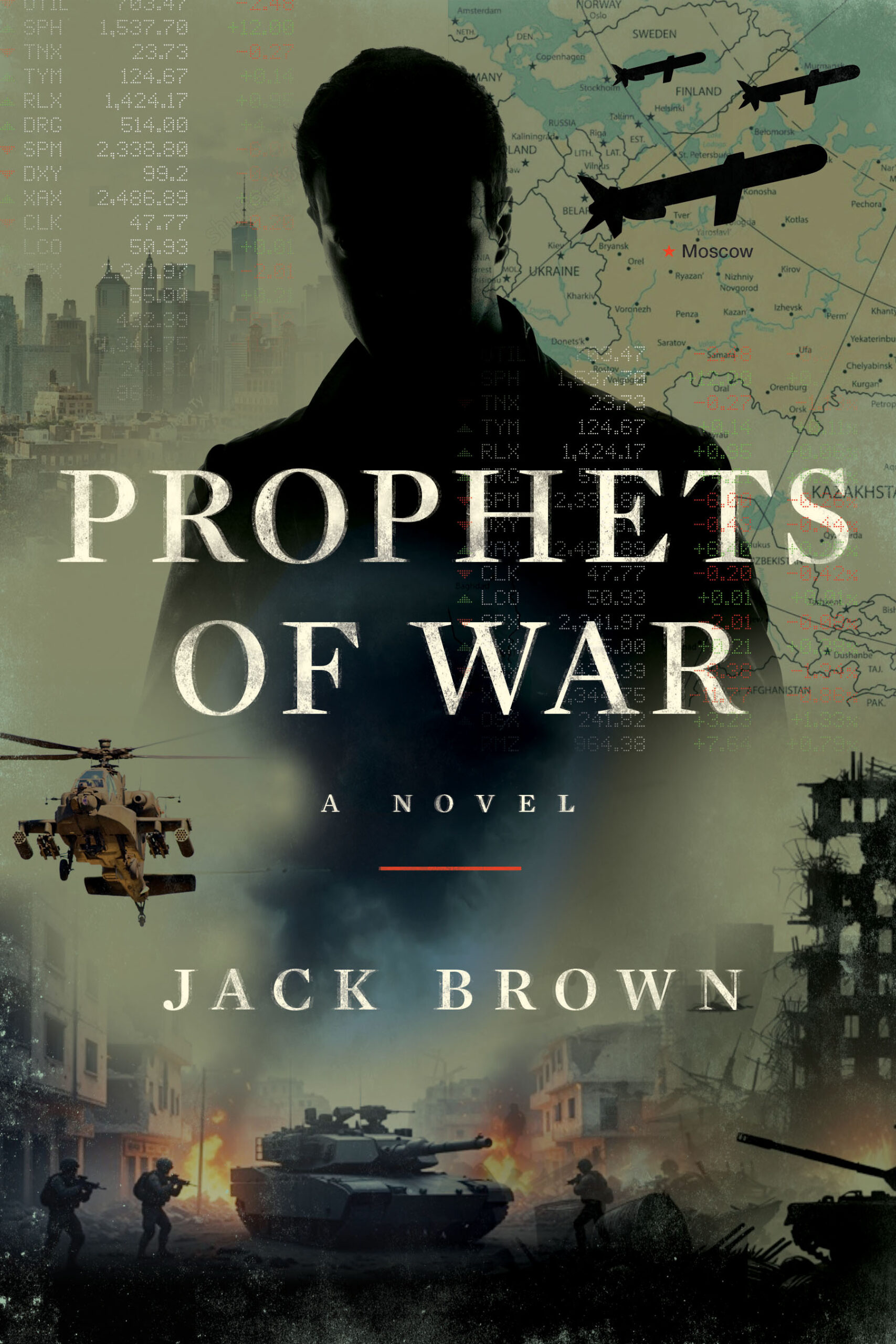
Prophets Of War by Jack Brown (EXCERPT)

In a world of increasing geopolitical cynicism, fueled by the atrocities of the military-industrial complex, a debut geopolitical novel asks: what if war wasn’t a tragedy, but a business model?

That’s the question that author Jack Brown posits in his high-stakes thriller Prophets of War, as he explores the intersection of ambition, ideology, war and capital. When Alex Morgan*, a rising star in wealth management, stumbles onto a series of cryptic financial clues, he doesn’t just uncover corruption. He unmasks a global conspiracy. For behind the headlines of the war in Ukraine lies something far more chilling: a private empire of shell companies, black-market trades and political operatives who are turning global conflict into personal profit.

The deeper Alex digs, the more terrifying the truth becomes. His own father may be at the center of the scheme. His mentors may be funding both sides of the battlefield. And the woman he trusts the most might be the key to it all — or may represent the final betrayal.

From Caribbean tax havens to Wall Street boardrooms to shadowy Zoom calls between oligarchs and ex-presidents, Prophets of War is a pulse-pounding political thriller that tears into the machinery of modern power. Inspired by real systems, real tactics and real moral failures, it asks a question no one wants answered: what if the next world war is already on the balance sheet?

Read on for an illuminating look at our protagonist, on the cusp of having his entire world turned upside down!

Continue reading

Permanent link to this article: https://www.thefrumiousconsortium.net/2025/09/22/prophets-of-war-by-jack-brown-excerpt/

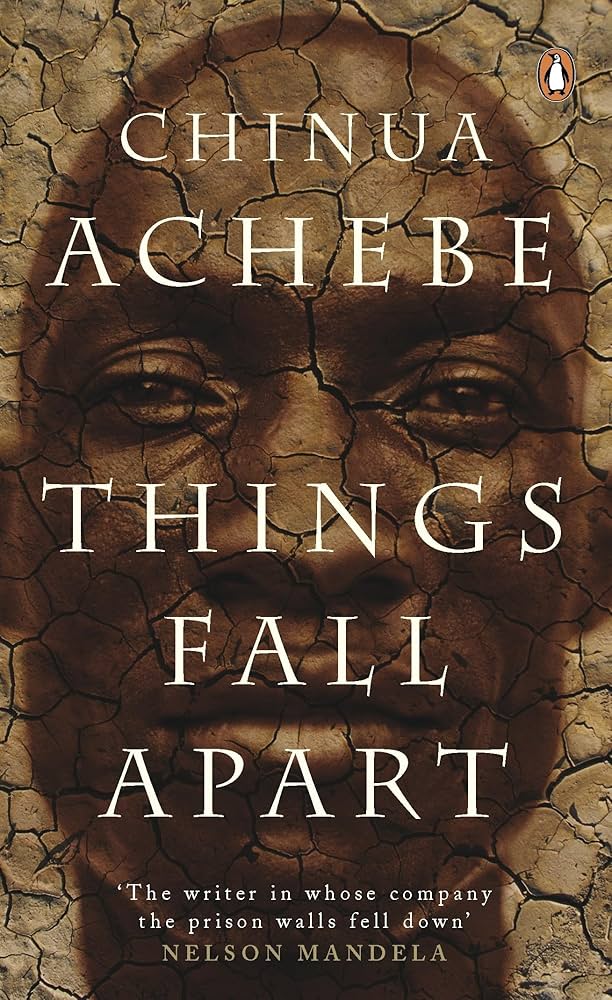
Things Fall Apart by Chinua Achebe

Things Fall Apart grabbed me from its very first page, even though nearly 70 years have passed since its first publication. It had fallen into the category of reputed classics that I have never quite gotten around to, what with there being a lot of books both old and new, and if not for the Süddeutsche Zeitung and a snafu at my local bookstore I might have carried on with not getting around to it. What a loss that would have been! Here’s how it happened: One of the Süddeutsche‘s sets is called Metropolen, metropolises, and it’s twenty books about twenty major cities around the world. In my rush to get the set a couple of years back, I accidentally bought the German translations of books that were originally written in English. (They’re pretty editions! I don’t regret owning them, but I feel silly reading an English-language book in German.) The Achebe book that appears on the Metropolen list is No Longer at Ease, and the local bookstore’s web site said that they had a copy on hand. When I went to buy it, though, neither I nor the clerks could find the physical object. Rather than concede entirely, and recognizing that No Longer at Ease is the second book in what came to be known as Achebe’s African Trilogy, I bought the first one, Things Fall Apart.

Things Fall Apart by Chinua Achebe

Achebe begins the novel in a timeless, almost mythological register:

Okonkwo was well known throughout the nine villages and even beyond. His fame rested on solid personal achievements. As a young man of eighteen he had brought honour to his village by throwing Amalinze the Cat. Amalinze was the great wrestler who for seven years was unbeaten from Umuofia to Mbaino. He was called the Cat because his back would never touch the ground. It was this man that Okonkwo threw in a fight which the old men agreed was one of the fiercest since the founder of their town engaged a spirit of the wild for seven days and seven nights. …
That was many years ago, twenty years or more, and during this time Okonkwo’s fame had grown like a bushfire in the harmattan. He was tall and huge, and his bushy eyebrows and wide nose gave him a very severe look. … When he walked, his heels hardly touched the ground and he seemed to walk on springs, as if he was going to pounce on somebody. And he did pounce on people quite often. He had a slight stammer and whenever he was angry and could not get his words out quickly enough, he would use his fists. He had no patience with unsuccessful men. He had had no patience with his father. (pp. 3–4)

Continue reading

Permanent link to this article: https://www.thefrumiousconsortium.net/2025/09/21/things-fall-apart-by-chinua-achebe/

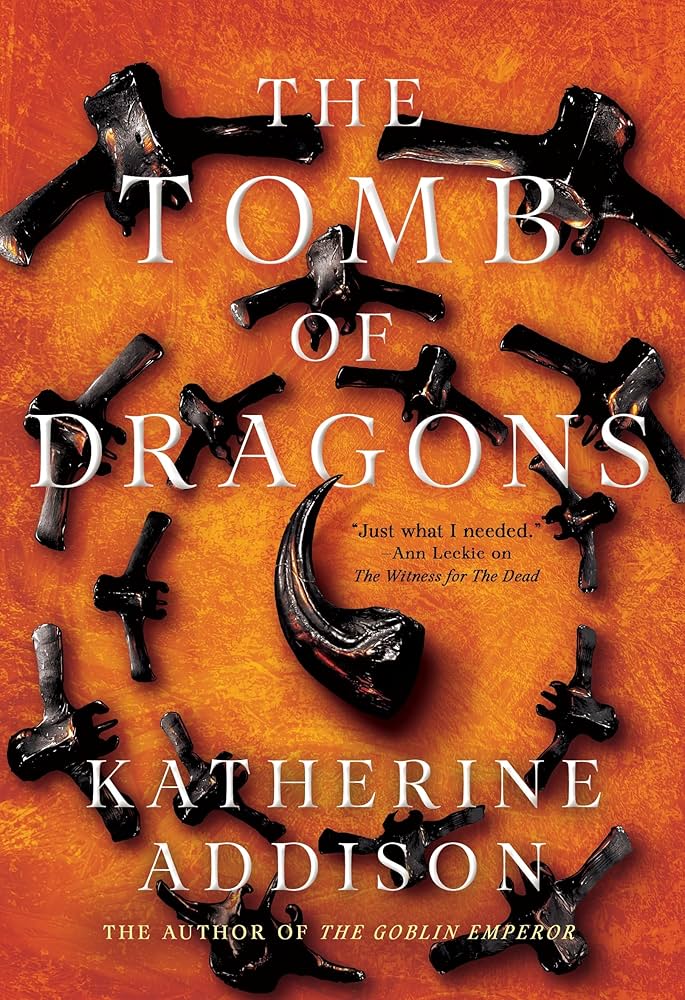
The Tomb of Dragons by Katherine Addison

The Tomb of Dragons is that rare third book of a trilogy that makes me view the first two books very differently. All three of the “Cemeteries of Amalo” share a world and time with Addison’s classic, The Goblin Emperor. The first-person narrator of the trilogy is Thara Celehar, a cleric of Ulis and a Witness for the Dead, someone who can reach the spirits of the departing newly dead and communicate with them in a limited fashion. Such Witnesses give true testimony about the thoughts or wishes of the dead so as to answer questions about their death, or to resolve other disputes. Their abilities also enable them to do things like still undead ghouls. In both The Witness for the Dead and The Grief of Stones Celehar has put his supernatural skills in the service of the people around him, and the communities he is a part of.

The Tomb of Dragons by Katherine Addison

His last act of service, though, cost him dearly. He can no longer witness, although this is not widely known. In The Grief of Stones, he had taken on an apprentice, Velhiro Tomasaran. Now she must assume the full office much sooner than anyone had anticipated. She came to be a cleric later in life, and she is not what most people of Amalo expect. Celehar is unstinting in support, and at least at the beginning of her service he may believe in Velhiro more than she herself does. A short novel from her perspective would be very interesting, and that’s true of many of the other characters who pass through the pages of The Tomb of Dragons. Celehar’s friend from the opera Iäna Pel-Thenhior would be an urbane counterpart to the dedicated but also self-doubting Celehar; a book from his point of view would show a lively and creative city, and his work balancing art with the cheerful mercenary approach necessary to keep an opera company in business. Like the end of The Goblin Emperor, the end of Celehar’s trilogy leaves open how many more stories Addison could tell.

Continue reading

Permanent link to this article: https://www.thefrumiousconsortium.net/2025/09/20/the-tomb-of-dragons-by-katherine-addison/