With a tagline like “Immortal. Mercenary. Kind of a tool” this is the kind of book that is usually pure catnip to me. Tho I have to admit that by the fourth or fifth issue opener of “My name is Simon. Simon Pure. Though I’m anything BUT”, I was ready to cheerfully strangle someone, character, creator or otherwise.
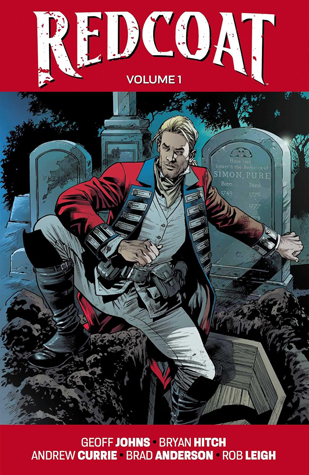 And, y’know, if I’d read this title in issue form, there’s a very good chance I would have bounced right off it somewhere around Chapter 4. But I’m glad I persevered with the trade paperback, because it was ultimately the kind of warmhearted, thoughtful work I generally associate with Geoff Johns and Bryan Hitch, even if I did feel that the beginning was edgelordier than I prefer. I don’t think that the me of twenty years ago would even have noticed or cared, but the premise of the Founding Fathers of the USA being a cabal of immortals with supernatural powers — and then the protagonist of this book being a Redcoat who shot Washington, crashed an immortality ceremony, and over a century later has to team up with young Einstein to save America… ugggghhhffff. Can’t we just let people be human? Do we really need to mythologize historical figures who have already accomplished great things with the powers of their heads and hands and hearts alone? George fucking Washington isn’t heroic enough for leading the ragtag Continental Army to victory almost entirely through sheer force of will: he has to have superpowers, too?!
And yes, yes, I know old George wasn’t perfect, but that’s exactly my point! My main beef with this (admittedly very human) desire to turn men — and have you noticed, it’s almost always men? — into gods is that it absolves “regular” people of trying to do good, too. But, and very crucially, Chapter 7 of Redcoat Vol 1 neatly turns that desire inside out, in an issue that absolutely made the rest of the book worth reading for me. I presume this was Mr Johns’ sneaky way of delivering his warmhearted, thoughtful message to people who really need to hear it, after dabbling in a bunch of ridiculous theories beloved by dumb people who think that they’re smarter than everyone else in order to suck them into the book in the first place.



 Al Singh
 Doug Merrill
 Doreen Sheridan
 Emily Lauer
 John Pitzel
 Lars N. Goldschlager
 Laura Eilers
 Professor X
 Robert Maedgen
 Sylvere Ap Leanan
 The Shire