I’m becoming a curmudgeon as I age, but I really do wish this book had explicitly stated at the outset that it’s set in New Orleans. I no longer have time to read blurbs or back matter, so when I realized partway through that this was set in historical America and not fantasy Europe, all I could think was how unnecessarily jarring that recalibration of thought had been. I mean, if you’re going to open the book with mention of actual historical events, why not mention where and when they took place, instead of assuming that the reader automatically knows where you’re setting your story? I don’t consider myself a particularly unknowledgeable person, but I don’t see the harm in telling readers right from the get-go exactly where you’re placing the events of your historical horror graphic novel.
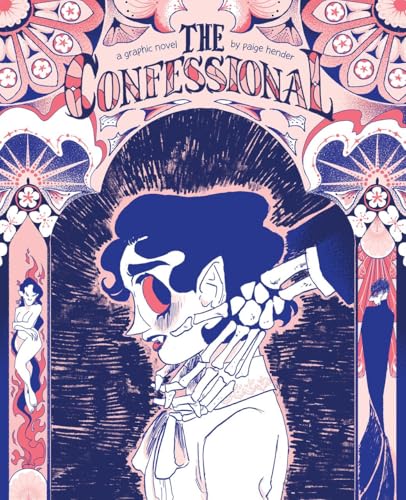 My grumpiness aside, The Confessional is an absorbing read, telling the tale of young Cora Velasquez and the coven of vampires to which she belongs. They all live together in a house of ill-repute down in 1920s New Orleans, with the other vampires feeding on patrons without killing them — death being bad for repeat business, after all.
Cora, however, is terrible at being a vampire. She doesn’t know how to feed without killing, and is suffering an existential crisis at the idea that being turned means that she’s lost her immortal soul. She turns to the Catholic church in her vulnerability, developing a crush on handsome Father Orville in the process. He is not immune to her charms either.
One day, she finally confesses to him what she really is while in the sanctity of the confessional. Ashamed, she flees immediately after, so is shocked when he comes looking for her. He has a request, one she’s only too willing to oblige. As their shared secrets tie them more firmly together, will their newfound partnership be their mutual salvation, or will naught but destruction come in their wake?






 Al Singh
 Doug Merrill
 Doreen Sheridan
 Emily Lauer
 John Pitzel
 Lars N. Goldschlager
 Laura Eilers
 Professor X
 Robert Maedgen
 Sylvere Ap Leanan
 The Shire