I’ve read F Scott Fitzgerald’s The Great Gatsby twice, and each time I’ve been baffled by the acclaim*. Much like the critics of its time, I think the book is fine, but not much more than that. The trouble is that Gatsby is an idiot, Nick not much better, and Tom and Daisy are just awful. The only character I’ve ever cared about was Jordan Baker, which is honestly the main reason I agreed to read and review this magical, queer, Asian adaptation of it.
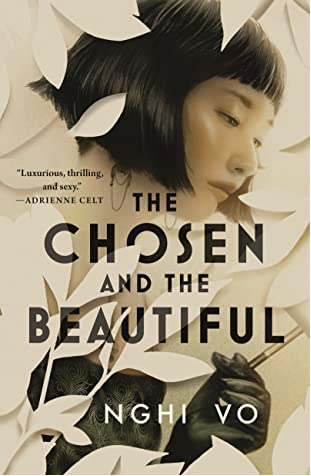 Tho that isn’t entirely accurate: I picked it up because I really dig Nghi Vo’s writing, and loved the idea of her spinning a fresh view of the classic story by centering the only character I found remotely bearable in it. In this adaptation, Jordan is the adopted Vietnamese daughter of the moneyed, blue-blooded Baker family. She moved away from the Middle West to live with her suffragette Aunt Justine in New York City, and spends most of her time on the town when not playing in golf tournaments. Through her old friend Daisy Buchanan, she meets Nick Carraway, whom she has to rescue from one of Jay Gatsby’s infamous parties. They get involved but everything ends poorly for everyone.
Plot-wise, the book is faithful to its source material, only adding in magic as a fillip that does more for Jordan’s story than anyone else’s. There are several interesting plot twists, mostly to do with the paper-cutting magic Jordan inherently knows, and lots of interesting notes on what it’s like to be Asian in a primarily white environment. That last is probably The Chosen And The Beautiful’s greatest strength, as Jordan navigates the casually racist high society of Jazz Age America. She’s both a part of and separate from it, both clinging to and repulsed by a world that’s all she’s ever known, tho she strongly suspects there’s much more outside it. This struggle to reconcile the dominant milieu with her sense of self is certainly far more compelling than Gatsby’s, in large part due to the fact that she’s not basing her entire life’s purpose on her idea of another person. As an Asian person who’s often found herself the minority participant in many situations, whether it be for reasons of race or class or wealth, I found Jordan’s wry observations to be extremely relatable.
 Al Singh
 Doug Merrill
 Doreen Sheridan
 Emily Lauer
 John Pitzel
 Lars N. Goldschlager
 Laura Eilers
 Professor X
 Robert Maedgen
 Sylvere Ap Leanan
 The Shire