Growing up, I never thought I’d be the mother to three boys. I always imagined having daughters whom I would try to guide through life with grace and thoughtfulness based on my own experiences. While my sons are a delight, there are certain subjects I feel less than perfectly equipped to advise them on. Unsurprisingly, penises is one of those.
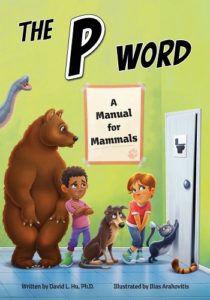 So I was super glad to receive a copy of this book and see how the experts deal with the subject! David Hu is a father and a professor of mechanical engineering and biology down at the Georgia Institute of Technology, who was moved to write this kids’ book because of conversations he had about bodies and their maintenance with his own son. The P Word goes over what a penis is, its biological functions in the body’s elimination and reproduction systems, and how to keep it clean and healthy. It’s written in an accessible, matter-of-fact fashion that is scientifically accurate while still being engaging for young readers. Heck, even this older reader learned new things, especially in the comparative biology sections. That said, I liked the parts about keeping the penis clean and safe best, with its considerate advice on urination, hygiene and sports protection. I also deeply appreciated the paragraphs on consent and talking to trusted adults about any concerns. Mr Hu keeps his text shame-free and health (physical, mental and emotional) focused, making this the perfect book to hand to your young penis-haver.
I actually gave this to my twelve year-old, who very emphatically did not want to read this with me but was happy to go over it on his own. This is the same kid who selected a book about periods to read one time, again in privacy, tho he did ask me relevant questions afterwards. And I get it: privacy is important! I’m just happy that I’m able to answer his questions about bodies as a parent, and that The P Word has given us a really good framework for having frank conversations regarding this specific organ.
Continue reading
Permanent link to this article: https://www.thefrumiousconsortium.net/2023/07/11/the-p-word-a-manual-for-mammals-by-david-hu-ilias-arahovitis-giveaway/
Did I look at the fact that Doug and I had just featured five books in a row by men before deliberately picking up this graphic novel created by a woman to read and review? Darn right I did. Bonus for it coming in my recent shipment of sale books from Penn State University Press. Thank you, feminism, for forcing me to read a book I’d recently purchased in a timely manner.
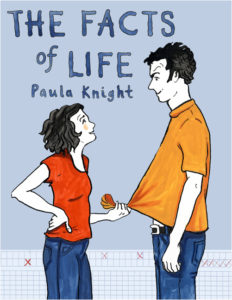 The Facts Of Life is an intensely personal, deeply moving story of being a woman growing up and maturing in the back half of the 20th century and the beginning of the 21st, and all the pressures that society placed in those years on women to get married and have kids. Polly, as Paula Knight names her stand-in, is born in England’s Northeast in 1969, a time of rapidly changing social mores. Even though contraceptives on demand are giving women and families freedom to control their reproduction, it’s widely accepted that woman are still going to start families and have children when the time is right.
Polly has always known this, even if the misinformation she picks up as a kid — not helped by her parents’ generationally-typical prudishness regarding sex education — puts her well off sex and reproduction. While sex eventually becomes a regular part of her life once she’s an adult, she’s ambivalent about reproduction. It isn’t that she doesn’t want to have kids. But between her diagnosis with Chronic Fatigue Syndrome, her chosen career as an illustrator and unlucky timing with her long-term relationships, she doesn’t actually feel that she’s in a good place to have and raise a child till she’s well into her 30s.
At first, everything seems fine. Her health is good, her finances stable and her partner, after a bout of ambivalence of his own, supportive. To their joy, they get pregnant fairly quickly. But then Polly starts bleeding, and they soon discover that she’s having a miscarriage.
Continue reading
Permanent link to this article: https://www.thefrumiousconsortium.net/2023/07/06/the-facts-of-life-by-paula-knight/
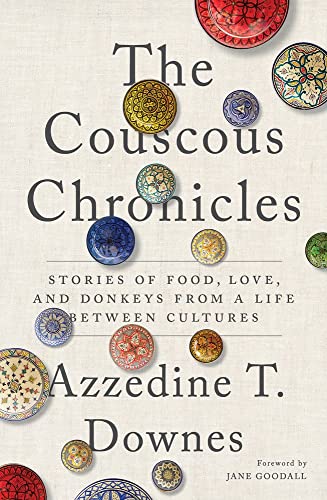
Stories Of Food, Love, And Donkeys From A Life Between Cultures. With a foreword by Dr Jane Goodall.
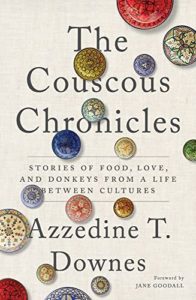 I am so glad Azzedine T Downes’ friends persuaded him to write a book about his travels, because this memoir is amazing! Funny and thoughtful, it’s a wonderful debut and hopefully the first of many more fascinating books about his life and philosophies.
The Couscous Chronicles covers Mr Downes’ adult life from when he was a Peace Corps officer suspected of being a spy for the CIA in Morocco, roughly to the end of his tenure with the agency. As a young teacher in 1980s Morocco, his blue eyes and prematurely greying hair caused much suspicion, as most of the people he met had a hard time believing that he was Muslim, American and decently proficient in Arabic. Soon enough, he was attracting the attention of many locals eager to betroth him, either to themselves or to their available relatives. While he was definitely amenable to having a marriage arranged by Islamic tradition, there were some catches that he was definitely uninterested in, leading him to eventually flee Morocco for the relative safety of post-graduate studies in Harvard. His career would eventually take him back to the Middle East as a newly married man. After his posting in Yemen, he was sent to Eastern Europe with his young family, before becoming the Peace Corps’ chief of operations in Jerusalem.
Continue reading
Permanent link to this article: https://www.thefrumiousconsortium.net/2023/07/03/the-couscous-chronicles-by-azzedine-t-downes/
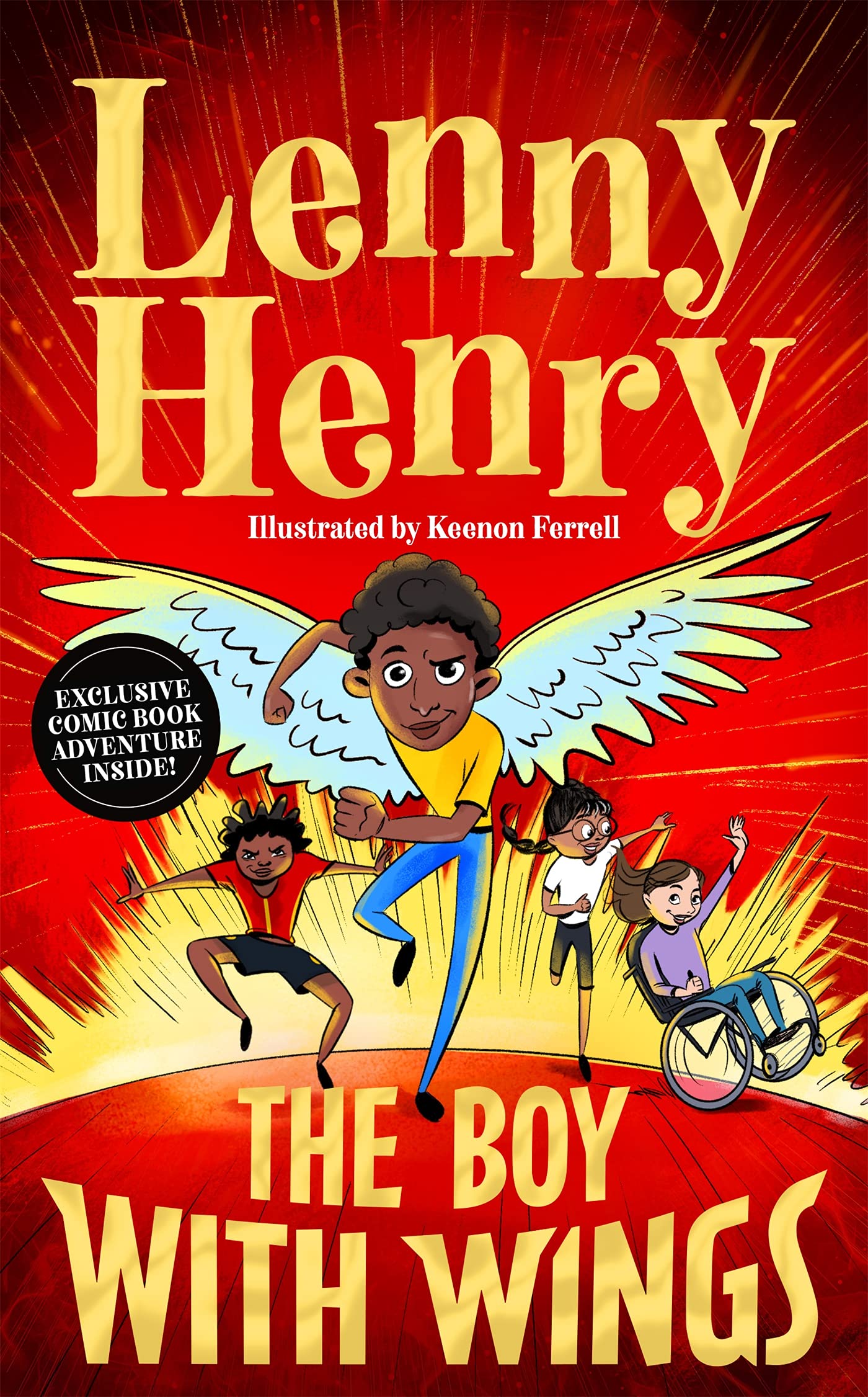
with illustrations by Keenon Ferrell and Mark Buckingham (yes, THAT Mark Buckingham!)
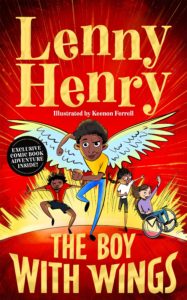 Tunde has always felt a little out of place in his primarily white school district. While his Black adoptive parents Ron and Ruth have been nothing but loving and kind, it’s hard being the beaky-nosed Black nerd who’s an easy butt of jokes, especially from school bully Quinn. It doesn’t help that Ron and Ruth have barred him from sports, and would stop him from doing any physical activity more strenuous than walking if they could possibly help it. They claim that he doesn’t have the physique for it, and since they’re both scientists at the nearby Facility, he doesn’t have a lot of basis from which to argue back.
At least he has friends! Jiah is even nerdier than he is, and Kylie is often spouting advice cribbed from her relationship counselor mother. While Tunde loves them both, he’s really relieved when he also makes friends with new kid Nev. It’s a little embarrassing for a twelve-year old boy to only have friends who are girls, so when he hits it off with cool, athletic Nev, it feels like he’s finally finding his people.
A disastrous birthday party, however, persuades him that he needs to spread his metaphorical wings, especially when it comes to standing up to Quinn. At first, this only means taking part in his school’s Sports Day. His stellar performance there, however, soon has him joining Nev, Quinn and cool new girl Dembe on the school soccer team. Despite Quinn’s bullying, everything seems to be going great… until something unimaginable happens at their very first competitive match.
Continue reading
Permanent link to this article: https://www.thefrumiousconsortium.net/2023/06/28/the-boy-with-wings-by-lenny-henry/
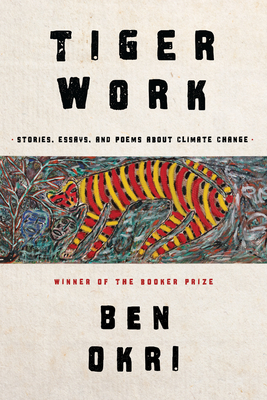
Okay, if you’re a Ben Okri fan, then this is likely going to be your jam. I hadn’t read any of his award-winning work before this collection, so I absolutely jumped at the chance to read the latest publication of the first Black, and at the time youngest, winner of the Booker Prize. And it’s about climate change, too? Sign me up!
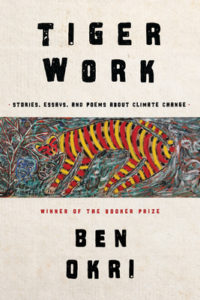 The first indication that maybe I wasn’t going to love this book as much as I wanted to came fairly early on, when the author states bluntly that he isn’t going to provide any solutions for readers. Then what, I wondered, was the point of this book? Or perhaps more cogently: who is the intended audience? For people like myself, committed to climate justice and looking for meaningful ways to contribute to the movement, this collection serves, perhaps, as reassurance that we are not alone. Through poems, parables and non-fiction, Mr Okri emphasizes the importance of ending our reliance on fossil fuels and pursuing renewable energy, even as he laments the high rates at which humanity currently consumes the resources of the planet. But that’s all preaching to the choir, and just another piece in the sea of climate change literature that environmentalists already consider daily.
Perhaps, I thought, this book is for people who’ve never really thought about the environment, or people with a reactionary disdain for us tree-huggers. After all, if science and facts and the evidence of their eyes and a sense of civic responsibility can’t persuade these people, then perhaps heavy-handed art from a famous person can. I doubt it will make any in-roads with hard-core denialists, but the attempt to reach out and affect the hearts and minds of those who can be brought to reason is both valiant and worthwhile.
Continue reading
Permanent link to this article: https://www.thefrumiousconsortium.net/2023/06/27/tiger-work-poems-stories-and-essays-about-climate-change-by-ben-okri/
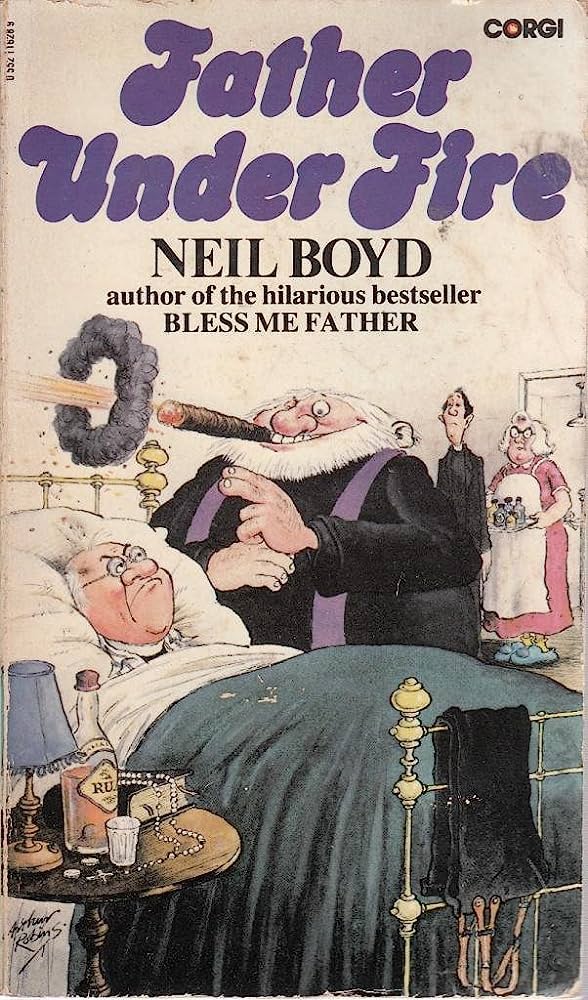
The fourth in Neil Boyd‘s Bless Me, Father series finds the irascible Father Duddleswell laid up with lumbago just as the priest with whom Duddleswell began his career settles in for an extended visit. Father Abe — most definitely not Father Abraham, with seven sons — is getting on in years, but still sly and not above using his age to get what he wants. Boyd does not directly ask how many times Father Abe has rolled out the “this could be my last chance to …” argument, but he shows that it is often enough that he’s having several last chances at things.

The pillars of St Jude’s populate pages of Father Under Fire just as faithfully as the other books of the series: Father Neil, the young Catholic priest nearing the end of his first full year out of seminary; Father Charles Duddleswell, longstanding priest of the parish, a stickler for rules unless they get in the way of the greater good; Mrs Pring, the housekeeper who appears to get on Duddleswell’s last nerve but is his steadiest supporter; Billy Buzzle, bookmaking neighbor with a keen eye for profitable joint ventures; Dr Donal Daley, boon companion and prodigious drinker of whiskey.
Continue reading
Permanent link to this article: https://www.thefrumiousconsortium.net/2023/06/26/father-under-fire-by-neil-boyd/
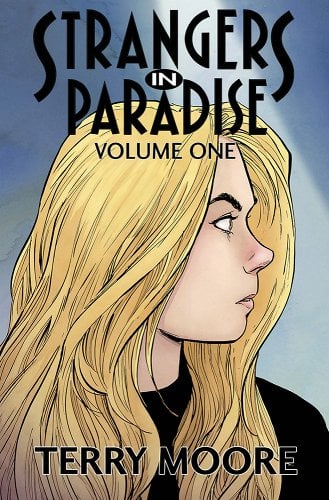
It’s been almost thirty years since I first saw this title and wanted to read it. I’m so glad I finally got the chance, even if it has been decades since it first came out!
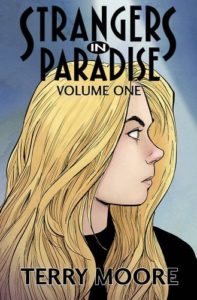 But mixed in with the glee of long anticipation is a note of dissonance. Even while I was reading this, I was fairly certain that I would have enjoyed it way, way more had I been reading it closer to the turn of the century. And this isn’t just because I’ve learned how to be more comfortable in my own skin since then. So many ideas of acceptable behavior change with the times, and so often for the better! Twenty years ago, the thought of a throuple would have seemed weird and seedy to me, but nowadays I can only think that Francine, Katchoo and David should really be a polyamorous unit, instead of being uptight and angsty over their feelings for one another.
Not, ofc, that they don’t have plenty of reason to be angsty outside of their relationship drama. Francine is probably the most normal of the bunch, and even she has a lot of codependency issues. As the graphic novel (and series) begins, she’s fending off the sexual advances of her long-term boyfriend Freddy Femur. She believes that sex has always been a turning point in her relationships with men, so wants to foster a deeper connection with Freddy before introducing sex into their relationship too.
Her best friend and roommate Katchoo (short for Katina Choovanski) hates Freddie, and not just because she’s in love with Francine herself. Into this already complicated relationship steps art student David. His persistent pursuit of Katchoo — despite her telling him to piss off as she’s uninterested in men — is meant to come across as romantic. Despite their differences, and through the trials that beset them, the three form a supportive bond that is not without its jealousies.
Continue reading
Permanent link to this article: https://www.thefrumiousconsortium.net/2023/06/23/strangers-in-paradise-vol-i-by-terry-moore/
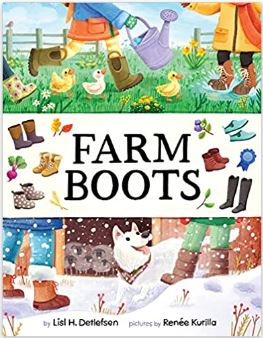
I pretty much live in comfy, faux-fur-lined, water-resistant boots from the first really cold night of autumn till spring warms up enough that I can venture out in sneakers. So I was really excited to pick up this look at all the ways boots are worn in one of their most practical settings: on a working farm.
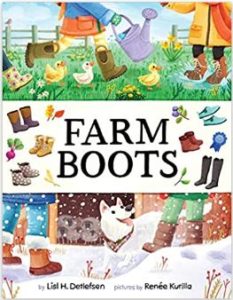 Written in verse throughout, this children’s book talks about the many kinds of boots you’d use for different agricultural tasks, from tending crops to livestock, following the turn of the year. It starts in the spring, goes through all four seasons, then ends a year later by checking to see whether the kids in the book need new boots. There’s a nice glossary page on the different kinds of boots at the end, and the book itself features gorgeous end papers showcasing boots, produce and blue ribbons.
The text is cute and gets the point across in a way that isn’t too difficult for young readers to follow. As an older reader, I felt that some of the rhymes were forced, but kids probably wouldn’t notice or care. I did love how the book covered so many different aspects of farm life, from growing to showing to snowing. It was nice to see the kids at both work and play.
The art was also lovely, with so many people and scenes. The animals and the kids’ interactions with them were outright adorable: a personal favorite of mine was the panel showing a Black girl putting the horse out to pasture with a kiss before mucking out its stable. There’s so much diversity representation on display that it was a little weird to realize that there weren’t any East Asian people pictured. If I squinted, maybe the dad and son in one of the first panels were of East Asian descent in a mixed race family, but they could just as easily have been white. This felt like a really weird oversight in a book filled with Black and brown and white faces. There was even a girl with a hijab and another in a wheelchair, which made the exclusion stand out even more.
Continue reading
Permanent link to this article: https://www.thefrumiousconsortium.net/2023/06/22/farm-boots-by-lisl-h-detlefsen-renee-kurilla/
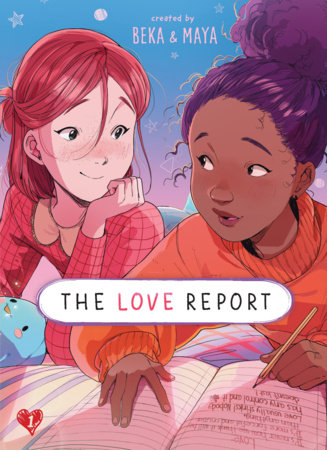
Secondary schoolgirls Grace and Lola are bffs, united by many things but, most recently, by an utter bafflement as to the meaning, if not outright point, of love. In an effort to figure it all out, they begin a project called The Love Report, filling out a notebook with observations of people in love at their school, and interviews with same whenever possible.
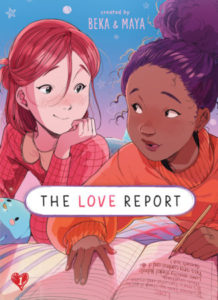 Each girl has her own reasons for wanting to know more about love. Grace has had plenty of little boyfriends that she meets outside of school, falling in and out of love, and moving on to the next with scarcely a thought for the boy she’s just broken up with. Lola, however, has had a huge crush on classmate Noah since seemingly forever, and doesn’t understand why he never talks to her any more.
As the girls set about investigating the relationships between the other kids at their school, they gain unexpected allies in Charlie, the girl who always knows the best gossip; Felicity Sunshine, the beautiful, aloof girl all the guys want to be with, and Adele, the Goth girl with a Reputation. Grace and Lola soon find their expectations entirely exploded as they learn not only the truth about relationships but also the truth about the girls who quickly become their friends, even as their own friendship begins to fray under the pressures of new love and the secrets they’ve been keeping from one another. Will the girls be able to find their way back to each other before love tears them apart for good?
Continue reading
Permanent link to this article: https://www.thefrumiousconsortium.net/2023/06/20/the-love-report-by-beka-maya/
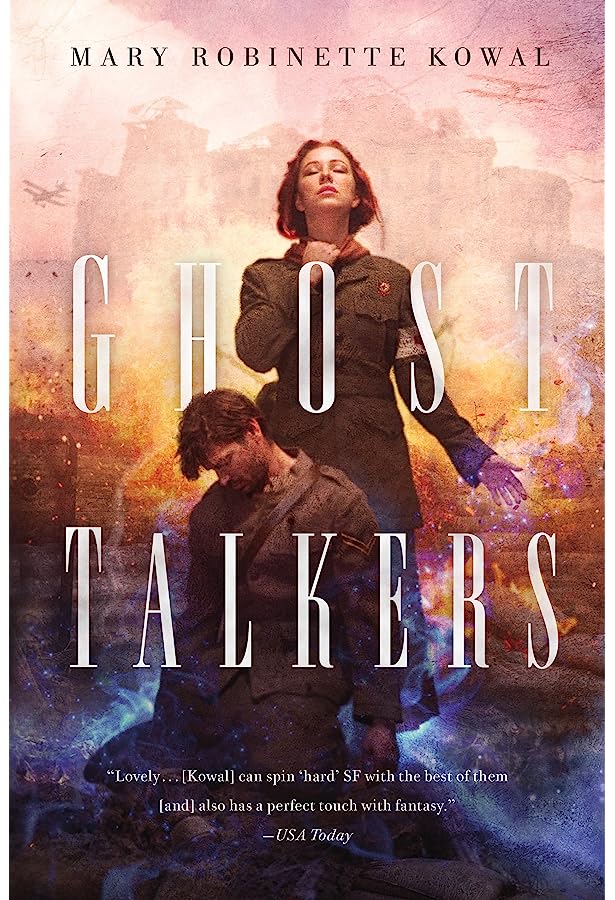
By mid-1916, British forces fighting in Europe have mastered the logistics of spiritualism well enough to gain occasional tactical advantages in the never-ending trench warfare of the Western Front. Men die; they report in to the Spirit Corps; the knowledge that they bought with their lives — a sniper’s location here, a hidden advance there, a flanking attempt somewhere else — goes back out to the field, in hopes that it arrives fast enough to make some sort of a difference in the unending slog of mud and blood. The mediums who take the reports give the dead soldiers something in return: comforting words that their sacrifice had meaning, and a chance to send a last message home.
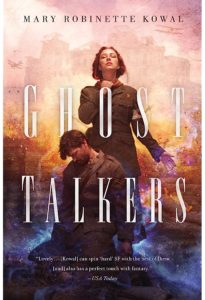
Kowal makes it visceral for readers. Here is how Ghost Talkers starts: “The Germans were flanking us at Delville Wood when I died.” The young man giving his report to Ginger Stuyvesant, a medium in the Spirit Corps, is proud of his training. Despite a fatal wound from an artillery shot, he has his comrades prop him up so he can see more, remembers to note the time, and manages to report back within minutes of his death.
In a warehouse in Le Havre, dozens of spirit circles, each led by two mediums, take in the reports of the dead and send that information to the commands and to the front. The British think the work of the Spirit Corps is important enough to have a multi-level deception in place to cover details of its operation. Harry Houdini’s and Arthur Conan Doyle’s debunking tours are meant to hide the truth that spiritualism is real, has been mastered on an industrial scale, and is playing a role in the British war effort that the high command considers vital. The soldiers are trained to think that they are posthumously reporting to London. The spiritualist operations in Le Havre take place under cover of the larger Spirit Corps that provides recuperating soldiers with a spot of tea and a bit of normalcy, something that also took place in the history outside of Ghost Walkers.
Continue reading
Permanent link to this article: https://www.thefrumiousconsortium.net/2023/06/19/ghost-talkers-by-mary-robinette-kowal/
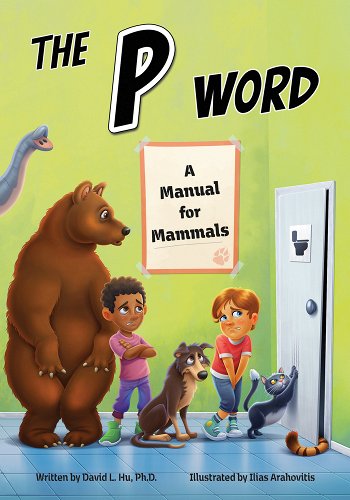 So I was super glad to receive a copy of this book and see how the experts deal with the subject! David Hu is a father and a professor of mechanical engineering and biology down at the Georgia Institute of Technology, who was moved to write this kids’ book because of conversations he had about bodies and their maintenance with his own son. The P Word goes over what a penis is, its biological functions in the body’s elimination and reproduction systems, and how to keep it clean and healthy. It’s written in an accessible, matter-of-fact fashion that is scientifically accurate while still being engaging for young readers. Heck, even this older reader learned new things, especially in the comparative biology sections. That said, I liked the parts about keeping the penis clean and safe best, with its considerate advice on urination, hygiene and sports protection. I also deeply appreciated the paragraphs on consent and talking to trusted adults about any concerns. Mr Hu keeps his text shame-free and health (physical, mental and emotional) focused, making this the perfect book to hand to your young penis-haver.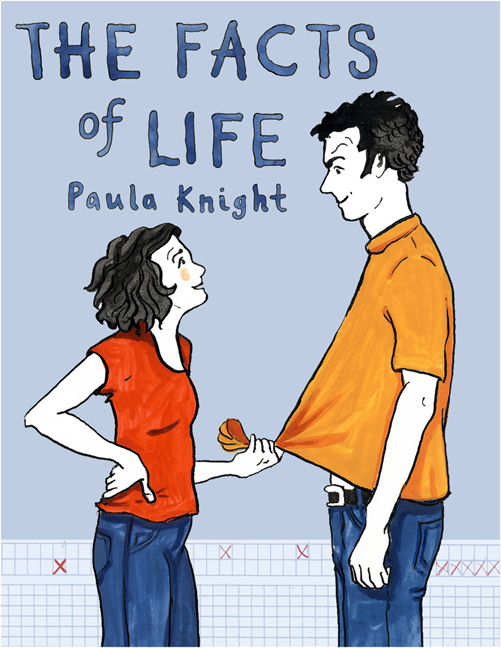
 Al Singh
 Doug Merrill
 Doreen Sheridan
 Emily Lauer
 John Pitzel
 Lars N. Goldschlager
 Laura Eilers
 Professor X
 Robert Maedgen
 Sylvere Ap Leanan
 The Shire