with, in my opinion, extremely important art continuity provided by colorist Len O’Grady. A transition between artists can feel really jarring, but Mr O’Grady did a spectacular job of keeping things consistent, such that I wouldn’t even have noticed a different artist on my first reading if I hadn’t already known that going in.
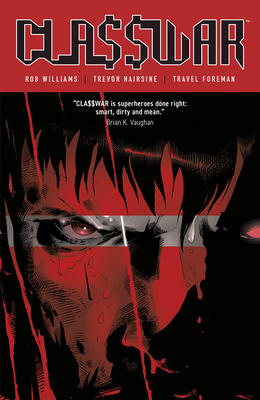 And while technically this is the first volume of Cla$$War, the rest has yet to be written. Will it ever be? Never say never, but I’m leaning towards no, given that the series first appeared in 2002, with the last three issues of six coming out a full two years after its debut.
That said, how do you top a book so sorrowfully prescient, that helped pave the way for not only monster cultural hits like The Boys but also demonstrated how the Internet would enable the world’s ongoing disillusionment with politics, particularly American? Sure this title seems like a natural bridge between relatively mainstream books that began to seriously question power in the real world, like Ultimate Avengers and The Authority (heck, even WildC.A.T.s), with more cynical explorations of how power is misused, a la The afore-mentioned Boys. More importantly it captures that turn of the 20th century era in American history when the public’s eyes were opened to the shocking overreach of our government. From the drug and illegal arms sales of the 80s, to the Wag The Dog expose of the 90s, onto Dubya’s copious missteps, this is a book that directs an unflinching eye at American politics in all its messiness and lies. It probably helps that this was written by a Welshman who had no illusions about this side of the Atlantic: it’s genuinely hard to think of any American in the immediate aftermath of 9/11 writing so honestly on these topics. It also probably helps that Britain has a much better history of skewering politics through comics than we do, as Alan Moore’s widely acclaimed V For Vendetta masterfully shows.

 Al Singh
 Doug Merrill
 Doreen Sheridan
 Emily Lauer
 John Pitzel
 Lars N. Goldschlager
 Laura Eilers
 Professor X
 Robert Maedgen
 Sylvere Ap Leanan
 The Shire