
It’s October already, friends, and we have a mountain of excellent reads to dive into. First up is a book from bestselling author Richard Osman, he of Thursday Murder Club fame! He’s such a hot commodity amongst mystery aficionados that I keep getting beaten by other reviewers to claiming his books over at Criminal Element, which is saying a lot since my review schedule starts filling up almost half a year in advance!
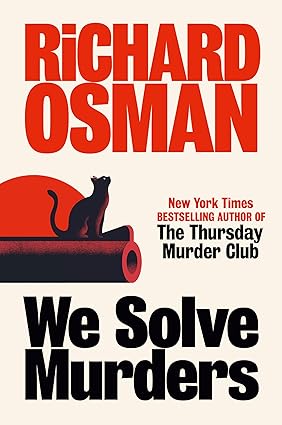 Mr Osman’s latest is the first in a brand new series featuring a father- and daughter-in-law detecting team. Bluntly titled We Solve Murders, this series debut follows Steve and Amy Wheeler as they do exactly that. They certainly have the pedigree for it. Steve is retired from the police force and thoroughly enjoying his familiar habits and routines: the pub quiz, his favorite bench, his cat. He might do the odd bit of investigative work, but his most exciting cases involve insurance fraud and lost dogs, and that’s just the way Steve likes it.
Amy, on the other hand, thinks adrenaline is good for the soul. A private security officer, she doesn’t stay still long enough for habits or routines. Having taken on what was supposed to be an easy job — hunkered down on a remote island, keeping a world-famous author alive — she’s shocked when the first dead body shows up. And then there’s the bag of cash. And suddenly a killer is on the loose with Amy in their sights. In need of help, Amy sends an SOS to the only person she trusts, launching herself and her father-in-law on a breakneck race around the world as they try to stay one step ahead of a lethal enemy.






 Al Singh
 Doug Merrill
 Doreen Sheridan
 Emily Lauer
 John Pitzel
 Lars N. Goldschlager
 Laura Eilers
 Professor X
 Robert Maedgen
 Sylvere Ap Leanan
 The Shire