I really loved Mindy Kaling on The Office, and quite enjoyed the first season of The Mindy Project. Alas, I stopped watching the latter when the levels of self-absorption stopped being entertaining, so I wasn’t sure how much I would enjoy reading this book, especially since excerpts veered over into unfairly judgmental territory. But that, I suppose, is why one shouldn’t judge a book by its excerpts. On the whole, Is Everyone Hanging Out Without Me? (And Other Concerns) is a charming, funny and honest, if hardly exhaustive, autobiography of a young woman who’s found success in comedy. It’s a great book for anyone interested in her life and how she did it, and a quick, light read for anyone wanting something humorous.
Permanent link to this article: https://www.thefrumiousconsortium.net/2015/11/21/is-everyone-hanging-out-without-me-and-other-concerns-by-mindy-kaling/
Nov 20 2015
Foxglove Summer by Ben Aaronovitch
It took me two days to finish the last 5%, mostly because damn you, Ingress double ap, but also because I was neither ready for nor okay with the idea of a cliffhanger, which was where I thought the book was going. Instead, it goes one better and, while I still really, really want to know wtf Mellissa is (a genius loci in her own right?) I was, overall, very pleased with the way this book put the series back on track after it faltered, I felt, with Broken Homes.
Anyway, Peter Grant goes off into the countryside to see whether a hedge wizard was involved in the disappearance of two young girls, then sticks around, ostensibly to be of service in an all-hands-on-deck sort of way, but really to get his mind off of the events of Broken Homes. Then he finds that magic might be involved after all, and Beverly decidedly shows back up in his life, yay! I was pleased with the way the book balanced the case at hand with the overarching story, and dead pleased at more possible info on Molly. I kinda want to go turn up at Ben Aaronovitch’s doorstep and beg him to keep writing, which I know would be entirely unhelpful to both him and to my aim of having him write more faster, but that’s the place Foxglove Summer left me. More more more please!
Permanent link to this article: https://www.thefrumiousconsortium.net/2015/11/20/foxglove-summer-by-ben-aaronovitch/
Nov 17 2015
Broken Homes by Ben Aaronovitch
This was prolly the first book in the series where the case itself felt a little too convoluted (I mean, Isengard, really?) tho I really loved how the overarching series continues to develop with the Faceless Man and argh argh argh the ending! I didn’t expect that to happen and I should have: props to Ben Aaronovitch for the masterful handling.
Still, tho, I felt the book got a bit too wanky in the details. I love learning about architecture, but had a really hard time visualizing Skygarden, which I felt slowed down my processing of the new magical elements introduced in the book, as well. I’ll admit that I’ve never had the firmest grasp on them in any of the preceding books either, but this was the one where I finally felt as if I was struggling to keep up. Anyway, Broken Homes would never work as a standalone, so is recommended only for people who’ve already read and loved the first three.
Permanent link to this article: https://www.thefrumiousconsortium.net/2015/11/17/broken-homes-by-ben-aaronovitch/
Nov 13 2015
My Brilliant Friend by Elena Ferrante
You guys, I wanted to love this book (despite even the vapid recommendation from Gwyneth freaking Paltrow that came with my copy) and there were certain parts where I’m like “yes, I understand that” and “yes, I lived that” but… I think the most egregious example of my problem with it is that I only understood the drama of the ending when I read the excerpt of the sequel. Why wasn’t the importance of the damn shoes made more clear in this book? If the promise had been explicitly stated in the book, the ending would have had a much different, better impact; as it is, it just felt abrupt. I dunno, maybe I just missed the part where he said it? Then clearly Elena Ferrante is too subtle an author for me.
And maybe it’s the fact that I had my own similar childhood attachment that’s working against me in appreciating this novel. I kept comparing my friendship with B to the heroines’ relationship and wondering which of us was the Lenu or the Lila, in turn. But none of the book was new territory, none of it told me stuff I didn’t already know. None of it had any resonance with the many strands of my emotional history. I also didn’t find any of the events at all startling, tho once I read the excerpt of the second novel, I was, first, greatly impressed at Ms Ferrante’s orchestration of events, but then disappointed that I needed a whole other book to understand the first. I did really like how Lila and her fiance aspired to make something better of their community, which is a large part of why I’m going to read that second book. There’s a great setup here, and I’m hoping the sequel (and I suppose the rest of the series) makes good on it.
Permanent link to this article: https://www.thefrumiousconsortium.net/2015/11/13/my-brilliant-friend-by-elena-ferrante/
Nov 06 2015
Code Name Verity by Elizabeth Wein
So you get to the one part in the book (and anyone who’s read it will know what I’m talking about) and you stop, stunned. And you go back and you read the last part over again. And if you’re me, and essentially a British schoolgirl at your core, like Maddy you burst into uncontrollable tears.
This book, about two young women working for the British during World War II, is a sensational depiction of gender and friendship in wartime. Both incredibly clever and deeply moving, it pulls no punches as our narrators describe the horror of warfare and living under Nazi rule. Code Name Verity balances out the grimness with sly humor, moments of beauty and, above all, an abiding faith in the bond between the two women. I am always partial to books about best friends, and this novel was far and away one of the best, if almost unbearably gallant, visions of such.
My only complaint about this book is that there isn’t that much difference between the women’s narrative voices, but given that the social background of “British schoolgirl” extends to them both, it’s forgivable. Regardless, it will take me quite a while to recover from this intense, amazing book.
Permanent link to this article: https://www.thefrumiousconsortium.net/2015/11/06/code-name-verity-by-elizabeth-wein/
Nov 03 2015
Modern Romance: An Investigation by Aziz Ansari
Honestly, this is just a superlative book on what it’s like to date and be in a relationship in the present day. Aziz Ansari and Eric Klinenberg conduct studies and review data to bring a comprehensive but still accessible (in large part due to Mr Ansari’s humor and personal anecdotes) overview of modern romance. They compare present standards with historical trends, and also look at mores in Doha, Tokyo, Buenos Aires and Paris, in addition to small-town and big-city America. Modern Romance: An Investigation sets out to demystify a lot of the challenges faced by those looking for love today, and succeeds with panache. I haven’t been this impressed with a popular sociology book since Andrei S Markovits’ Offside, and am even more so given that MR:AI never flags or dries out, and deals with a much larger and more universal concept than football.
Also, Mr Ansari is hilarious. Definitely looking forward to reading more of his stuff. Hopefully, a food book next? The chapter on Tokyo had me running to make ramen with chicken, spinach and egg. His enthusiasm is infectious! Which also made the last chapter, where he gives his advice on how to cope with modern romance, that much more effective, backed up as it was with reams of fascinating data. Terrific book.
Permanent link to this article: https://www.thefrumiousconsortium.net/2015/11/03/modern-romance-an-investigation-by-aziz-ansari/
Nov 03 2015
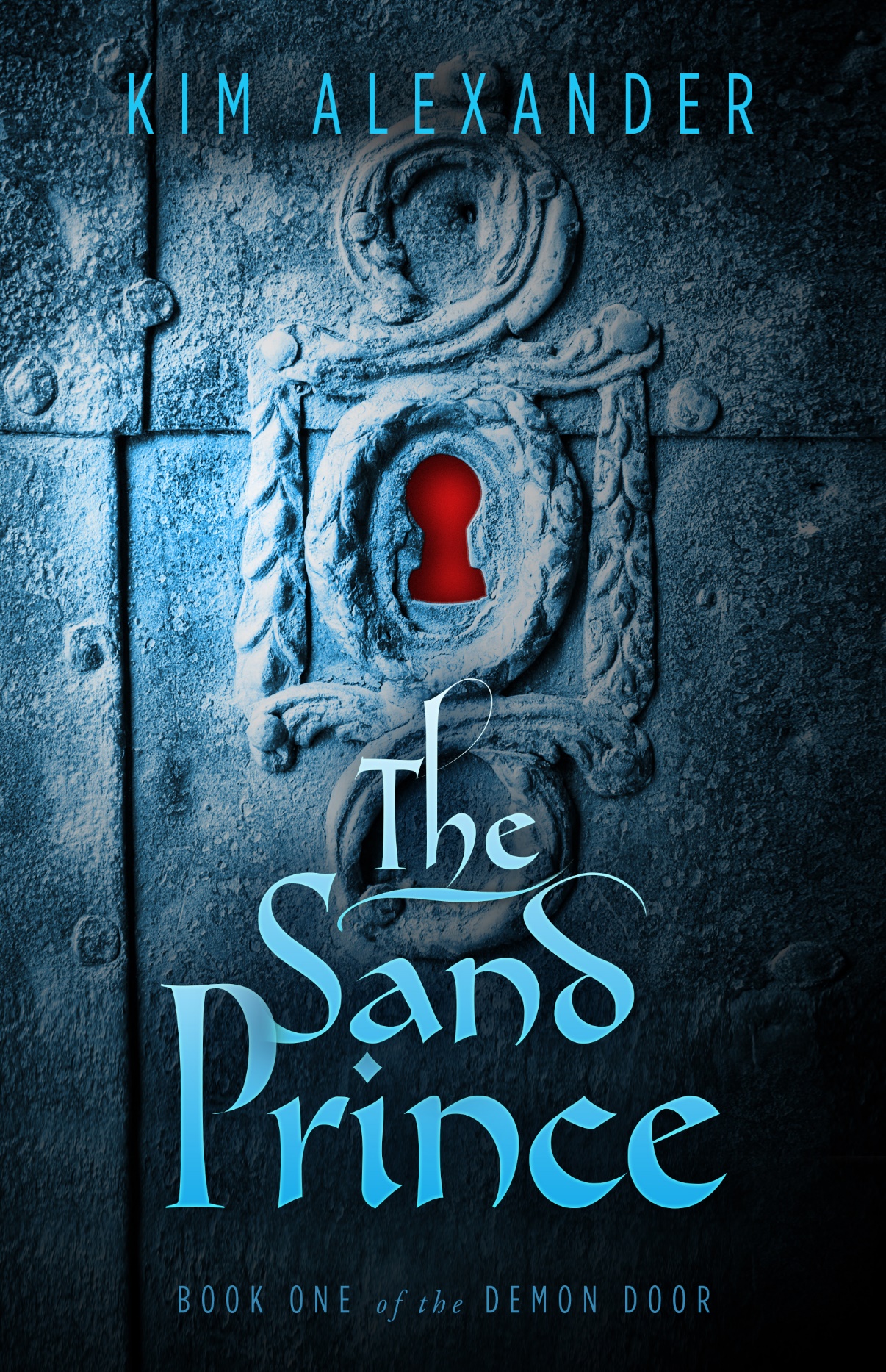
An Interview with Kim Alexander, author of The Sand Prince
Q: Every book has its own story about how it came to be conceived and written as it did. How did this book evolve?
An image. I was in bed, falling asleep, and I suddenly had a vivid image of two people sitting at a campfire. The girl had white hair and was in a party dress, and the man had red eyes. I knew she’d been kidnapped, but I also knew she wasn’t afraid of him. I had to figure out who they were and how they got there. That’s where it came from.
Q: Do you write with any particular audience in mind? Are there any particular audiences you hope will connect with this story?
Yes, I’d like it if everyone who plunked down coin for Game of Thrones would give me a shot. (kidding/not kidding.) I wrote this for myself. I am hoping that people who liked things like The Princess Bride, The Last Unicorn, Dune, the Sookie Stackhouse series–things that I personally love–might go for it.
Q: What is your next project?
Well, I am in the finishing stages of book two (spoiler: shit gets real) which is both easier because I don’t have to do so much exposition, but also much harder in that with about 40 named characters it’s become quite complicated. It’s about to head to the rough and dangerous waters of my editor. (Whom I love. Bow down before Carly Bornstein and speak her name with reverence.) And I am plotting out the third book in the series. I think there will be four, but who knows?
Q. What is the first book you read that made you think, “I have got to write something like this someday!”
I’ve read F/SF my whole life, but it was reading Dave Barry’s columns in the Miami Herald. They were funny and light and impermanent (this was before PCs, folks) but they made me realize you could leave a mark on the world with your words.
Q. Are there any new books or authors in science fiction or fantasy (or both!) have you excited? What are you reading right now?
I’ve vastly slowed down in my reading, and I’m trying to stay away from my own genre. When I was doing author interviews at my old job at Sirius XM, I would read about 3 books a week, cover to cover. The writers were always amazed I’d read their books, but I felt it was unfair to them and to the audience not to do so. Since I am out there doing my own thing and just reading for pleasure now, I’m giving my brain a break. I am getting ready to start Ancillary Justice, though, and I just finished the new Clive Barker, The Scarlet Gospels. His writing is so seductive. And I’ll stop drop and roll for anything by China Mieville.
Q. Are you a pantser (someone who writes by the seat of their pants) or a plotter?
Total pantser. I write the chapters completely out of order, as they occur to me, and try and jigsaw them together after. So, a LOT of rewriting!
Q. What are you reading at the moment?
Girl’s Guide to the Apocalypse by Daphne Lamb, she’s a fellow Booktrope author and a hilarious person.
Q. What made you choose science fiction/ fantasy as your means of expression?
Didn’t have a choice. I don’t know that you can force yourself to write in a genre that doesn’t call to you. At least, I can’t.
Q. How did you learn to write?
I mentioned my old gig at Sirius XM. I got to ask the most successful and talented writers in the world how to write, and they were generous with their time and advice. But it comes down to: Start. Write. Fix it later. And rewrite. Rinse, repeat. (And don’t use adverbs!)
Q. Do you adhere to any particular writing regimen?
I turn off my phone, put a cat on my lap, and off I go. I’m pretty disciplined.
Q. Tell us everything about your book and why you love it!
My hero is a half-human demon prince with a drinking problem and social anxiety disorder.
(This is a somewhat difficult book to summarize!)
It’s a story about finding out where you belong- and since it’s a fantasy, my rather beleaguered hero has multiple worlds to choose from.
Here’s the blurb:
When the storm came, it was made of magic, not rain, and when it had passed, the life and the city Hellne knew were changed forever.”
In Kim Alexander’s debut novel she weaves a witty, epic fantasy brimming with diverse characters and plenty of intrigue.Two worlds On the war-ravaged demon world of Eriis, Hellne, the fierce young queen, fights to keep her people alive, and to keep her son’s parentage a secret. On the green and gentle human world of Mistra, the demons have faded into myth. Only a handful of old men and children still guard The Door between the worlds.
Bound by magic Rhuun, the Prince of Eriis, uncovers a sultry book written by a human, sparking an obsession with the other world. When he is forced to flee Eriis, he must travel through The Door or pay the price in blood. Divided by a door The humans of Mistra are not what Rhuun was expecting—and one insufferable young woman in particular is about to find out that the demons of Eriis are not mythological after all . . .
As we quickly discover, the book that Rhuun loves so much and bases his entire knowledge of the human world on, turns out to be a cheesy romance novel. (You get to read his book, The Claiming of the Duke, as you go along, and that was a blast to write.) So he has some catching up to do when he goes through The Door.
Writing fantasy really gave me the freedom to do some comedy, a little romance, some sex for the grown folks, and loads of world building. (I should mention that The Sand Prince is not a romantic comedy, although it has romance and comedy!)
I didn’t want to use a medieval-ish backdrop, so I put the humans in a city very much like Washington DC (my home) called Mistra. (They use horses and gas-light, but they have indoor plumbing and photography.) The demon kingdom of Eriis is a once-great, now half-demolished city in a really unpleasant desert. But people live there, and have children. This is their home. I got to think about children growing up, and what they think is normal, and what they take for granted. Also, a good friend challenged me to create a world without homophobia, and I think I’ve done that. There is a large cast, and I love them all (even the bad guys) and relish the chance to get inside their heads. Because no matter the setting, the world, or how bizarre or outlandish the situation, they have to be human first. (Rhuun, being only half human, might disagree, and his mother, the demon queen would send me to the Crosswinds for saying that, but I stand by it!)

Author Links:
Kim Alexander Website
Facebook
Twitter
Pinterest
Google+
~~~
Kim’s book will be available on Amazon Tuesday, November 3rd, which is today, so go buy it! I’ll be writing a review later on, because it was a damned good book and I’m DYING for the second one to get published!
Permanent link to this article: https://www.thefrumiousconsortium.net/2015/11/03/an-interview-with-kim-alexander-author-of-the-sand-prince/
Nov 03 2015
The Fault in Our Stars by John Green
This book wasn’t for me. I thought it might be — 10 million fans can’t be wrong — I had heard good things about it, the title stayed lodged in my brain, and I thought about buying the book several times over the course of this year. So I picked it up, not entirely on impulse, at Berlin’s main train station just before an overnight trip to points south and read it all at once, finishing somewhere between Prague and the Slovak border.
The Fault in Our Stars is a tale of dying teens in love. Sometimes books aimed at children or young adults will get to the emotional core of an idea or character or event in a way that books aimed at adults will not or cannot. As Madeleine L’Engle put it, “You have to write the book that wants to be written. And if the book will be too difficult for grown-ups, then you write it for children.” A book about death and love and growing up that is aimed at young people can afford to be very direct, and that can pay off by going straight to the heart of the matter. But the flip side of that coin is self-involvement, mawkishness, self-indulgence. A story of dying teens falling in love is an invitation to self-involvement, and I think that’s what most put me off of The Fault in Our Stars, along with the author’s indulgence.
Permanent link to this article: https://www.thefrumiousconsortium.net/2015/11/03/the-fault-in-our-stars-by-john-green/
Nov 02 2015
Poor Doreen by Sally Lloyd-Jones
I was walking through the kids’ section of the Silver Spring library nearly two weeks ago, somewhat haphazardly selecting books for Jms while he was at school, when I came across THIS book. Honestly, the only major character I can think of named Doreen in literature is the crazy ass friend in The Bell Jar, so I pretty much leap at anything with my name on it (call it the aftereffect of never finding touristy keychains with my name on them.)
But a weird thing happened when I started reading the book with Jms. Honest to God, Sally Lloyd-Jones must know one of the default archetypes I choose for a role-playing character (optimistic, good-hearted, not necessarily bright but a shameless manipulator; the other, should you care, is a misanthropic sociopath) because she channeled that perfectly in Miss Doreen Randolph-Potts, the Ample Roundy Fish who is the star of this charming picture book. Jms and I loved her misadventures, as well as the pictures and the way both referenced the alphabet. Tho Jms is perfectly capable of reading on his own (he’s 4 and has been doing so since age 3, brag brag,) he prefers when I read it aloud, as the construction of the sentences here lends itself perfectly to dramatics. We liked this book so much, I might get “him” a copy for Christmas!
Permanent link to this article: https://www.thefrumiousconsortium.net/2015/11/02/poor-doreen-by-sally-lloyd-jones/
Oct 31 2015
Did You Ever Have A Family by Bill Clegg
Stunning and sensitive, this book would have been perfect but for the ending, which I felt petered out in a way that was meant to be philosophical but which just felt oddly disconnected given all the emotions that had filled the pages till then. I mean, honestly, I’d cried three times before even getting halfway through, with tears threatening again near the end (an awkward situation, by the way, when I’m waiting by the door to hand out Halloween candy,) when Cissy sees Will’s canoe. As I finished the book, I couldn’t help but want Bill Clegg to have ended it more strongly, on a crescendo that would have swept me up in another round of emotions. He chose otherwise and I can’t help but feel it let down an otherwise terrific novel.
Did You Ever Have A Family has a gorgeously complex narrative that reads almost like a mystery novel. Aside from the shocking, even scandalous events it recounts (centering on a woman losing her entire family on the eve of her daughter’s wedding, when her house in small-town Connecticut blows up,) it beautifully examines the feelings on every side of a situation, showing how meaning well isn’t enough, and how openness and honesty can go a long way to salving wounds, and how we shouldn’t wait to give of ourselves to those we know deserve our love. It was striking how sympathetic and complex Mr Clegg made all the characters, even the rather awful Lolly (and I really liked how he showed that she was objectively bratty without judging her too harshly for it.) I’m really looking forward to his next novel, which I can only imagine will build on the quiet triumph that is this one. Then, I hope, we’ll see something truly spectacular.
Permanent link to this article: https://www.thefrumiousconsortium.net/2015/10/31/did-you-ever-have-a-family-by-bill-clegg/
 Al Singh
 Doug Merrill
 Doreen Sheridan
 Emily Lauer
 John Pitzel
 Lars N. Goldschlager
 Laura Eilers
 Professor X
 Robert Maedgen
 Sylvere Ap Leanan
 The Shire