After introducing readers to the lost world of Hungarian nobility before the Great War in They Were Counted, Miklós Bánffy continues their stories toward the great catastrophe that is coming, that only a very few of them can see looming on the horizon. These two books, along with They Were Divided form Bánffy’s Transylvanian Trilogy, sometimes called The Writing on the Wall. Though it is split into three volumes, it is essentially one long tale. When he began the work, the world he wrote about was already lost in the calamity of the Great War, which blew the Austro-Hungarian Empire into its constituent parts, and whose peace settlement gave Transylvania to Romania, suddenly putting lands that the Hungarian nobility he wrote about had ruled for centuries into a foreign country. By the time that Bánffy finished the work in 1940, Hungary was again fighting in a world war, again on the losing side, as Bánffy, who had been foreign minister in the early 1920s, surely recognized. After the war, a short-lived republic gave way, under Soviet occupation, to a Communist dictatorship. These authorities had no interest in a work about a lost aristocracy, and so Bánffy’s brilliant work languished for decades.
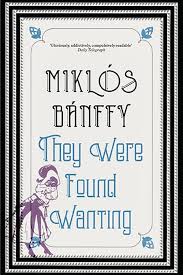
The trilogy was translated into English in 1999, and into German in 2012. I don’t know if it’s been translated into other major languages yet; I hope that it gradually finds the vast and admiring audience it deserves. Patrick Leigh Fermor found it a remarkable work and wrote a foreword to the edition that I have. During his 1933–34 walk from the Hook of Holland to Istanbul, Fermor encountered Transylvania while Banffy was writing, and offers this perspective:
It was in the heart of Transylvania — in the old princely capital then called Koloszvar (now Cluj-Napoca) that I first came across the name of Banffy. It was impossible not to. Their palace was the most splendid in the city, just as Bonczhida was the pride of the country and both of them triumphs of the baroque style. Ever since the arrival of the Magyars [Hungarians] ten centuries ago, the family had been foremost among the magnates who conducted Hungarian and Transylvanian affairs …
Banffy is a born storyteller. There are plots, intrigues, a murder, political imbroglios and passionate love affairs, and though this particular counterpoint of town and country may sound like the stock-in-trade of melodrama … it is nothing of the sort. But it is, beyond question, dramatic. (pp. xviii–xix)

 Al Singh
 Doug Merrill
 Doreen Sheridan
 Emily Lauer
 John Pitzel
 Lars N. Goldschlager
 Laura Eilers
 Professor X
 Robert Maedgen
 Sylvere Ap Leanan
 The Shire