Writer, editor, translator, project manager, reformed bookseller. Currently based in Berlin, following stints in Moscow, Tbilisi, Munich, Washington, Warsaw, Budapest and Atlanta. Previously blogged at A Fistful of Euros, though that is now largely lost to link rot.
Most commented posts
- The Goblin Emperor by Katherine Addison — 9 comments
- White Eagle, Red Star by Norman Davies — 7 comments
- Rivers of London by Ben Aaronovitch — 7 comments
- Every Heart a Doorway by Seanan McGuire — 6 comments
- The Stone Sky by N.K. Jemisin — 6 comments
Author's posts
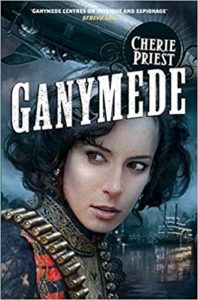
Ganymede, the third of Cherie Priest’s five Clockwork Century novels, follows the efforts of some free people of color to tip the scales of the American Civil War, ongoing for more than 20 years at the time of the book’s events, in favor of the Union by bringing it an experimental Confederate submarine that sank …
Continue reading
Permanent link to this article: https://www.thefrumiousconsortium.net/2017/11/26/ganymede-by-cherie-priest/
At the Unseen University in Ankh-Morpork, magic leaks into all sorts of things, including the scraps from the wizards’ sumptuous dinners. Some of the rats who were helping themselves to leftovers got an unexpected dose of intelligence as part of the magic in the cooking. And a cat, Maurice, got it too when he ate …
Continue reading
Permanent link to this article: https://www.thefrumiousconsortium.net/2017/11/20/the-amazing-maurice-and-his-educated-rodents-by-terry-pratchett/
Wilhelm Tell, a five-act drama in verse, was Friedrich Schiller’s last major work. It tells the story of the start of the Swiss Confederation as the people of four inner cantons — Uri, Schwyz, Unterwalden and Luzern — joined forces, swearing an oath to drive out a Habsburg ruler who is intent on limiting traditional …
Continue reading
Permanent link to this article: https://www.thefrumiousconsortium.net/2017/11/16/wilhelm-tell-by-friedrich-schiller/
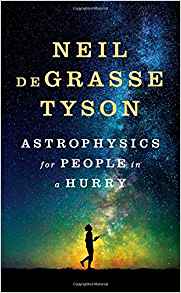
In just over 200 pages, Neil deGrasse Tyson takes his readers, who are presumably in a bit of a rush, on a grand tour of the cosmos, with a refreshing emphasis on what scientists don’t know. He’s bumptious, conversational, unafraid of including personal opinions about people in the field and commendably clear even when describing …
Continue reading
Permanent link to this article: https://www.thefrumiousconsortium.net/2017/11/15/astrophysics-for-people-in-a-hurry-by-neil-degrasse-tyson/
When Tsar the Polish poet southward sent For stirring trouble and renewed dissent He took his pen — described the lands he crossed The steppes so vast, the palaces long lost Exiles who before Adam M. had gone And Muslims who so well had served their Khan Crimean shores, the mounts above them ranged The …
Continue reading
Permanent link to this article: https://www.thefrumiousconsortium.net/2017/10/22/sonnets-from-the-crimea-by-adam-mickiewicz/
Doors sometimes open from the mundane world into more fantastical, miraculous realms, and sometimes children find their way through these doors to sojourn a while among the fae, with the King of the Dead, with scientists creating life from dead tissue and electricity, with forms and dreams stranger still. Many of those who return from …
Continue reading
Permanent link to this article: https://www.thefrumiousconsortium.net/2017/10/20/every-heart-a-doorway-by-seanan-mcguire/
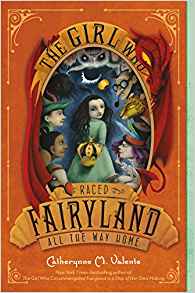
The setup at the end of The Boy Who Lost Fairyland — intimations that all is not well in the balance between our world and Fairyland; and Something Must Be Done — could have set up the last book in the sequence as a heavy quest, not least because Catherynne M. Valente’s characters are growing …
Continue reading
Permanent link to this article: https://www.thefrumiousconsortium.net/2017/10/19/the-girl-who-raced-fairyland-all-the-way-home-by-catherynne-m-valente/
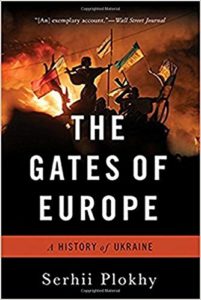
The first argument of The Gates of Europe is its existence: a history of Ukrainians as a people, a nation separate from others; a history of the Ukrainian lands that is not a subset of another history, whether that other history is Russian or (less probably) Polish. In his very first sentence, Plokhy cites the …
Continue reading
Permanent link to this article: https://www.thefrumiousconsortium.net/2017/10/16/the-gates-of-europe-by-serhii-plokhy/
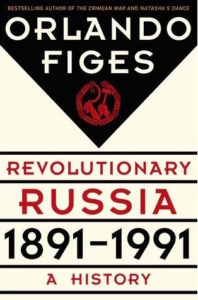
Orlando Figes’ title presents the essence of his argument: The Russian Revolution should be looked at over a much longer period than historians, and the interested public, usually give it. Revolutions succeeded in February and October of 1917 because they had been brewing for a long time; the Soviet Union claimed to be a revolutionary …
Continue reading
Permanent link to this article: https://www.thefrumiousconsortium.net/2017/10/09/revolutionary-russia-1891-1991-by-orlando-figes/
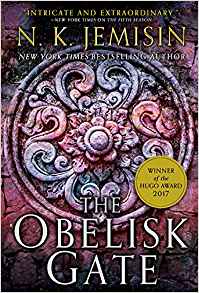
I put down The Obelisk Gate for about three and a half months when I was four-fifths of the way through. One of the main characters, a girl not yet in her teens, did something horrible, and I just couldn’t anymore. I haven’t had that strong a reaction since Elric killed Moonglum near the end …
Continue reading
Permanent link to this article: https://www.thefrumiousconsortium.net/2017/10/09/the-obelisk-gate-by-n-k-jemisin/




 Al Singh
 Doug Merrill
 Doreen Sheridan
 Emily Lauer
 John Pitzel
 Lars N. Goldschlager
 Laura Eilers
 Professor X
 Robert Maedgen
 Sylvere Ap Leanan
 The Shire