2025 turned out to be a year of reading easily. I remember thinking at the end of 2024 that I was going to make sure I read for enjoyment at least as much as for satisfaction or a sense of accomplishment. My reading, especially in the first half of the year, reflected that desire. I only finished five books of non-fiction all year, though Portrait with Keys mostly uses the techniques of fiction, so that number may be debatable. I only finished three books in February, and then two in April. I am sure that horror and exasperation at another round of Trump in the White House played a role in my pace and choices.
One of the delights of this year just past has been diving into the work of T. Kingfisher. I read six of her works in 2025, and I bought a bunch more. I’m not sure that 2026 will see me joining the Kingfisher of the Month Club, but it will be close. I love her no-nonsense women, her dark hilarity, how readily she keeps her authorial promises. Her UK publisher is bringing out new editions of older work, and I am happily snapping them up. She’s wonderfully prolific, and prolifically wonderful.
Other authors I read more than one book from included Alexander McCall Smith, Lois McMaster Bujold, Ben Aaronovitch, Chinua Achebe and Nghi Vo. Most of them are writers whose series I’m either keeping up with or catching up on. I’ve read all but one of the No. 1 Ladies’ Detective Agency books, somewhere near half of the Vorkosigan Saga, all of Rivers of London except for the graphic novels, and almost all of the Singing Hills novellas that have been published to date. The others from Vo are on back order. I started reading them in the Hugo Award readers’ packets, but decided to wish for paper copies this past Christmas because I wanted to have the whole set at hand. Plus they’re pretty.
I read all of five translations this past year: one from French to German, one from Japanese, two from Hungarian, and one from Dutch to German. Three of five were terrific, and I am looking forward to finishing Banffy’s trilogy in 2026. I didn’t get on well with this year’s Nobel winner, but at least now I know.
The only re-reading I did in 2025 was finishing up John Crowley’s lovely and monumental Little, Big. I bought the 25th anniversary edition, which was published just in time for the book’s 40th anniversary, in the summer of 2024 and finished reading in January 2025. It’s a book that reads well at a seasonal pace, especially if you have read it many times before. I did not read any full volumes of poetry this year. That happens sometimes.
I read 26 books that were written by men; I read 29 books that were written by women; if any of the authors listed below are non-binary, I am happy to be corrected. Two books have co-authors, and in both cases one is a man and one is a woman. I did not count the one book that I listed but did not finish. This is the first year since I started counting that the number of books by women has exceeded the number of books by men. Thanks, T. Kingfisher!
In good years for reading in German, about 10 percent of the books that I read are in that language. Last year I read three, down from 13 in 2024. One classic from the early 20th century, which I probably should have read as part of my undergraduate degree lo these many years ago. One classic of East German literature. And one translation from Dutch that’s part of the Süddeutsche series about great cities. I’d like to read a bit more in German in 2026, there’s some neat history by Karl Schlögel on my shelf, along with some more contemporary reporting by Michael Thumann, plus the variety in the Süddeutsche books mean that I have a lot to look forward to.
I tried 18 authors whose works were new to me. That’s up from 10 in 2024, the first year I counted.
Best explanation of why people will not be settling Mars any time soon: A City on Mars by Kelly and Zach Wintersmith. Best meditative account of how people are actually living in space now: Orbital by Samantha Harvey. Best telling of the advent of modernity: Things Fall Apart by Chinua Achebe. Best third book that made me re-think the whole trilogy: The Tomb of Dragons by Katherine Addison. Best book to make a reader re-think the whole magical school subgenre: The Incandescent by Emily Tesh. Best and funniest romances with swords and suchlike: Paladin’s Grace and Swordheart by T. Kingfisher.
The full list, roughly in order read, is under the fold with links to my reviews and other writing about the authors here at Frumious.
Continue reading
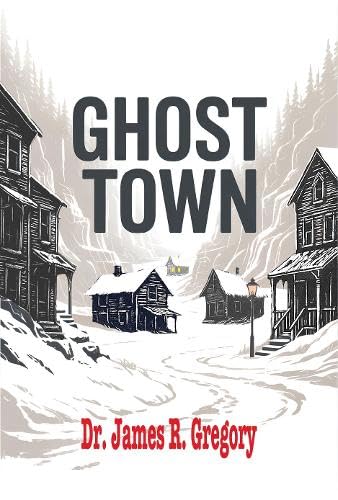 In the late 1800s, the small town of Sulphur Creek is experiencing a coal mining boom. Sammy Murphy was born into solitude, and is more familiar with shadowy tunnels than open streets, and with hiding secrets than with making friends. But as he begins to engage with the inescapable pulse of industry, he searches for the kind of meaningful connection all people desire.
 Al Singh
 Doug Merrill
 Doreen Sheridan
 Emily Lauer
 John Pitzel
 Lars N. Goldschlager
 Laura Eilers
 Professor X
 Robert Maedgen
 Sylvere Ap Leanan
 The Shire