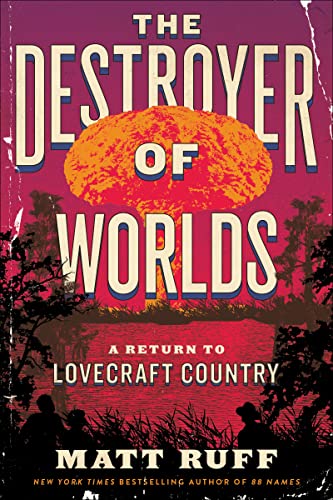
Reader, I was invested. Possibly even enthralled. At one point, I thought “Matt Ruff, if you XXXXX, I am throwing this book right out of the train window, and possibly Lovecraft Country too as soon as I get home and put my hands on my copy.” Not because the event would have been cheap or manipulative — it would have been completely in keeping with both the character and the world that Ruff shows; indeed its possibility was foreshadowed in an early chapter — but because I had come to like the character enough that if this particular horror had come to pass, I don’t think I would have been able to finish the book. Like I said, I was invested.

The Destroyer of Worlds is a sequel to Lovecraft Country, bringing back most of the earlier book’s characters, and develops others more fully. Where Lovecraft Country was a collection of linked stories that were complete in themselves but formed a larger narrative, The Destroyer of Worlds is a conventional novel, with short chapters that move among the points of view and threaded plots of the cast of characters. The ensemble of protagonists are Black friends and relatives from the South Side of Chicago. After a pre–Civil War prologue, the main story opens with Montrose Turner and his grown son Atticus traveling south to visit the site of the plantation their ancestor escaped from to mark the centennial of that momentous family event. George Berry, Montrose’s half-brother and publisher of The Safe Negro Travel Guide, Ruff’s fictional counterpart to The Negro Motorist Green Book, “begged off at the last minute.” (p. 13) Meanwhile, George’s wife Hippolyta and their son Horace plus Hippolyta’s friend Letitia Dandridge are on a trip of their own, driving out to Las Vegas, partly on business for the Guide, partly on a secret errand that ties back to events in Lovecraft Country.
Both sets of travelers get more than they bargained for. While there are supernatural terrors in the setting of Lovecraft Country and The Destroyer of Worlds, for Black people in 1957 America the powers that enforce white supremacy are every bit as frightening and often more immediate. Both sets of travelers have run-ins with local law enforcement. Atticus and Montrose spend a little too long observing a North Carolina chain gang, and one of the nearby police officers turns out to be a rural sheriff who appeared in Lovecraft Country. That situation goes downhill fast, and soon guns are blazing. Hippolyta, Horace and Letitia get pulled over at the Nevada border for a surprising reason that shows not every white officer is bad every time, but of course they could be, and there’s no way for a Black person to know in advance whether an encounter with the law might destroy their own world.
Continue reading
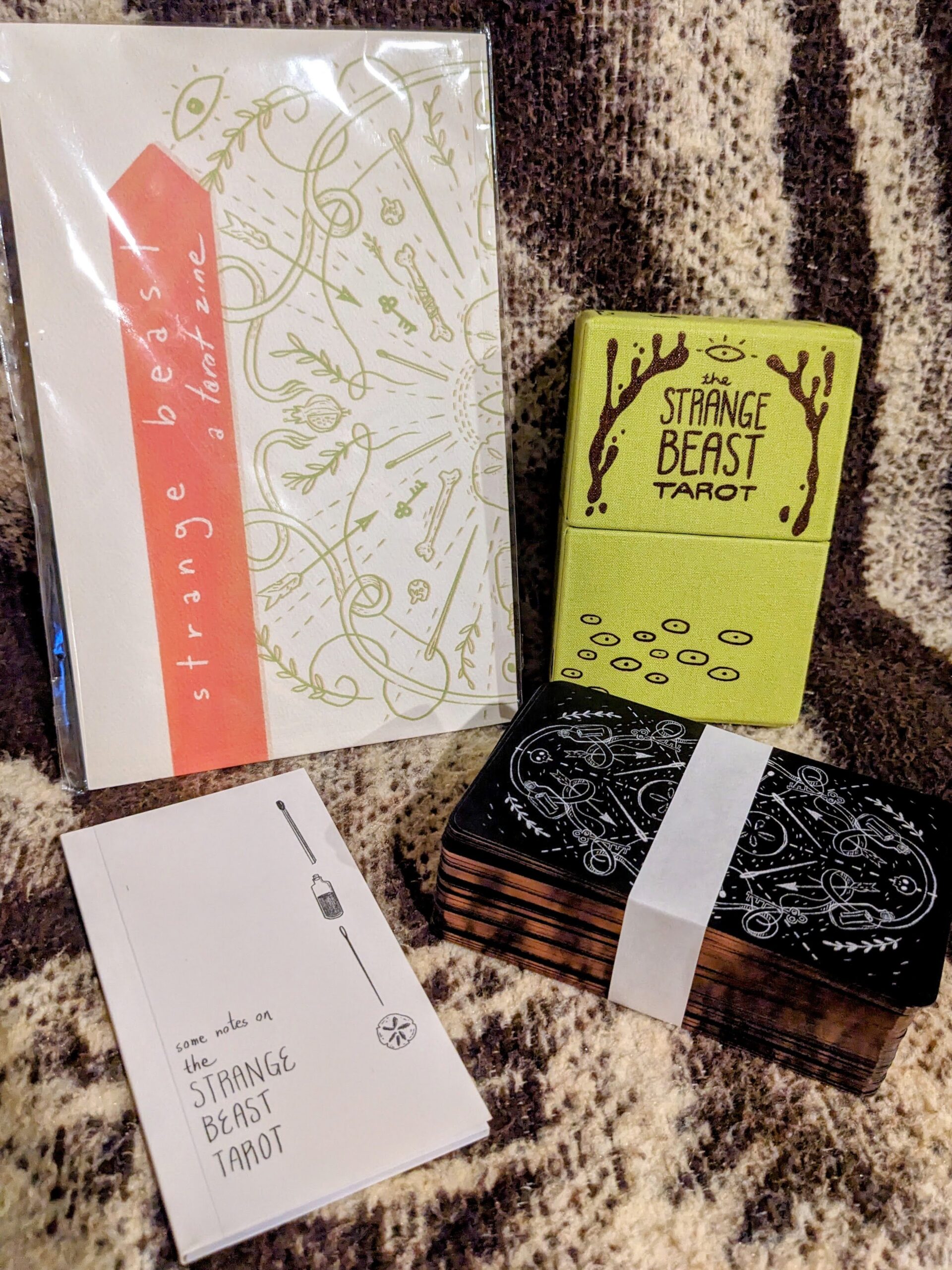 Which, ofc, includes their latest creation, the Strange Beast Tarot deck. I got in on it at the crowdfunding stage, and snagged as well the Strange Beast Tarot Zine, which includes essays on Tarot and original games to play with this deck or any other. I was actually pretty surprised by how moved I was by Taliesin Jaffe’s essay on The Four Tools, as represented by the four suits of the deck. If you use the Tarot to help guide your intuition in personal problem-solving the way I do, it will definitely resonate.

 Al Singh
 Doug Merrill
 Doreen Sheridan
 Emily Lauer
 John Pitzel
 Lars N. Goldschlager
 Laura Eilers
 Professor X
 Robert Maedgen
 Sylvere Ap Leanan
 The Shire