OKAY, I am still inordinately pissed at the absurd, regressive, anti-feminist retcon that DC Comics gave Wonder Woman’s origins with the New 52. I know that people say that comic book back stories are like changeable weather: if you don’t like it, wait a short period of time and it’ll change again. But between the increasingly more ridiculous attempts at codifying Emma Frost’s back story over at Marvel, and the fact that the Kuberts’ boring ass mini series is STILL the accepted origin story for Wolverine, I had no hope of the Distinguished Competition returning one of my favorite comic book characters to her sui generis roots.
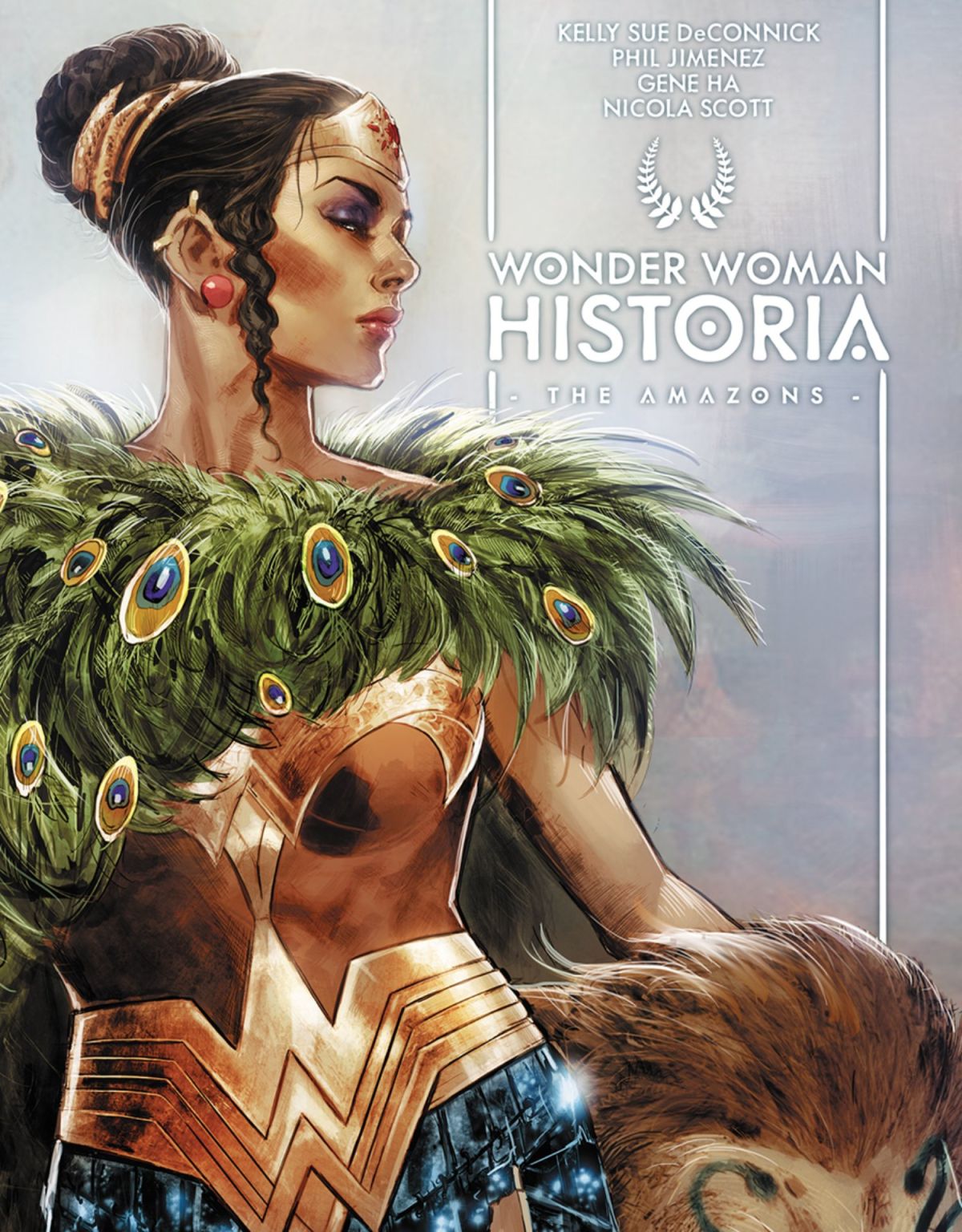 But then I read this volume and holy shit, y’all! HOLY SHIT! Idk if this is canon but this is 100% a step back in the correct direction, a return to George Perez’ excellent interpretation. In fact, Wonder Woman Historia gives one of the best comic book characters of all time the kind of 21st century update that would never have passed the restrictions of the Comics Code era in which Mr Perez worked. Honestly, I hope this book would make him proud. It certainly made my heart beat faster, and my soul sing with both recognition and glee.
Wonder Woman herself only shows up in the very last pages of this book, but to a very large extent, learning about the origins of the Amazons is very much an important part of learning about the heroic character. Insofar as Diana is the manifestation of a long chain of mythology brought into the modern world, it seems only right that the women who birthed (after a fashion) and parented her should also have their stories told.
This storytelling team — and I deliberately use that term here for reasons I’ll explain later in this review — begins with a tale of the goddesses of Olympus rebelling against their male counterparts, demanding satisfaction for the myriad ways in which their female and not-male worshippers are being continually abused by the male. Zeus, unsurprisingly, laughs off their concerns. The six goddesses, minus watchful Hera, decide to take matters into their own hands, and create a line of women who will avenge the wrongs done against the innocent by cruel, selfish men who are secure in their privilege from any prosecution, worldly or divine.




 Al Singh
 Doug Merrill
 Doreen Sheridan
 Emily Lauer
 John Pitzel
 Lars N. Goldschlager
 Laura Eilers
 Professor X
 Robert Maedgen
 Sylvere Ap Leanan
 The Shire