
It’s my birthday week so I’m going to treat myself by focusing on recently published Middle Grade books this week instead of going for a wide variety of genres, as I usually do. MG is one of my favorite categories because the authors uniformly care about being entertaining and emotionally engaging — and often educational — when writing to their target market.
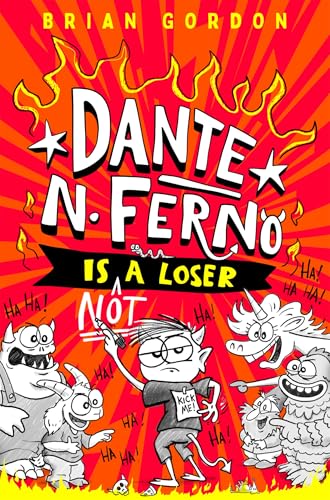 So let’s kick things off with a very cute series debut. If you’ve ever read the Diary Of A Wimpy Kid books and wished there was a little more fantasy involved, then this is definitely the book for you!
This illustrated Middle Grade novel revolves around a kid named Dante, who’s been the biggest, well, loser in his town of Brimstone ever since an embarrassing incident with teddy bear underpants. But now that he’s starting high school, he has a plan for becoming the coolest kid around. It helps that the student body at Purg High School will consist of both other little devils from Brimstone as well as kids from the neighboring town of Blisshaven. Surely, he’ll be able to reinvent himself here, with the help of his four-step, foolproof popularity plan.
Ofc, nothing goes as he expects, but it’s fun for the reader to follow along as Dante learns how to navigate a new school and new challenges. Readers familiar with classic literature will see and appreciate the many allusions to Dante Alleghieri’s The Divine Comedy, especially the appearances by Virgil and Beatrice. I personally enjoyed the jokes built into the teachers’ names and, as a comic book and trivia nerd, absolutely loved the final chapter.



 Al Singh
 Doug Merrill
 Doreen Sheridan
 Emily Lauer
 John Pitzel
 Lars N. Goldschlager
 Laura Eilers
 Professor X
 Robert Maedgen
 Sylvere Ap Leanan
 The Shire