The Fourth Crusade by Jonathan Phillips

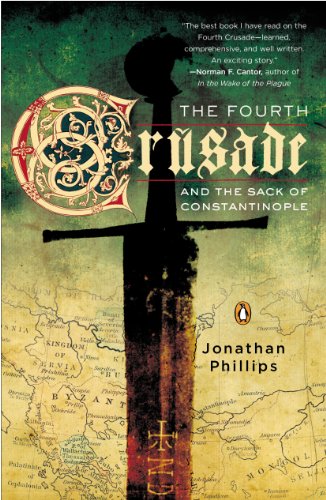
Where Jonathan Riley-Smith provided an overview of crusading as a movement over many centuries, Jonathan Phillips looks closely at one particular crusade, with an eye toward answering the question of why an expedition intended to take Jerusalem and other sites in the Holy Land wound up instead besieging, conquering and sacking Constantinople. Apparently this was an important question for quite a number of people over a long period of time, but given how many other crusades either strayed far afield from Jerusalem or were directed against fellow Christians in France, Italy, and parts of the German Empire, it’s not all that surprising that at some point crusaders would fight against Byzantium. Indeed, given previous relations between Greeks and crusaders that ranged from grudging passage to active attacks and subversion, it might be more surprising that the two parts of Christendom had not come to blows earlier, not least because they regarded each other as schismatics who had turned away from the true faith and thus, by some measures, worse than actual infidels.
The Fourth Crusade

The short version of why the Fourth Crusade wound up at the gates of Constantinople is that one thing led to another, and that choices the leaders made at early stages of the crusade both foreclosed other options and increasingly committed the crusaders to war on the Bosporus. Phillips of course tells a longer version, setting the stage with an overview of crusading in general, what the first three crusades had achieved, and what led to the preaching of a fourth at that particular time. Discussions of the preaching lead naturally into explanations of why leadership fell to men such as the Count of Flanders and the Marquis of Montferrat rather than the kings of England and France. First and foremost, the kings could not set aside their quarrels, even for such a cause as the recovery of Jerusalem. Second, the gap in resources between the prosperous counts and their nominal overlords was not as great in the late 1100s and early 1200s as would later be the case. Regional leaders could mobilize forces for crusades that were as strong as royal contingents. Third, many of these high nobles came from families that had strong crusading traditions, and they thus felt honor-bound to match the deeds of their forbears, or at least to make the attempt.

Two aspects of medieval politics and warfare that come through clearly in The Fourth Crusade are the immense amount of lead time involved and the wild uncertainty. Preparations for a new crusade began soon after the election of Innocent III as pope in 1198; the men of the Fourth Crusade arrived at their rallying point in Venice four years later, in the summer and autumn of 1202. Count Thibaut of Champagne, who had been expected to be one of the leaders of the crusade, died in late May 1201 before he had even mustered his followers, much less begun his way toward the Holy Land. Leaders tried to plan years advance, with little idea of what resources would be available to them, or whether key people would even be alive.
Continue reading

Permanent link to this article: https://www.thefrumiousconsortium.net/2020/05/24/the-fourth-crusade-by-jonathan-phillips/

Giants at the End of the World edited by Johanna Sinisalo and Toni Jerrman

Giants at the End of the World is a nifty artifact, its subtitle “A Showcase of Finnish Weird” telling part of the story, and the headline of the back jacket text “Worldcon 75 proudly presents” telling the rest. The slender and compact collection of 11 stories was a present to attending members of the 2017 World Science Fiction Convention in Helsinki, and it is a fine glimpse into the worlds of strange fiction by Finnish authors.

Giants at the End of the World

Eight are translations from Finnish; two first saw publication in this volume, although one of those, “Summerland,” is the first chapter of a novel of the same name that was published in 2018. The editors introduce each story and author with a one-page note about their person and their works, and they round out the volume with eleven pages listing of contemporary Finnish SF/F available in other languages, a listing that is by no means confined to English. I was particularly pleased to see one novel that had been translated into Georgian, but larger and smaller languages, from Albanian to Vietnamese and French to Japanese were present as well.

The stories are, of necessity, shortish, and true to the subtitle tend toward the strange and fantastical, rather than toward the science fictional. Peculiar things simply happen, and the authors are typically happy to let readers try to interpret the occurrences rather than tipping their hand with an explanation. What is the proper perspective for viewing “The Haunted House on Rocketworks Street”? Why and how did the exiles of “Undine” wind up where they are? Is the first-person narrator of “Snowfall” coming unstuck from reality, or is she possessed of greater insight than the mundane people around her? Those questions and other are left satisfyingly unanswered.

Though the subtitle proclaims a geographic unity of the collection, the stories wear their Finnishness lightly. One features elements from the Kalevala, Finland’s national epic; some are explicitly set in or near Helsinki; others describe natural landscapes that are recognizably Finnish but could plausibly be in other places sufficiently far north. Some, too, are set in fully imaginary realms and do not have an explicitly Finnish connection at all. The editors have chosen their showcase to present a wide range of weirdness, and all of it is deliciously strange.

“The Bearer of the Bone Harp,” by Emmi Itäranta, is a case in the Holmes mode, with added elements of music, magic, and menace. It originally appeared in an anthology of short stories about the composer Jean Sebelius, and it left me wanting to find out more about the world it is set in and those particular characters. “The Skinner,” by Anne Leinonen, was creepily dystopic. “Summerland” also left me wanting to discover more about dueling NKVD agents in 1938 London with hints of magic emanating from rival Summer and Winter Courts. The title story closes the volume nicely with a story of travel and secrets, and giants at a place that may actually be just the beginning.

Giants at the End of the World is probably not generally available, but some of the authors are undoubtedly present in a book advertised in its endpapers — Never Stop: Finnish Science Fiction and Fantasy Stories, selected by Emmi Itäranta.

Permanent link to this article: https://www.thefrumiousconsortium.net/2020/05/21/giants-at-the-end-of-the-world-edited-by-johanna-sinisalo-and-toni-jerrman/

The Long Way To A Small, Angry Planet (Wayfarers #1) by Becky Chambers

Sometimes, when I’m in the middle of a long jag of perfectly fine to mediocre books, I start to wonder whether my reading skills are atrophying because I’m only managing 100 pages a day. But then I get a book like Becky Chambers’ The Long Way To A Small, Angry Planet and crush all 500 or so pages in a little over 24 hours, and I realize that I was just waiting for the right book to come along to restore my faith in myself, to spark that alchemy that has me tearing through the pages, laughing and crying and barely believing how fast the book goes by.

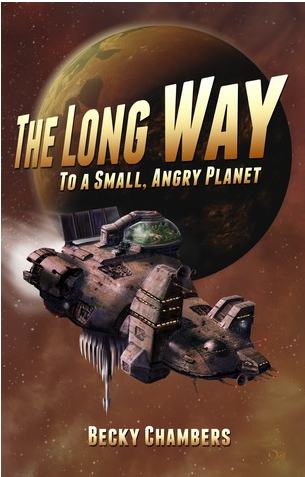
TLWtaSAP was an absolute joy to read. A space opera focused on the crew of the Wayfarer, a ship specializing in building the tunnels through space-time that allow for interstellar travel, it hearkens back to the golden age of sci-fi, when Asimov and Bradbury told connected short stories revolving around their robots or colonists of Mars. To a large extent, it’s also reminiscent of episodic TV set in space, where you get to explore each character’s back story while unraveling an overarching plot. In this case, the Wayfarer has been hired for an ambitious job following the declaration of a peace agreement between the Galactic Commons and the Toremi Ka, a tribe of a warlike race of aliens who value conformity in thinking above all, and will fight dissenters to the death. While traveling to their destination in Toremi space, the Wayfarer engages in all sorts of adventures where secrets are revealed and deeper relationships forged, only to find that perhaps their mission isn’t as risk-free as the GC had promised.

TLWtaSAP felt like reading (or bingeing, in my case) the entire first season of a really great TV show like Firefly or Star Trek. I’m genuinely baffled by its description, for good or ill, as “feel good” or “slice of life.” Sure, there’s no overarching galactic conspiracy that our team has to save the known universe from but there’s still a shit ton of adventure, loss and death-defying to be had, with alien species, cultures and diplomacy to add complexity to the proceedings. There weren’t any dei ex machinae or other implausible plot twists: everything flowed smoothly because Ms Chambers is a terrific writer with an engaging style who clearly spent a lot of time thinking through the story she wanted to tell. Calling TLWtaSAP “feel good”, however well meaning the sentiment, sounds incredibly dismissive of a complex exploration of the kinds of relationships that develop between very different people thrust into close quarters (in space!) as well as the political and social machinations going on in the setting at large. But hey, if it draws in readers who might be searching for that kind of touchstone before trying out a new genre, then I guess I’m for it, even as I wonder at how much pain and grotesqueness its detractors prefer to see from their genre fiction.

Anyway, I loved this thoughtful, often moving, definitely hilarious (the scene with Sissix and the orchid, among others, had me guffawing so hard) novel and can’t wait to read the sequels. TLWtaSAP well deserved all the awards it received.

Permanent link to this article: https://www.thefrumiousconsortium.net/2020/05/18/the-long-way-to-a-small-angry-planet-wayfarers-1-by-becky-chambers/

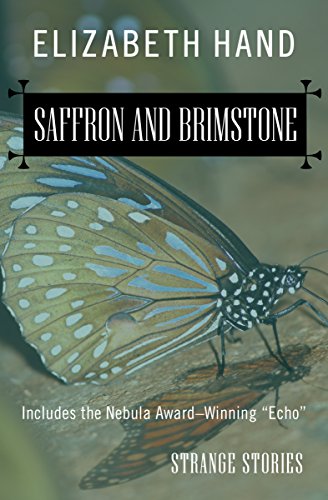
Saffron and Brimstone by Elizabeth Hand

I zipped through the eight stories of Saffron and Brimstone in about a day and a half when I was in the hospital and looking for something fantastical to read. The tales — one novella, a quartet of connected short stories, and three other stand-alones — all bring fantastic or horrific elements into the mundane world, sometimes to the characters’ surprise, sometimes not.

Saffron and Brimstone by Elizabeth Hand

The half-titular story, “Cleopatra Brimstone,” is the longest and concerns a gifted young woman who’s an insect researcher, and the delayed consequences of an assault perpetrated on her. “Pavane for a Prince of the Air” relates a free spirit’s death by mundane disease. It captures the way a serious illness seems to collapse the world into a narrow space — whether that’s a hospital room or a home — for the person bearing it and the people closest to them. It is also a sideways commentary on health care for artists in the United States, but mostly it is a portrayal of someone who has always lived by his own rules also dying in his own way, and how that affects the people close to him.

“The Least Trumps” pulls out some neat tricks from a love of Tarot and obscure fantasy novels, with some meditations on a life lived next to fame, obsession, and tattoos. “Wonderwall” shows a tawdrier side of bohemian life, how suffering doesn’t always lead to great art, and how having the resources to pull oneself out of a spiraling gyre can be better for creativity even if it sounds sort of mundane.

The four stories of “The Lost Domain” are “the result of an epistolary friendship that began sometime in the late 1980s… My correspondent and myself have met only a handful of times. We never, ever talk on the phone. We live thousands of miles apart, and never run into each other of the street.” (Author’s Afterword) The four parts — “Kronia,” “Calypso in Berlin,” “Echo,” and “The Saffron Gatherers” — are variations on the theme of people who are immensely important to each other but who seldom meet face to face. Sometimes when they do meet, the consequences are fatal; sometimes they are merely transformative; in one instance, it is not clear whether they do meet or whether the narrator merely thinks they do.

All of the stories in Saffron and Brimstone are lush and immersive, with atmospheres that linger long in my memory. In several of them, bad things happen to male characters immediately after sex; lover beware, I suppose. I liked this better than I liked Black Light because it was not as obvious where the stories were going, and when it was, I liked the characters and settings well enough to follow along anyway.

Permanent link to this article: https://www.thefrumiousconsortium.net/2020/05/17/saffron-and-brimstone-by-elizabeth-hand/

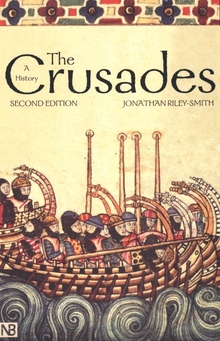
The Crusades by Jonathan Riley-Smith

How could I resist a book that took my alma mater‘s motto as its epigraph? Of course I couldn’t, all the more so because I wanted to read something about knights and journeys and castles, and none of the fantasy that was close at hand was as immediately appealing.

The version of Riley-Smith’s book that I have is a second edition, published in 2005 as a revision of the 1987 edition. The brief preface to the new edition was very interesting to me because it sketched how the concerns of historians had changed over more than a decade and a half, a glimpse of the historicity of history, so to speak. (It also leads me to wonder what has changed in the time since, though not, mind, enough to seek out a current book on the topic.) Here was one of the most interesting points:

The Crusades by Jonathan Riley-Smith

“Most historians also seem to have lost interest in the question of whether the Latin settlements in the East were colonies or not. This may also be a result of general disillusionment with Marxism, but it should be added that the conviction that the settlements were examples of early colonialism is still axiomatic in Arab and in some Israeli circles.” (p. xxv) There are some adjectives missing between “Most” and “historians” that would go a long way toward clarifying who Riley-Smith thinks matter. It’s an interesting glimpse into how history informs and is shaped by current relations and controversies to say that viewing the crusades as colonial enterprises is “axiomatic” in Arab circles. It sets the stage for, at best, a great deal of miscommunication.

More aspects that changed between 1987 and 2005, according to Riley-Smith, include growing interest in the motivation of crusaders, greater knowledge of the smaller crusades to the East in between the traditionally numbered crusades, deeper understanding of the Latin settlements in the East, and increased interest in the military orders including the order-states of Prussia, Rhodes and Malta. All of these changes were shaped by greater access to a wider range of sources, something that will have only expanded in the meantime, especially as archives have become digitally accessible. (I do wish the maps had been re-done with 2005 technology instead of keeping 1987’s dot-screen overlays.)

In the course of just over 300 pages Riley-Smith lays out the history of crusading, from the ideas about violence, penitence and just wars that gave rise to the First Crusade just before 1100 through Napoleon’s extinguishment of Hospitaller Malta in 1798, by which time crusading had long since ceased to be a vital force in Western Europe. Riley-Smith gives the most details on the First Crusade as a way of explaining the movement, its trials, its successes, and its many legacies. He takes what is called a “pluralist” view of crusading, showing how similar acts, theology and papal perspective apply to crusades in the Baltic, Iberia and within Western Christendom every bit as much as to crusades to the Holy Land. Apparently this was in opposition to a traditional view that crusading only involved lands around the eastern Mediterranean. I am not sure who supposedly held this view, as the German and Polish history I am familiar with certainly regarded the actions in the Baltic realm as crusades. (And not just historians: the title of Henryk Sienkiewicz’s popular novel from 1900 is Krzyżacy, which is usually translated as The Knights of the Cross or The Teutonic Knights but could simply be rendered as Crusaders.) At any rate, that is more a matter for the guild of historians than for the general reader at whom Riley-Smith’s work is aimed.

Continue reading

Permanent link to this article: https://www.thefrumiousconsortium.net/2020/05/16/the-crusades-by-jonathan-riley-smith/

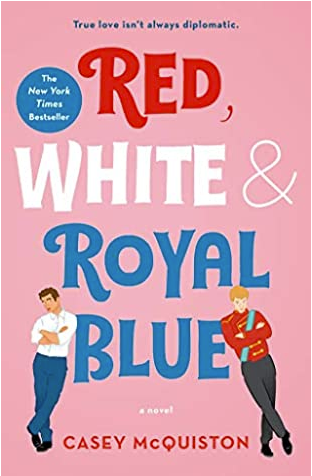
Red, White & Royal Blue by Casey McQuiston

Ah, if only, if only. I’ve enjoyed enough romance novels to be able to differentiate between the wonderful modern-day version and the traditional version described by Sir Walter Scott, and only sometimes do the twain meet in ways more convincing than mere bad plotting. It’s bittersweet to feel that this charming tale of the First Son of the United States of America and the youngest prince in the direct line of the English monarchy falling in love with one another should feel at once realistic and achingly unlikely, a fact acknowledged by Casey McQuiston in her, er, acknowledgments when she mentions that the germination of the book came to a screeching halt following the debacle of America’s 2016 presidential election. But if you’d like to escape our present, miserable reality for a convincingly realistic parallel world with wildly different people in the White House and Buckingham Palace, then by all means crack this book open for some truly lovely writing about being in love against all odds.

Note: if progressive politics dismays you a/o you’re a member of #Cult45, you probably won’t like this book, and that’s too bad for you.

Anyway, Alex Claremont-Diaz is the younger child of America’s first female president, white Texan Ellen Claremont and her ex-husband, the Mexican-American Senator from California Oscar Diaz. Ever since an unpleasant encounter at the Olympics, Alex has held a grudge against Prince Henry, the youngest grandson of England’s reigning Queen Mary, but after the two accidentally fall into a cake together at Henry’s older brother’s wedding, political forces go into overdrive to cover up any hint of tension between the two. Towards this end, Alex and Henry are forced into bff photo ops, then slowly begin to discover that they actually like each other. And then they begin to discover that they actually like each other. Chaos ensues against a backdrop of international politics.

As with all romance novels, the reader’s buying into the relationship proceedings will depend on their own views in re a healthy romance. Personally, I’m of a mind with Oscar in his estimation of Alex and Henry’s relationship: it could all turn out to be a disaster in the end but that doesn’t mean love isn’t worth fighting for in the meantime. I’m not so convinced of a pledge of True Love from two young men in their early 20s in the first openly gay relationship each has ever had, especially when it’s primarily been conducted long distance for months, but I’m a curmudgeon so. The book does end in a good place, but I’d be intensely surprised if the two were still together ten, even five years down the line: YMMV, of course. I did like that a good chunk of the book deals with Alex realizing that he’s bi, a topic that isn’t often covered in romance but is extremely well-handled here. I was also really impressed by how Ms McQuiston got all the voices to sound authentically of their backgrounds. As someone with an Anglo-American upbringing, I’m super sensitive to missteps in this regard, so the authenticity of voice in this book is honestly one of the most impressive literary achievements I’ve read in decades. I don’t necessarily believe in the depiction of British monarchy (too rigid) and press (not aggressive enough) here, but the portrayal of American politics was both realistic and aspirational, a panacea to the “how the fuck did we get here?” times we’re living in now.

Red, White & Royal Blue was a good, escapist read, and I’m very much looking forward to Ms McQuiston’s next book, a queer time-travel romance with female leads. Also, I frigging love her round, over-sized tortoise-shell glasses and wish I could get away with wearing same.

Permanent link to this article: https://www.thefrumiousconsortium.net/2020/05/11/red-white-royal-blue-by-casey-mcquiston/

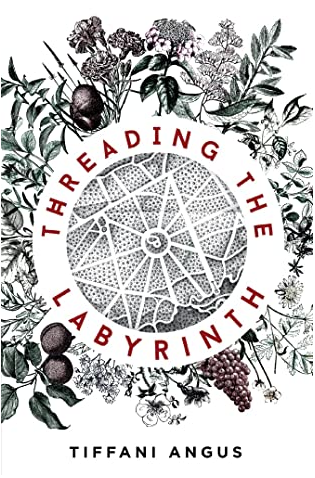
Threading The Labyrinth by Tiffani Angus

I’m at the stage of the stay-at-home order where I’m craving beauty but am too tired to do the gardening or art that I want to — homeschooling special needs 6 year-old twins is really, really hard, and God bless my 9 year-old for being remarkably fuss-free. So for these difficult times, a novel like Tiffani Angus’ Threading The Labyrinth is the perfect balm. Featuring the beauty of gardens and art without skimping on what exhausting, difficult work they can be to create and maintain, it’s a terrific reminder that life isn’t just picture-perfect social media posts, that the things we appreciate take effort and time to bring into being. Almost without saying so, it’s a reminder for us all to be a little kinder to ourselves if we’re not perfect in our aspirations for love or beauty, because time is the great leveler.

And time, as much as gardens and art, is the central concern of this ghost story that travels between several distinct eras to tell us a multi-layered tale of inheritance and belonging. In 2010, American art curator Toni has discovered that she’s been entailed The Remains, as she’ll call it, of an English estate. The manor house is a crumbling ruin, but something about the walled garden calls to her. Almost four score years earlier, an actress named Irene will join the Land Girls, and come work that same garden to help prepare food for the war effort. An almost equal time before that, a young Victorian woman will inherit her aunt’s talent and equipment for the newfound art of photography, even as she’s asked to pose for the paintings of an artist coming to a crossroads in his career. And then there are segments following the American Revolutionary War, and even earlier, stretching back through time for a wide-ranging, loving look at the history of England and how it all comes together in this one secret, beautiful place.

As far as speculative fiction goes, this is definitely on the gentler side, with scares coming less from the supernatural aspects of the narrative than from the very ordinary human malice that challenges our heroines and heroes as they struggle to preserve the garden and its stories. That said, nature is creepy and will kill you without a second thought, so the thing with the vines totally freaked me out. I also enjoyed Dr Angus’ quiet criticism of the mores that stifled women throughout the centuries, as well as the sex-positivity on display. Her writing is beautifully evocative of a beloved England, and while I enjoyed the acknowledgments of that country’s colonial legacy, it was easy to tell — in perhaps my only criticism of this book — that Toni was written by someone not-American.

Threading The Labyrinth is at once a romance of England and a gorgeously layered story of ghosts through the centuries. It is a remarkable debut novel from an author whose work I look forward to reading more of.

Permanent link to this article: https://www.thefrumiousconsortium.net/2020/05/07/threading-the-labyrinth-by-tiffani-angus/

The Colours of All the Cattle by Alexander McCall Smith

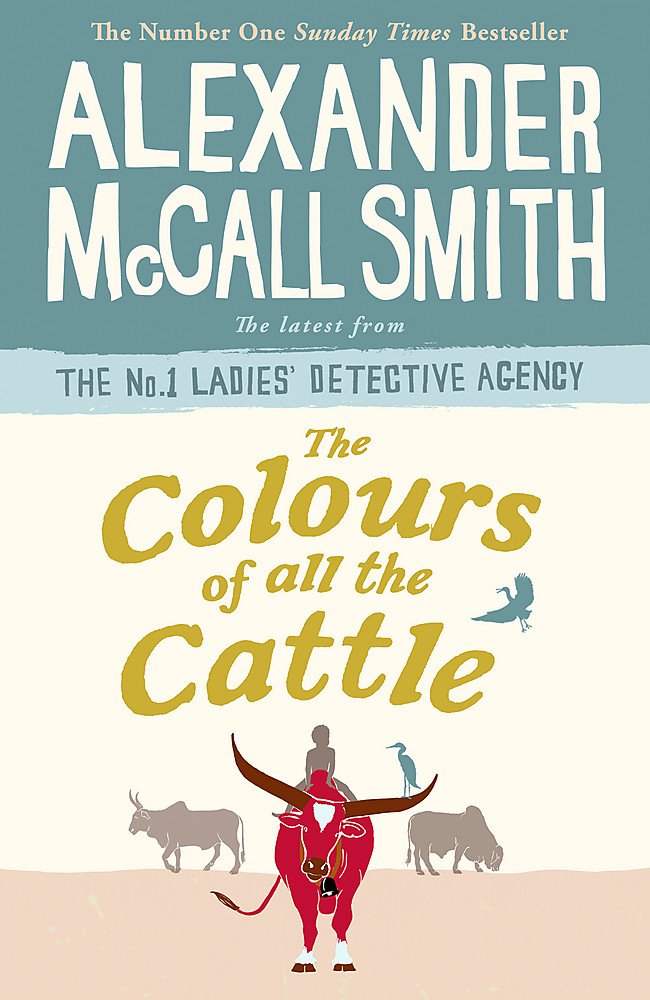
The back cover of The Colours of All the Cattle calls this book, the nineteenth in the No. 1 Ladies’ Detective Agency series, “the one with the election.” Indeed, a special election for a seat on the Gabarone city council dominates the stories told in The Colours of All the Cattle. The council is closely divided about a proposal to build Big Fun Hotel on some land next to a cemetery. Many people are unhappy about the implied disrespect of a boisterous resort near where people go to visit their dearly departed, but it looks like big money is involved and the fix is in. But Mma Potokwani, the formidable matron of the orphan farm, knows that a vacancy is coming up because a council member is ill and will resign before his term is complete.

She looked intently at Mma Ramotswe. ‘And that means that there will be an election for that seat, and a new member.’
‘I suppose so,’ said Mma Ramotswe.
Mma Potokwani lowered her voice again — almost to a whisper. ‘And that also means, Mma, that some good person — some person who might be a woman this time — could stand for that seat.’
It took a few moments for Mma Ramotswe to respond. The, eyes wide with surprise, she said, ‘You, Mma?’
Mma Potokwani smiled. ‘No, Mma. You.’ (pp. 22–23)

The titles of the chapters that follow give a sense of Mma Ramotswe’s enthusiasm for campaigning: “I Am Not the Right Person” or “Sign Here, Please, and Here…” To add to Mma Potokwani’s powers of persuasion, the filing deadline is just a few days away, and only one other candidate has submitted the papers necessary to get on the ballot: Violet Sephotho, the closest that the series has to a recurring villain.

The Colours of All the Cattle

The set-up is contrived, but it provides McCall Smith with opportunities for lovely set pieces with his characters. Mma Makutsi, for example, practically bursts when she finds out who Mma Ramotswe’s opponent will be, and pens a manifesto that spends a couple of paragraphs on her virtues and several pages lovingly detailing all of Violet Sephoto’s shortcomings and mean deeds. More seriously, Mma Ramotswe and other characters reflect on public good versus private profit, and what small-time individuals can do to prevent the latter from overwhelming the former. For her election poster, she chooses the words, “I am Mma Ramotswe. I am not much, but I promise you I’ll do my best.” (p. 178) The contrast with the flashy, up-and-coming, on-the-move Violet Sephoto could not be clearer.

Continue reading

Permanent link to this article: https://www.thefrumiousconsortium.net/2020/04/29/the-colours-of-all-the-cattle-by-alexander-mccall-smith/

Firefly: The Ghost Machine (Firefly #3) by James Lovegrove

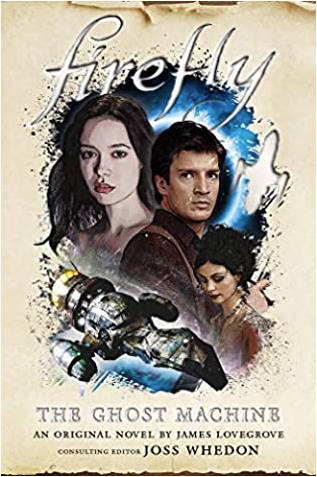
Oooh, a novel set between the end of the series and the start of the movie! First, tho I’m a big fan of the entire Firefly ‘verse, I must admit that my grasp on the details is a little shaky, so I was seriously impressed by James Lovegrove’s commitment to calling back to details from the series actual. It really grounds the whole book in the canon, and makes it feel that much more “real,” as much as can be said of a fictional universe anyway.

Second, there’s a reason Titan Books proclaims that this novel was written in consultation with Joss Whedon. I didn’t feel like it was super necessary with the first two books in the series but it’s definitely something readers would wonder about otherwise here, so it’s super neat that any speculation is headed off at the pass.

So Firefly: The Ghost Machine begins with the crew stopping at the backwater planet of Canterbury to pick up cargo for Badger. Trouble is, once Captain Mal Reynolds finds out that their cargo is actually an experimental mystery box that “fell off a truck” from a nearby Blue Sun testing facility, he puts two and two together and decides that this job is way too hot for the Serenity to handle. He politely declines, gunfire ensues, and he and Zoe head back to the ship to break the news to the crew that they’re leaving the planet empty-handed. Only Jayne has other ideas, and sneaks the box on-board with a view to getting his own personal payday from Badger.

Joke’s on him, however, as the box contains a so-called Ghost Machine that starts to mess with everyone’s heads, lulling them into waking dreams of their deepest desires. Well, everyone except River, because her head is impervious given all the messing about that’s already been done to it. As the rest of the crew succumbs, leaving their ship to spin out of control, River needs to dig deep into her addled psyche in order to free her friends and save the day.

Given the timeline, obviously, everyone will survive, so the real draw here isn’t the suspense of seeing our crew in harm’s way but in seeing what makes each and every one of them tick — and then seeing how their deep-seated fears begin to warp their own fantasies. For Mal, unsurprisingly, it’s living a life of happy luxury with Inara and their children. Perhaps more surprisingly, Zoe imagines a universe where the Browncoats won and she’s free to be a bounty hunter tracking down Alliance war criminals. It was actually really refreshing to see most of the men dream of romance and family whereas the women longed for independence and professional aptitude. Which isn’t to say that there wasn’t any overlap, just that Mr Lovegrove writes very convincingly of the motivations and fears of our crew as we know them, and doesn’t fall back on any tired shtick to do it.

I could absolutely envision this book as an episode or arc of the series, tho there were definitely bits that were much gorier than you’d ever see on-screen. I also loved how Mr Lovegrove captured everyone’s courage and pluck, without overlooking their flaws. This was another great installment in the Firefly series that makes me miss the TV show while simultaneously satisfying my desire for more from the ‘Verse. Excellent, as always!

Permanent link to this article: https://www.thefrumiousconsortium.net/2020/04/28/firefly-the-ghost-machine-firefly-3-by-james-lovegrove/

Shorefall (The Founders Trilogy #2) by Robert Jackson Bennett

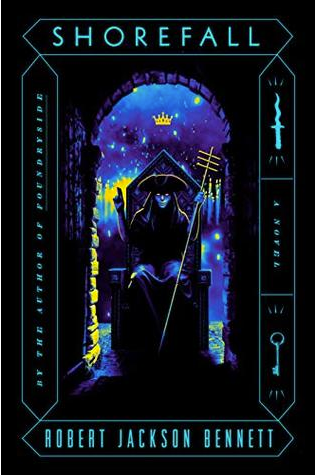
Ahhhh, so lovely to slip back into the genre-bending fantasy-cyberpunk world of The Founders Trilogy, like a nice warm bath for my mind. The first novel Foundryside was one of my favorite books of 2018, and I was ecstatic to be able to get my hands on an advance copy of the sequel, which begins about three years after the events of the first book end. Sancia, Berenice, Gregor and Orso have radically altered the power structure of Tevanne by opening their own scriving house in what’s now known as the Lamplands, inspiring numerous others to break away from the sprawling campos of the three remaining large houses in order to found their own small enterprises. That isn’t enough for our Foundrysiders tho, who have been working on ways to topple the large houses and their dependence on slavery for good.

Shorefall opens with a heist, as the Foundrysiders infiltrate the Michiel complex in order to steal all their scrivings (basically, all their patents/programming.) But a nocturnal visitor warns Sancia that something terrible is on its way, that Dandolo House has done the unthinkable and resurrected the First Heirophant himself. As the mad heirophant Crasedes draws closer to Tevanne, Sancia and crew must find a way to contain him, but soon find themselves pawns in a struggle spanning centuries, a struggle not all of them will survive.

I feel like this novel had a bit of second book syndrome, where the author had to cram in all the between bits before being able to turn his gaze to the finale. Which doesn’t make it a bad book at all, but I certainly felt less invested in the proceedings and more hurried along than I had in Foundryside. To a certain extent, the breathless nature of Shorefall’s narrative was the necessary result of certain plot twists, but the rapid exposition thereof lent the reader little time to empathize with our characters. I was also pretty mad about what happened to Orso. Like, I get it, but I certainly don’t have to like it.

I did like that we find out more about Crasedes and Clef and their relationship, tho again, if the narrative hadn’t felt so hurried, I would likely have felt it more deeply at the big reveal. I’m guessing that Valeria is Clef’s wife and Crasedes’ mom? I imagine that will be explained in the sequel. And while I absolutely prefer the idea of radical empathy as a solution to the age-old problem of “how to stop people from abusing power”, especially in contrast to Valeria and Crasedes’ differing but equally terrible solutions, I found myself instinctively recoiling from the mindmeld technique as I’m not convinced that it will preserve autonomy or necessarily promote goodness and humanity. The Foundrysiders could do it because they’re all good people, but what if, say, the Morsinis had discovered this and used it to convince the powerless that whatever benefited the Morsinis was the only thing that mattered? I’m hoping this is another thing addressed in the last book, which I am no less looking forward to despite Shorefall not being quite as spectacular as Foundryside. It’s still a solid read and an entertaining novel, and sets the stage for a brand new world in the trilogy’s final installment.

Permanent link to this article: https://www.thefrumiousconsortium.net/2020/04/21/shorefall-the-founders-trilogy-2-by-robert-jackson-bennett/