Nightmare In Savannah by Lela Gwenn, Rowan MacColl & Micah Myers

What if (the original, tho in fairness, I haven’t yet watched the remake of) The Craft wasn’t about witches but was about wicked fairies instead?
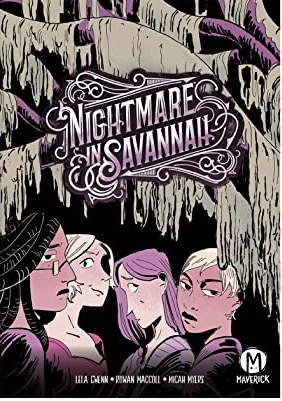
That’s the basic premise of Nightmare In Savannah, which opens with Alexa Bowman moving from Chicago to live with her grandfather in Savannah, Georgia. She’s not super looking forward to starting in a new school, but things are made exponentially worse when her queen bee classmate Jen looks her up on the Internet and humiliates her by very publicly revealing the truth about her parents. While several other cool kids, including football star Lucas, try to befriend her, Alexa takes their claims that Jen isn’t as bad as she seems to mean that they’re all willfully ignorant of how toxic Jen truly is.

So instead, Alexa chooses to hang out with another group of girls who’ve all been victimized by Jen but aren’t “useful” enough to keep in her orbit. Skye has a prominent birthmark on her face that she hides with long, trailing hair. Chloe is a rich girl whose parents give her everything material that she desires and nothing else. Fae likes to drink. After a wild night in the woods with her new friends, Alexa wakes up with markedly different physical features that no one else seems to be able to see. But all her new friends wear the same marks, and they all seem to have strange abilities that soon start wreaking havoc on the rest of the school. Then her grandfather starts keeping company with a strange woman who seems far too interested in Alexa and her friends, but who also seems to hold many answers to their questions.

Continue reading

Permanent link to this article: https://www.thefrumiousconsortium.net/2021/11/10/nightmare-in-savannah-by-lela-gwenn-rowan-maccoll-micah-myers/

E.X.O. – The Legend Of Wale Williams, Part One by Roye Okupe, Sunkanmi Akinboye & Raphael Kazeem

I have super enjoyed the other books in the YouNeek YouNiverse so far but this, I feel, is the best of them yet!

Set in a near future Nigeria, Wale Williams is the son of a workaholic scientist, Dr Tunde Williams, whose absorption in his work leads to a tragedy that tears their family apart. Unable to deal with being near his father anymore, Wale takes off after promising to carry away some of the research that Tunde fears will be used for evil purposes should it fall into the wrong hands. Leaving behind his childhood sweetheart, Zahra Martins, he goes walkabout for five years, returning to Lagoon City only after receiving news of his father’s death.

Unfortunately, Lagoon City is a lot different from what Wale remembers. Rife now with a criminal element calling itself The Creed, the gang’s merciless thugs terrorize the inhabitants of the Omile neighborhood, answering only to a leader known as Oniku. Wale intervenes in a mugging but otherwise wants little to do with addressing the problem, disappointing his activist brother Timi and their entrepreneurial friend Benji. But then Creed robots attack the Williams estate, involving Wale whether he likes it or not.

During the attack, Wale uncovers an exo suit left for him by his father, and uses it to defeat the robots and stop them from attacking other innocent civilians. But his heroics draw the attention of various factions with their own motivations, and soon Wale is fighting more than just random crime while uncovering family secrets that threaten all of Lagos, if not the entire country and more.

Continue reading

Permanent link to this article: https://www.thefrumiousconsortium.net/2021/11/09/e-x-o-the-legend-of-wale-williams-part-one-by-roye-okupe-sunkanmi-akinboye-raphael-kazeem/

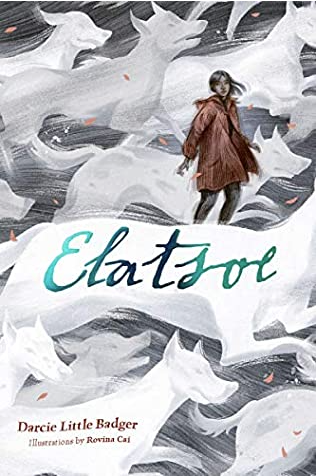
Elatsoe by Darcie Little Badger

It’s sheer coincidence that I saved this for Native American Heritage Month, but I’m so glad the Hugos forced me to finally get around to reading it!

Elatsoe is the full name of Lipan Apache Ellie Bride, a teenage girl who lives in a Texas much like our own but with certain significant differences. For a start, Ellie’s ability to summon and talk to the ghosts of animals is unusual but not as outlandish as it might be in our reality; similarly with her best friend Jay’s British-fae heritage that allows him to travel through fairy rings. When her beloved ghost dog Kirby warns of an imminent death, Ellie goes into a minor tailspin, searching to make sure that her nearest and dearest are all safe. The friends and family that she can immediately contact are all fine, but then her parents get a phone call letting them know that Ellie’s cousin Trevor has died in a car accident at the other end of the state.

While the loss of a beloved older cousin who’d just started a family of his own would be crushing enough, Ellie’s grief is further intensified by Trevor’s appearance to her that night in a dream. His fading spirit tells her that he was murdered by a man named Abe Allerton from the nearby town of Willowbee. On waking, Ellie is sure that this was no mere dream, and shares it with her parents. They agree that they all ought to go support Trevor’s widow Lenore and his infant son Gregory, which will allow Ellie the opportunity too to get to the bottom of things once there.

Continue reading

Permanent link to this article: https://www.thefrumiousconsortium.net/2021/11/08/elatsoe-by-darcie-little-badger/

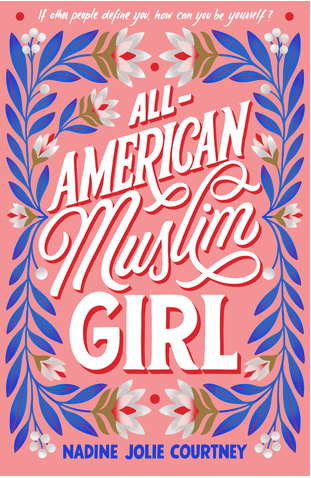
All-American Muslim Girl by Nadine Jolie Courtney

Circassians! The father of Allie, title character and first-person narrator of Courtney’s novel, comes from a Circassian family. They’re an ethnic group originally from the Northern Caucasus. After their encounter with an expanding Russian Empire went the way of most encounters between small peoples and the empire, the vast majority of Circassians were expelled to the Ottoman Empire. Most contemporary Circassians live in Turkey, with a smaller population in Russia, and still smaller but historically significant groups in Jordan and Syria. Allie’s extended family hails from Jordan, where various older relatives were prominent enough to have known the royal family personally.

All-American Muslim Girl

More importantly for Allie, her father is an American academic. As a result, her immediate family (she’s an only child) has been peripatetic as she has grown up while her father moved from one academic appointment to another. Her mother’s work as a therapist has been flexible enough that the family could follow the professorial lottery. Which, with a tenure-track job at Emory University, Allie’s dad appears finally to have won. Allie has reacted to her family’s journey by becoming adaptable, with a knack for fitting in nearly everywhere and a genuine interest in the people she gets to know at each new stop. The down side, understandably, is that she sometimes wonders who she really is beneath all of the personas she has tried on.

Allie’s mom grew up a white Christian in Florida and converted to marry Allie’s dad, Mo (short for Muhammad). Crucially for the story, the protagonist presents as white: Circassians are literally Caucasian, and genetics made Allie a redhead. She’s not obviously from a Muslim background, and her father became increasingly secular over his adult life.

All-American Muslim Girl begins with Allie halfway through her first year in high school in the fictional north Atlanta suburb of Providence. In the first chapter, Allie and her parents fly to Dallas, where their extended family — “still jet-lagged from Saudi, Jordan, London, and New Jersey. Everybody is a cousin, or a friend of a cousin, or the cousin of a friend—and they all go back decades, most to the old days in Jordan” (p. 13) — is gathering to celebrate New Year’s at the house of one of her aunts. Parts of the reunion read to me like the large, Southern family events I went to as a kid. People everywhere going in and out; music; generations; teasing, sometimes gentle, sometimes more barbed; relations of semi-understood provenance (Aunt So-and-So who’s actually a second cousin); and lots of food. Of course for Allie’s family, the conversations are going in three different languages: English, Arabic, and Circassian. The decor is different, with a lot of vivid colors and Koran verses, though naturally the two aunts’ houses that Allie visits in Dallas could hardly be more different from one another.

Continue reading

Permanent link to this article: https://www.thefrumiousconsortium.net/2021/11/07/all-american-muslim-girl-by-nadine-jolie-courtney-2/

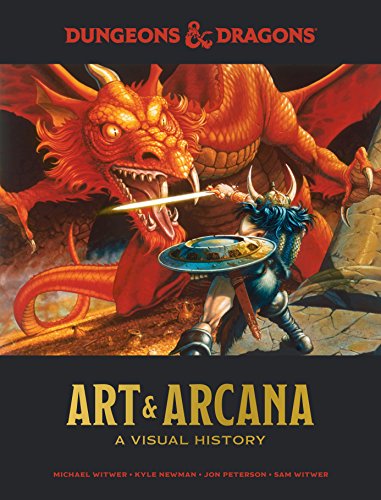
Dungeons & Dragons Art & Arcana: A Visual History by Michael Witwer et al.

For a certain kind of person, this book is a source of great joy. Fortunately, I am that kind of person, and I have kept coming back to it since I bought it in February. I first became aware of Art & Arcana when I flipped through an electronic version that came as part of the Hugo voters’ packet in 2019. Even through a laptop screen, I could see that the physical book would be something special, and so it has proved.

D&D Art & Arcana

Art & Arcana is a visual history of Dungeons & Dragons, beginning before the beginning with the game’s immediate (Chainmail) and more distant (H.G. Wells) antecedents, and continuing through D&D’s fifth edition, its current incarnation that began publishing in 2014. The book itself is a serious object: just over 400 pages, oversized, hardbound, printed in full color on every page. I’ve been out of the printing business for too long to spec paper by hand anymore, but it’s quality stock that will stand up to years of reading and referencing, and the colors fairly leap off the page, especially in the many full-page illustrations.

I learned the game from friends and their various older brothers just as the original version of D&D was transforming into Advanced Dungeons and Dragons; the three little tan booklets and the several supplements were giving way to hardback books, although at that time only two of the three books necessary for AD&D had been published, so we mixed and matched as required. The wait for the Dungeon Master’s Guide seemed an eternity, though Art & Arcana tells me it was about a year. I played with great regularity through the mid-1980s, tapering off and essentially coming to a stop in the early 1990s. My D&D books did not come with me to Budapest, and they still have not caught up with me. About half of Art & Arcana is familiar from when I was either playing or still reading and buying bits of D&D things here and there. The rest is just as gorgeous, if not as familiar. Of course for people whose formative experiences came from newer editions of D&D, the ones that feel like home to me will be history, maybe even primitive ancestors.

The book’s modest amount of text recounts the story of the game’s development, beginning with how Gary Gygax and Dave Arneson, along with other members of their gaming clubs, worked out how to add medieval and fantasy elements to the games they were already playing with miniature soldiers. In the early 1970s, the game changed from rules about what to do with miniatures — which by then included monsters — to open-ended role-playing for which miniatures were useful but not necessary. In 1974, Dungeons & Dragons proper made its debut.

Continue reading

Permanent link to this article: https://www.thefrumiousconsortium.net/2021/11/06/dungeons-dragons-art-arcana-a-visual-history-by-michael-witwer-et-al/

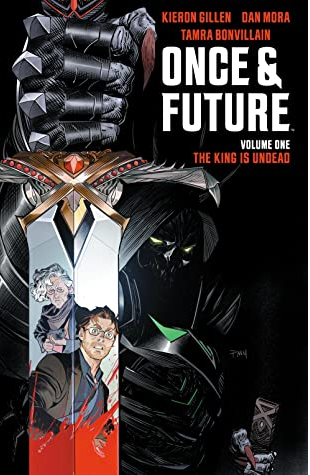
Once & Future, Vol. 1: The King is Undead by Kieron Gillen, Dan Mora & Tamra Bonvillain

The first comic that really expanded my idea of what graphic novels could do was Camelot 3000 by Mike W Barr and Brian Bolland, which I read as a young adolescent, then again less than a decade ago. It certainly was not as good for me the second time around, but I’ll always treasure the book for really opening my eyes to the possibilities of the medium.

And now here we have Once & Future, a new comic title based on a similar premise: the resurrection of King Arthur and how history attempts to repeat itself, to varying degrees of interesting success and even more fascinating failure. Instead of being set in the far future like C3000 tho, it’s set in the modern-day. Also unlike its predecessor, I’m fairly confident it won’t make me cringe on a re-read a dozen or so years from now.

An old scabbard is found on an archaeological dig in Cornwall shortly before the man responsible for the find is shot and killed. Hearing the news, independent senior citizen Bridgette McGuire takes off from her nursing home, prompting her athletic if dorky grandson Duncan to cancel a dinner date in order to come find her. The last thing Duncan expects is to find his gran digging up a small arsenal of weapons, right before a mythological creature attacks! Gran seems to be coolly taking everything in stride, to the utmost consternation of poor Duncan, whom she’s raised not to believe in monsters or fairy tales. Now both such things are appearing before his very eyes, and he’s not sure how to handle any of it.

Gran, however, believes that violence is almost always the answer, and has him take her to Glastonbury, where she wants to intercept the people responsible for the theft before they can set in motion their wild plan to resurrect King Arthur. She knows that the prophecy of him returning in Britain’s darkest hour is double-edged: while it might mean he could come back to save them, it can also mean that his return will herald the worst era the isles have ever known. But Gran will need allies in her quest, and might not even be able to rely on Duncan once he learns the truth about who she really is.

Continue reading

Permanent link to this article: https://www.thefrumiousconsortium.net/2021/11/05/once-future-vol-1-the-king-is-undead-by-kieron-gillen-dan-mora-tamra-bonvillain/

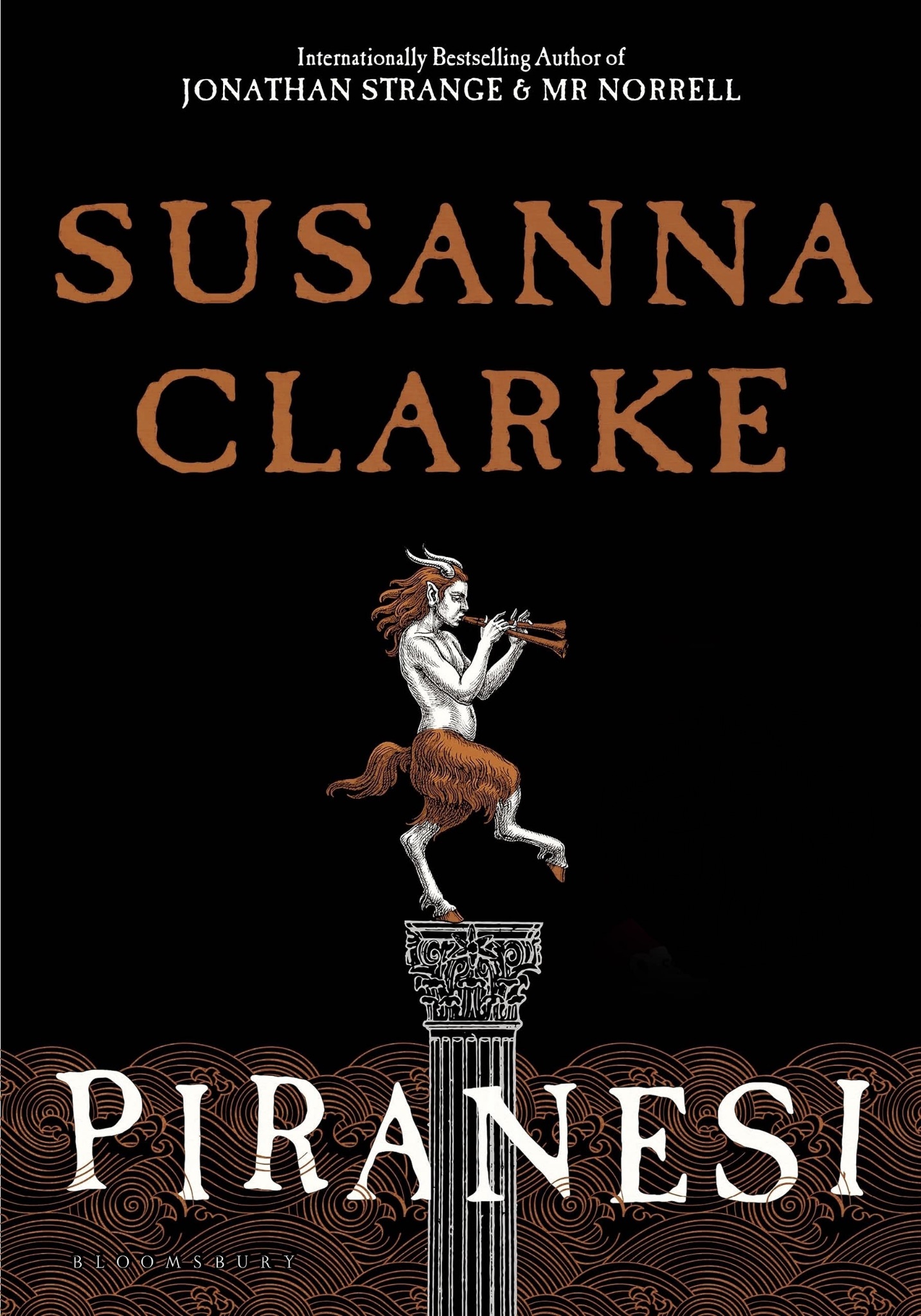
Piranesi by Susanna Clarke

Piranesi lives in a vast House of marble statues, so tall that its top story is in the clouds and its lowest is filled with floods and marine life. He spends his days charting the different halls, paying attention to tide patterns and gathering information for the only other living person to haunt this place, a man he calls The Other.

Piranesi by Susanna ClarkeThe Other believes that the secret to accessing an ancient, powerful knowledge lies hidden somewhere in the House. He and Piranesi meet twice a week to share knowledge, their discoveries and the occasional supplies. But one day, he comes to Piranesi with a warning: another person has found access to the House, bearing naught but madness and instability. Piranesi must do everything possible to avoid talking to this mysterious figure he terms 16. But it’s another chance encounter that sets Piranesi on the slow path to the truth, unraveling the mystery of the House and the true reason for his presence in it.

Early on in the book, I got the weird feeling that this was being plotted out like a psychological thriller. While one can imagine this novel as a whole in those terms, it is certainly far more fantastical than your average mystery, a bit like Gormenghast meets House Of Leaves, as re-written by Ann Cleeves. Reading the book, I kept waffling between how much I admired the economy of Susanna Clarke’s language while also wanting just a smidge more description of the House: the Coral Halls sounded especially gorgeous, and I would have liked a little more of that descriptive effort in other rooms. This is not, overall, a lush novel. Like the marble halls of the sprawling House, it is mostly austere.

Continue reading

Permanent link to this article: https://www.thefrumiousconsortium.net/2021/11/04/piranesi-by-susanna-clarke-2/

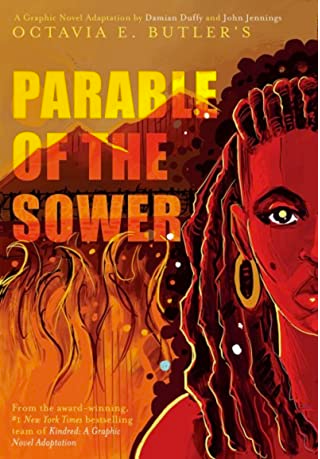
Octavia E Butler’s Parable Of The Sower: A Graphic Adaptation by Damian Duffy and John Jennings

I actually hadn’t read the original text of Parable Of The Sower before this, but I have read and loved Parable Of The Talents. I’ve also read and, in retrospect, disliked Kindred — I had good things to say about it at the time, but the way Sarah treated her ancestress feels more selfish and less forgivable with time.

PotS will not leave a similar impression on me, thankfully, but it will also not reach the heights of PotT in my esteem. A large part of why is gently pointed out by Nalo Hopkinson in her outstanding introduction: the Lauren Olamina here is a teenager and thinks she knows it all and is impatient with the older people who seem, to her, to be stuck in their ways. She lives in the walled enclave of Robledo with her preacher dad, her teacher stepmom, her brother and half-siblings. Life in Robledo is hard but much better than the squalor outside their walls. At least inside the enclave, they have enough food and shelter for everyone.

Lauren still doesn’t feel safe there, tho, and is constantly dreaming about traveling north to where, she’s heard, there are greater opportunities and less incivility. She also dreams of forming a new religion with a god vastly different from her Baptist father’s. She doesn’t dare tell anyone about her dreams or preparations for fear of scolding or worse, but when disaster strikes and her proto-prepper precautions turn out to have been prescient, she must set off on her path much earlier than expected.

The way north to safety is hard and with few allies, but Lauren slowly gathers the beginning of Earthseed, as she calls her religion and the community around it. But will the promised land prove nothing but false, and her journey through hardship, evil and literal fire be all for naught?

Continue reading

Permanent link to this article: https://www.thefrumiousconsortium.net/2021/11/03/octavia-e-butlers-parable-of-the-sower-a-graphic-adaptation-by-damian-duffy-and-john-jennings/

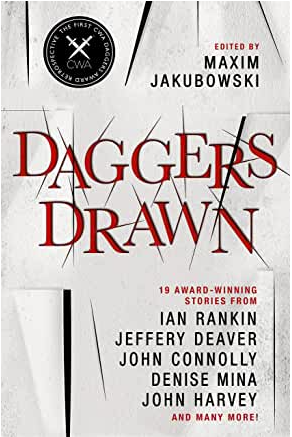
Daggers Drawn edited by Maxim Jakubowski

I really struggled with this short story collection, which is unusual given that its publisher tends to be astonishingly good at anthologies. I wonder if some small part of that was due to how my brains have been practically leaking out my ears as I worked to hit several deadlines this past week (including the publication of my own brand new role-playing game system, Equinox.) Like, I had to sit down and re-read the introduction twice to see if I could properly grok the point of this book, which is apparently to collect in one volume the winners of the Crime Writers’ Association’s Short Story Dagger since the award was first handed out in 1983. Twenty of those stories have been included in this book, cut down from thirty-eight, as several of the authors won more than once (and picked out the one they liked best for inclusion here,) and at least one other is not permitting reprints. So this is essentially a really good look at the stories that crime writers have really loved over the past four decades or so.

Trouble is, I found very few of them surprising in much more than how envelope-pushing they were attempting to be. The first story, Swiftwing 98, by Peter O’Donnell writing as Madeleine Brent is clever enough. While I enjoyed the unusual cast of the next entry, Julian Rathbone’s Some Sunny Day, I was quite underwhelmed with the mystery itself. Larry Beinhart’s Funny Story was a thoughtful tale of crime and genuine evil wrapped in a morally ludicrous, if not outright terrible, framing device. Things started to go rapidly downhill from there on in. I was not a fan of the moralizing in Jerry Sykes’ Roots, and I straight up cringed through Stella Duffy’s Martha Grace, which reduced its title character to a punch line throughout. John Harvey’s Fedora had a similar sort of punching-down feel to it, and I am 100% not surprised to discover that the author of Apocrypha, a tale narrated by a Black man down on his luck, is, as far as I can tell, a white guy. I also found the representation of neurodivergency in Denise Mina’s Nemo Me Impune Lacessit incredibly grating, if not borderline offensive.

There were four stories here that I did very much enjoy, however. The Weekender by Jeffery Deaver and The Dummies’ Guide To Serial Killing by Danuta Kot actually had twists I did not see coming. Phil Lovesey’s Homework features a swotty teenage girl taking a page from Hamlet to exact some necessary vengeance. And the very last story, #Me Too by Lauren Henderson, gets in some of that punching-up that’s necessary for any type of entertainment to escape soullessness.

Continue reading

Permanent link to this article: https://www.thefrumiousconsortium.net/2021/11/02/daggers-drawn-edited-by-maxim-jakubowski/

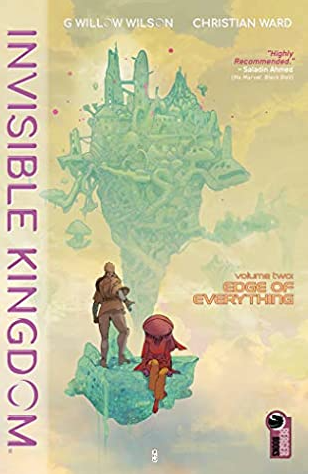
Invisible Kingdom Vol. 2: Edge Of Everything by G. Willow Wilson & Christian Ward

I sincerely love it when I jump into a series arc at the midpoint without any prior introduction, but end the book free of any nagging questions as to things that might have come to pass before. I feel like this is the hallmark of a good writer, and certainly not a trait every author possesses. Fortunately for me, G Willow Wilson has this ability in spades, making for a wholly absorbing reading experience for me and, I surmise, anyone else who tries reading this without the benefit of having read Book 1 beforehand.

In Edge Of Everything, the crew of the freighter Sundog has exposed the conspiracy between the ruling Lux conglomerate and the predominant Renunciation religion. Now they’re low on fuel and desperate to resupply, with the closest planet being the isolationist Rool. Captain Grix wants their renegade ex-Renunciation sister Vess to negotiate with her people for them, but Vess is understandably reluctant, having turned her back on Roolian society in order to pursue an ascetic’s path. What she hadn’t counted on was forming a connection with Grix strong enough to make her falter in her purpose.

It’s while floating in Roolian airspace that the Sundog is beset by a crew of pirates ready to break the ship down for scrap. Grix has no intention of accepting any of their blandishments to join their crew, but getting free of them will require a lot more cunning and derring do than even she anticipates. What will the crew do when all seems lost, and only the infinite void is seemingly left to claim them?

Ms Wilson’s writing is immediately immersive and gripping, deftly imbuing each of her characters with full personalities despite having a good-sized cast, lots of action to get through and not much space to cram all that into either (Xether’s my favorite!) There are certainly no soggy middles here in the second book of what’s meant to be a three-part series! The only complaint I have about any of the writing is the off-putting inclusion of inappropriately timed sexy times: other people may dig that, but “barely out of life-threatening injury recuperation and presence desperately needed to avoid a crisis involving several others who depend on you” is not, for me, the most germane five minutes in which to start exploring a new sexual relationship.

Continue reading

Permanent link to this article: https://www.thefrumiousconsortium.net/2021/11/01/invisible-kingdom-vol-2-edge-of-everything-by-g-willow-wilson-christian-ward/