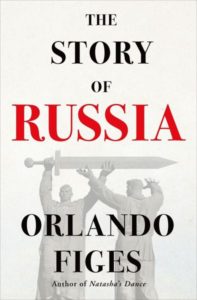
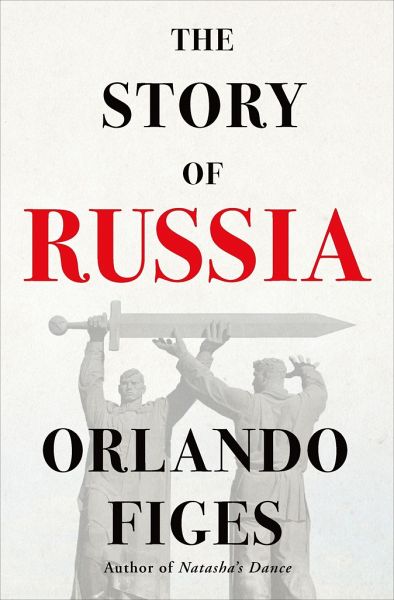
It’s not difficult to guess Orlando Figes’ brief for The Story of Russia: write a history of Russia, accessible to the interested and educated public, acceptable to specialists; keep it under 300 pages; emphasize links between Russia’s deeper past and the government of Vladimir Putin. There is value in the book’s relative brevity, though I wonder how well someone completely new to Russian history would be able to follow the parade of names and places through the centuries, even with the aid of several well-executed maps. Maybe the intended audience is people with a passing familiarity with European and Russian history, but who would like to deepen that knowledge. Figes obliges with what feels to me like a relatively standard division of Russian history into periods: origins, Mongol conquest, the rise of Muscovy through the death of Ivan the Terrible, reforms under Peter the Great, war with Napoleon, imperial crises in the nineteenth century, revolutions and the end of the empire, and Soviet futurism versus Old Russia.
He closes with two chapters that I found odd. “Motherland” begins at the end of the Great Terror, takes in World War II, and runs all the way through the end of the Soviet Union, including the Khrushchev thaw, Brezhnev stagnation, and Gorbachev’s reforms. That’s a lot of contradictions to cover in 34 pages, and the title fits less and less as the years go on. Because so much of this period is still within living memory — indeed, within Figes’ own adult lifetime — and because so much of today’s Russia is shaped in reaction to the choices of these eras, they deserve longer consideration, even if that means the book would run to 320 pages or so.
The final chapter, “Ends,” covers the thirty-plus years since the end of the Soviet Union, and I found it even odder. Figes asks, “How does the story of Russia end?” (p. 268) Well, it doesn’t. Vanishingly few important European powers have stories that end; Prussia is the only one I can think of. The European empires that were tsarist Russia’s peers are gone, but their legacies live on, from splinters of Austria-Hungary throughout Central Europe to the ongoing wars of Ottoman succession in the Middle East. Fortunately, Figes follows with more sensible questions about how far Russia’s past will shape its future (or more accurately, which parts of Russia’s past will shape its future) and why, in his view, Russia returned to autocracy in the twenty-first century. Less fortunately, Figes completed the book in the early months of Russia’s large-scale invasion of Ukraine. He felt compelled to offer some views, and while they are not as bad as his 2014 assessment that “Russia is no longer an aggressive state. Russia does not start foreign wars.” they are also not very good.
Continue reading
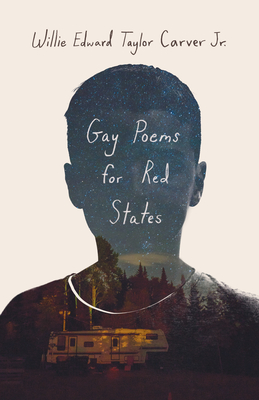 In 2022, Willie Carver was named Kentucky Teacher of the Year. A homophobic vendetta led by just one woman caused him to decide, only months later, to leave the public school system, but not before testifying before Congress about the targeted harassment both he and his students received as a result of him living as an openly gay man.


 Al Singh
 Doug Merrill
 Doreen Sheridan
 Emily Lauer
 John Pitzel
 Lars N. Goldschlager
 Laura Eilers
 Professor X
 Robert Maedgen
 Sylvere Ap Leanan
 The Shire