
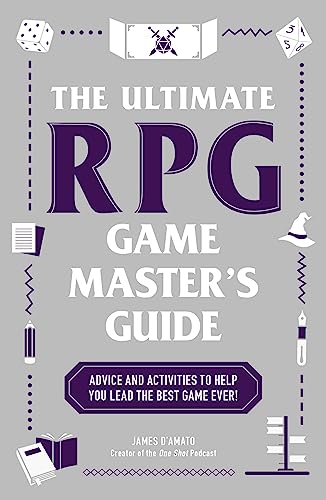
 subtitled Advice And Tools To Help You Run Your Best Game Ever!
There is so much useful information packed into this relatively slender volume, not only for anyone aspiring to run role-playing games but also for more experienced Game Masters looking to hone their skills. All the advice here is system agnostic by design, which makes this a really great resource that isn’t limited to just one kind of game. Its 200+ pages also make it very accessible for readers who already have a ton of material to get through with prepping most RPGs and don’t need yet another massive, small-text tome on top of that.
And frankly, most GM’s guides written specifically for one game are kinda terrible. I’ve been running Dungeons & Dragons for years and still haven’t been able to get past the very first chapter of the official Dungeon Master’s Guide, as my eyes keep glazing over from the potent mixture of confusion and boredom it evokes. Plus, it’s fifty bucks! (And don’t get me started on the diminishing quality of Wizards Of The Coast book bindings over the years.)
Fortunately, The Ultimate RPG Game Master’s Guide is a much more budget- and brain-friendly alternative to collecting a whole bunch of different guides that may or may not prove helpful to the vocation of being a versatile and successful GM. The contents of this volume are well-structured, really going over everything GMs need, from prep to actual play. The bulk of the book is organized into two large parts: GMing Basics (mostly philosophy) and Leading The Game (mostly exercises.)



 Al Singh
 Doug Merrill
 Doreen Sheridan
 Emily Lauer
 John Pitzel
 Lars N. Goldschlager
 Laura Eilers
 Professor X
 Robert Maedgen
 Sylvere Ap Leanan
 The Shire