I am all about the comfort reads this week, and I’ll be blessed if I read anything as charming as this graphic novel is anytime soon!
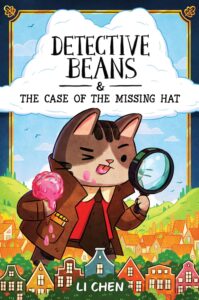 Detective Beans is a young cat obsessed with being a detective, even if that usually just takes the form of acting out his favorite movies for his mom and his best friend Biscuits. While he dreams of fighting crime and helping his community, his most pressing case at the moment is the mystery of whomever is leaving little post-it notes with sweet messages of encouragement on his belongings for him. The handwriting doesn’t match Biscuit’s, and Mom swears that it isn’t hers either.
That case is put on hold, however, when Beans realizes that his beloved fedora hat has somehow disappeared. As he begins tracking it down all through town, he soon finds himself embroiled in greater mysteries than he’d ever dared imagine. Will he be able to reclaim his hat, while proving himself as resourceful as any “real” detective?
This delightful romp through a fictional anthropomorphic town is peak cozy reads, as Beans bounces from one small adventure to the next on his quest for his hat. Li Chen peppers her narrative with gentle humor and a genuine sweetness that is balm to this adult reader’s rumpled heart. When we find out at the end who the post-it writer is, I awwed aloud.
Continue reading
Permanent link to this article: https://www.thefrumiousconsortium.net/2024/11/13/detective-beans-the-case-of-the-missing-hat-by-li-chen/
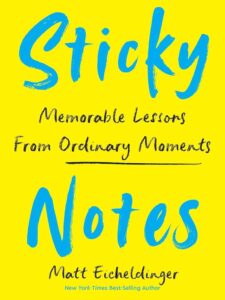 subtitled Memorable Lessons from Ordinary Moments.
I’ve been kind of a mess these past few weeks, even before the dismal US election results and definitely after, so this book was a wonderful antidote for despair. It isn’t entirely perfect — the vignette about Hiking Boots made me go “yeah, sure, he wound up going back to what he wanted to do all along, but I’m pretty sure he gained a lot of valuable life skills and tools along the way” — but it’s pretty darn close. Heartwarming and inspiring, this is a great book for reminding ourselves of the basic decency of most human beings, if we just care to stop and consider the fact of our shared humanity.
Matthew Eicheldinger is a middle school teacher whom I first encountered via his touching short videos on social media. He talks about the lessons he’s learned from his students, on a myriad of topics including patience and compassion and just showing up. Some of the stories can get a little schmaltzy and some of them seem to trail off instead of actually ending but they are, overall, a celebration of the kindness and generosity of middle school kids, not a demographic traditionally known for such.
Continue reading
Permanent link to this article: https://www.thefrumiousconsortium.net/2024/11/12/sticky-notes-by-matthew-eicheldinger/
I don’t know if this is the perfect complement or counterprogramming to my eldest child and I watching and really enjoying Agatha All Along together. Probably a little of both — tho my kid will likely have little interest in this book, alas.
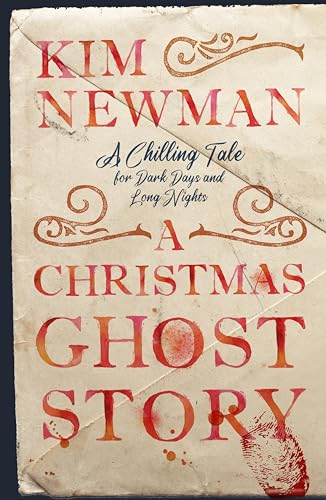
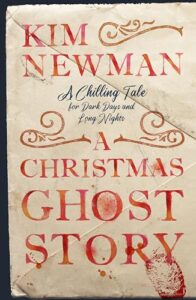 That might be for the best tho, as it’s A Chilling Tale for Dark Days and Long Nights, and I think my kids consume too much horror content as it is (even if the YouTube stuff they gobble down is hilariously terrible, with absurd special effects and wooden acting.) In this horror novella, a bestselling self-published suspense author and her teenage son live in a fairly remote cottage in the Somerset Levels. Angie is a single mom with a penchant for wordplay and a devotion to Christmas passed down through her family, but in a wry sort of manner. She and her son Rust put up offbeat DIY ornaments, change the words in Christmas carols to turn them into Christmas “cruels”, and engage in inexplicable but harmless rituals, like stuffing their mince pies with too much mince and putting broken biscuits in a long-disused pet bowl for Santa’s reindeer.
In the manner of countless teenage boys of the 21st century, Rust has a podcast. His focus is on local paranormal phenomena. Angie hates the idea but tries to be supportive, tho Rust can’t help but notice that some of her jokes are meaner than others. Still, they’re pretty close for a mother and son, and look forward to engaging in the usual Christmastime customs.
Continue reading
Permanent link to this article: https://www.thefrumiousconsortium.net/2024/11/08/a-christmas-ghost-story-by-kim-newman/
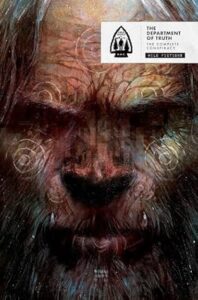 with a host of incredibly talented guest artists!
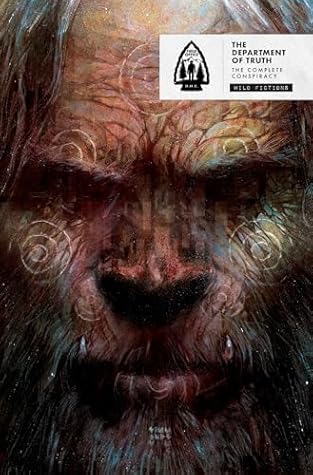
So I went into this book assuming it was a graphic novel, like the rest of the series. Readers, it is not! While it is 100% based on The Department Of Truth comic book series — and there are two issues from the main series at the very end of this volume — the bulk of this book is an illustrated primer to supernatural phenomena the world over. It does, however, mainly focus on America, as that’s where the series’ namesake department is located.
Roughly divided into three parts, the book covers first, intangibles such as ghosts; second, close encounters such as aliens, and third, the cryptids that make up the bulk of what the Department Of Truth deems the most dangerous Wild Fictions. These Wild Fictions are essentially the coalition of so much willpower and belief in a creature that the cryptid in question becomes not only real but deadly to those who cross its path (tho interestingly, the concept of the tulpa on which this is clearly based is only mentioned briefly and never actually explained in these pages.) The conceit is that cryptids are far more likely to manifest and pose a threat than the other categories because of humanity’s often difficult relationship with the wild. The write-ups are written from the acerbic point of view of DoT agents who break down the history of each phenomenon, with a brief risk assessment and occasional redactions of material still too classified to share with the general public.
Continue reading
Permanent link to this article: https://www.thefrumiousconsortium.net/2024/11/07/the-department-of-truth-wild-fictions-by-james-tynion-iv-martin-simmonds/
As a third culture kid, this book really hit home, perfectly depicting not only fairly commonplace events (travelling to see family, getting separated from a parent while shopping) but also the existential angst of feeling lost and disoriented in a place of wonders that, one feels at one’s core, should feel more intimately familiar.
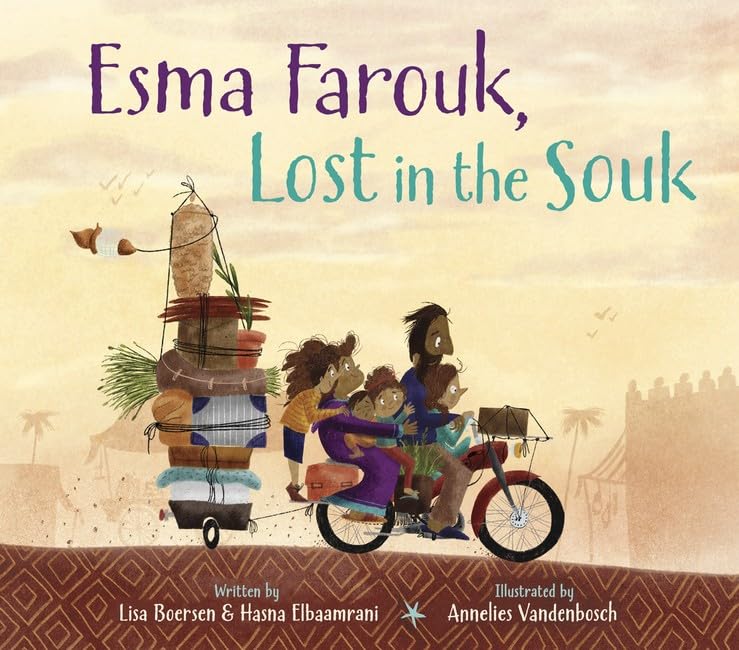
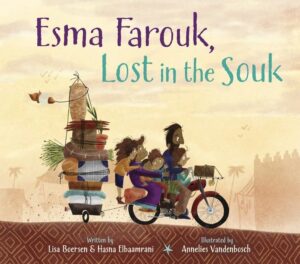 Plenty of readers will wonder what I’m going on about and that’s okay! Because you don’t have to be a third culture kid to delight in this picture book on either its face or at that deeper level. Esma Farouk is a young girl who lives in The Netherlands with her family. Every summer they head back to Morocco to visit her grandparents, and engage in the gift-giving dance known to so many cultures worldwide. Expatriates’ suitcases always come to their native lands full, empty out, then miraculously manage to fill themselves up again for the return trip. And it isn’t just the reciprocal generosity of family that helps stuff their bags. There must, ofc, be shopping!
Esma goes with her mom and her Aunt Fatima to the souk, the big open-air market filled with strange and enticing sights and fragrances. As is the way of all expats, Mom swiftly finds things she absolutely must bring home with her. Esma is distracted by the snake charmer, and when she hurries to catch up with Mom again, discovers that she’s been following the wrong person! Will she be able to find her mom, with the help and ingenuity of a bunch of souk regulars?
Continue reading
Permanent link to this article: https://www.thefrumiousconsortium.net/2024/11/05/esma-farouk-lost-in-the-souk-by-lisa-boersen-hasna-elbaamrani-annelies-vandenbosch/
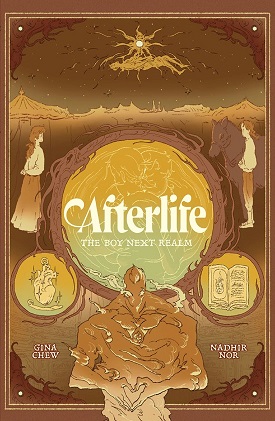
If you enjoyed Erin Morgenstern’s The Night Circus, then you will probably also be swept away by the romance of this sepia-toned graphic novel, as a teenage girl fights Death itself to bring her little brother back to life.
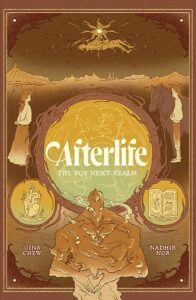 If, however, you found TNC as wildly mid as I did, then you’ll probably feel the same way about this book. But, y’know, TNC was a publishing phenomenon, so clearly I am in the minority here.
Much like its predecessor, Afterlife: The Boy Next Realm is one of those books that’s great in theory. There’s a plucky young heroine on a quest, metaphysical questions on what happens after we die, and a love interest who’s genuinely self-sacrificing without being a simp (archaic usage.) The book even opens on two young lovers whose romance is forbidden, sneaking away on a night train and trying to escape the actual circus they work in. Alas, things go poorly. The boy, Eric, subsequently makes a bargain with Death to forever be able to watch over his beloved Kyralee.
Fast forward a century and a teenaged girl named Kyra is in a hospital at her beloved brother’s bedside. She’s exhorting him to keep living. He doesn’t. She spots a cloaked figure by the doorway and takes off in pursuit, much to the consternation of their parents. When she finally catches the cloaked figure, she discovers that he’s a Soul Keeper named Eric, who was sent to guide her brother Major to the Afterlife. Kyra decides that she’s going to get Eric to help her bring Major back to the realm of the living instead. As Kyra is the latest reincarnation of his lost Kyralee, Eric finds it difficult to say no, even when her actions grow increasingly rash and dangerous.
Continue reading
Permanent link to this article: https://www.thefrumiousconsortium.net/2024/11/04/afterlife-the-boy-next-realm-by-gina-chew-nadhir-nor/
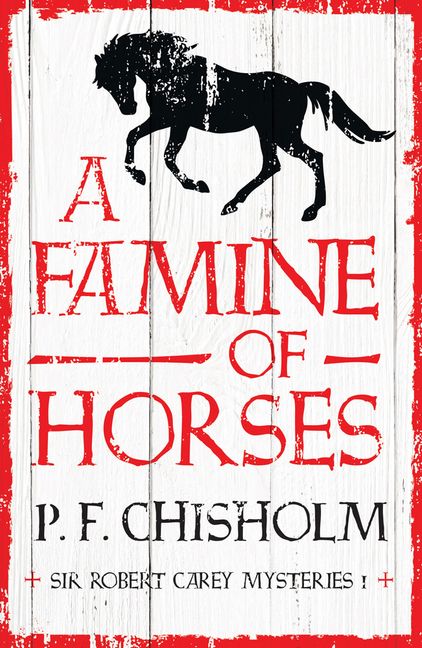
The same friend who, ages ago, recommended I read Dorothy Dunnett suggested I pick up books by P.F. Chisholm, and this is how bookish friendships are sustained over decades. We don’t always like the same things — Little, Big left her cold — but she seldom goes astray when she says she thinks I will like something. I hope the recommendations I have made in return have been similarly rewarding, because A Famine of Horses was a bang-up winner. I started it while waiting for a flight out of Larnaca and had finished it by the time I landed in Berlin
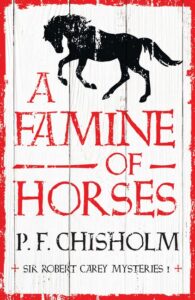
Sir Robert Carey has accumulated debts and probably enemies at the court of Elizabeth I, and he says more than once that his appointment as Deputy Warden of the Marches has saved his life. Given the violence and uncertainty of the Marches — the parts of England bordering Scotland — that is quite a statement about his situation in London. Why Carey was so keen to leave London is never completely explained, though there are hints about problems with both money and women. The novel never slows down enough to explore Carey’s past, for he has not so much been thrown in at the deep end as dove in with rolls and twists that nobody in those parts has seen before.
Even before he arrives in Carlisle he has an enemy in Sir Richard Lowther, who believes that the office had been promised to him, and who is the beneficiary of much of the corruption across the whole of the Western Marches. As Carey is approaching, the man who will be his sergeant and a small troupe discover a dead body hidden in a grouse stand. Dead men are common enough in the Marches, but this particular corpse was that of Sweetmilk Graham, youngest son and favorite of the powerful Graham patriarch, Jock of the Peartree. Worse luck, Sergeant Dodd and his men are soon surrounded by Grahams interested in the shrouded body carried by one of the horses. Dodd is economical with the truth, and insists that he’s on the Warden’s business and will brook no interference. The semi-bluff works, but sets up repercussions that will echo throughout the novel as connections and loyalties flow back and forth, and the law proves a most malleable ideal.
Continue reading
Permanent link to this article: https://www.thefrumiousconsortium.net/2024/11/03/a-famine-of-horses-by-p-f-chisholm/
 Happy November, friends! I’ve been so overwhelmed with work that I had to take yesterday off from posting, though Halloween always feels like a good reason to work less and celebrate more. While I originally thought that I’d just be reading last night between bouts of handing out candy to trick-or-treaters, I ended up sharing hot toddies and maple cream pie with my neighbors outdoors in the gloriously mild weather. I hope you had a brilliant evening of it as well, dear readers, whether you spent it reading or otherwise.
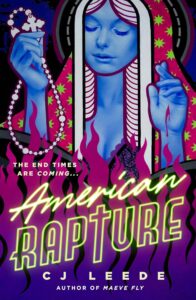
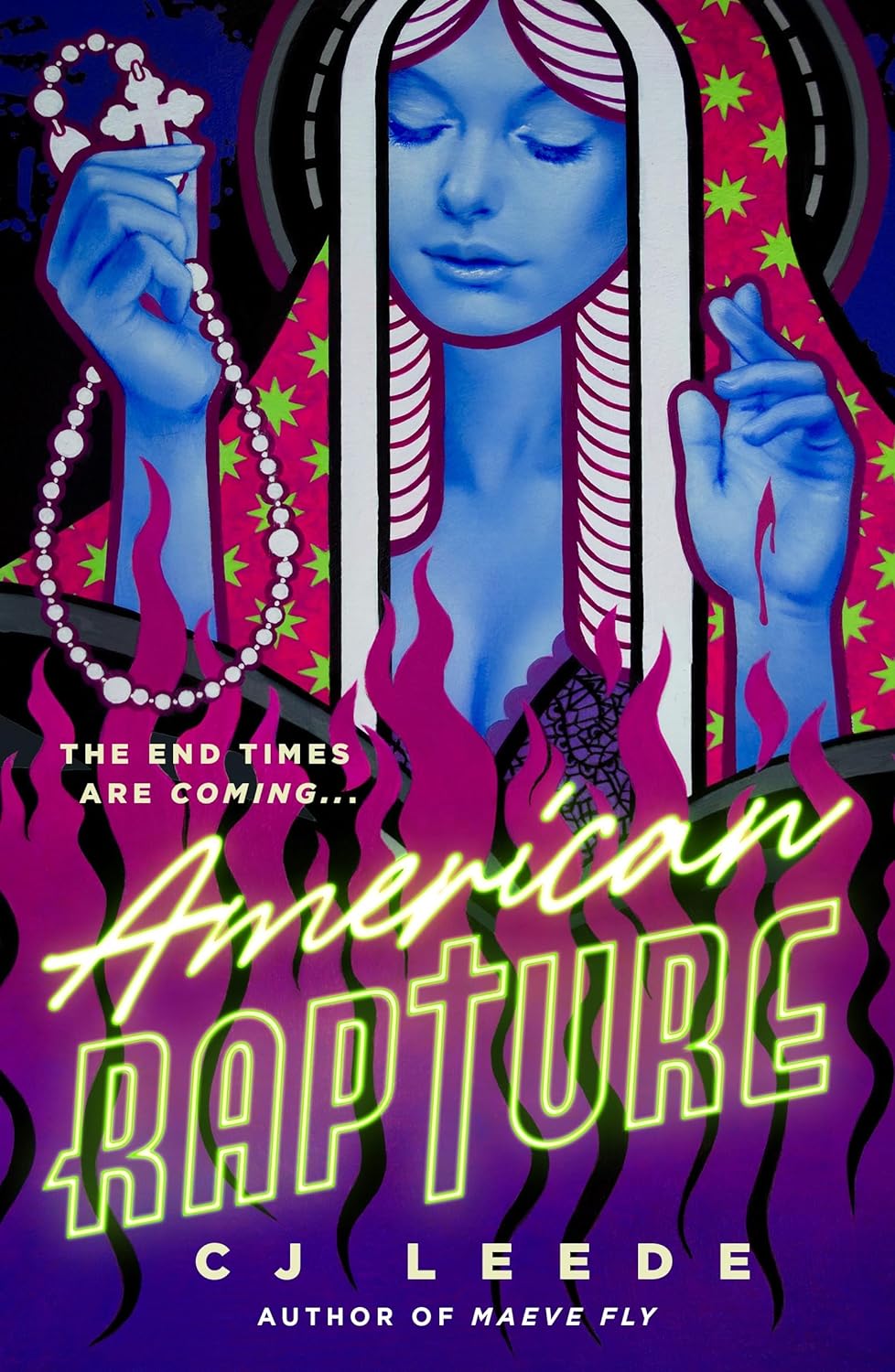
We’ve got some great recommendations for the continuation of spooky season into November, starting with CJ Reede’s American Rapture, an apocalyptic horror novel that I’m desperately trying to cram into my own reading schedule right now. A virus is spreading across the country, transforming the infected and making them feral with lust. Sophie, a good Catholic girl, must traverse this hellscape to find her family. Along the way, she discovers that there are far worse fates than dying a virgin.
Continue reading
Permanent link to this article: https://www.thefrumiousconsortium.net/2024/11/01/tantalizing-tales-november-2024-part-one/
Oh poetry, thou fickle siren, luring thousands of writers into your gentle-seeming embrace only to let them flounder on the sharp rocks of skill that underpin you.
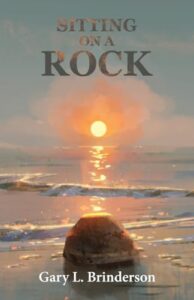 So here’s the deal, dear readers. Poetry is about image and emotion. Back in the day, it also used to be about form and rhyme. For better or worse, blank verse changed the landscape irrevocably: I personally think it’s for the better, even as I fear that aspiring poets forget that meter is still just as crucial as meaning in modern verse. There’s a reason that spoken word is different from singing is different from anything written down on the page. With written poetry, it’s important that the words are capable of cohering by themselves into a rhythm that the reader can recognize.
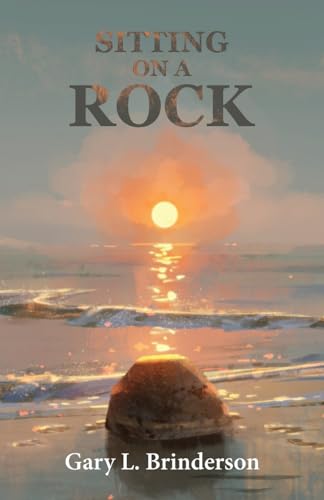
I appreciate Gary L Brinderson’s intent in writing this collection of poetry. Only one of these poems is longer than a page, and fittingly it’s on the topic of mentoring, which seems to be the point of the book. In nearly a hundred poems, readers are exhorted to be better versions of themselves — tho there is the occasional welcome aside into the poet’s personal life, with pieces directed to people he loves. There is wisdom and humor and a whole lot of heart in this book, which I genuinely believe should have been written as a work of creative non-fiction instead of poetry.
Continue reading
Permanent link to this article: https://www.thefrumiousconsortium.net/2024/10/30/sitting-on-a-rock-by-gary-l-brinderson/
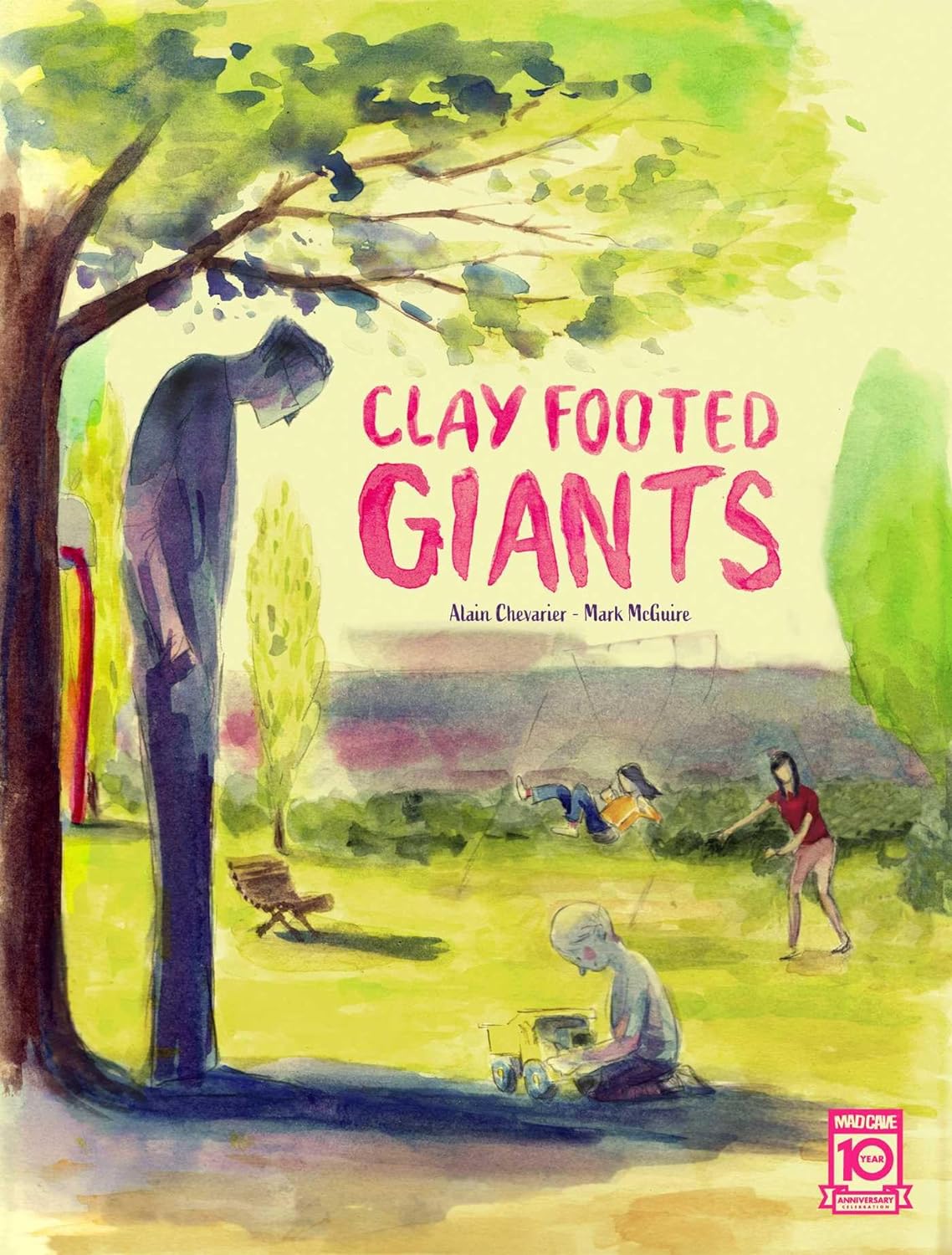
Extremely well-meaning but — and I hate to use this word because of the way it’s morphed so far from its more neutral original meaning — problematic.
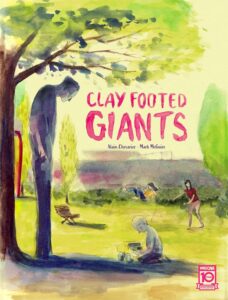 Pat is a 40-something American academic living in Montreal. His wife Ester has an important job, so he does his fair share of housework while they raise their two children. He’s recently started dreaming again about being a basketball star as he was in college, even as his good friend Mathieu tries to get him to join Mathieu’s own far less competitive sports league.
Because the nature of her job requires travel, Ester has to go away for a few days for work. As he’s minding the kids solo, Pat loses his temper at his youngest, Sam, for going through a box of slides Pat’s dad recently sent him. In order to make up for turning into a grizzly bear, Pat shows the slides to his kids, and finds himself drawn into their portrayal of his father as a decorated young soldier home from Vietnam. His dad has never wanted to talk about that time in his life, preferring to drink instead of engage in meaningful conversation. His mother isn’t much better, weighed down as she is by a burden of shame around her failed marriage to his dad and the circumstances surrounding it.
But when Sam gets into a fight at kindergarten one day, Pat begins to wonder whether the anger he and his father both carry around in them is perhaps hereditary via epigenetics. Soon, his interest in finding out what really happened to his dad in Vietnam turns into an obsession that threatens to destroy the very family he claims to be trying to protect. Will Pat be able to reconcile his past with his present in order to save his and his children’s futures?
Continue reading
Permanent link to this article: https://www.thefrumiousconsortium.net/2024/10/29/clay-footed-giants-by-alain-chevarier-mark-mcguire/
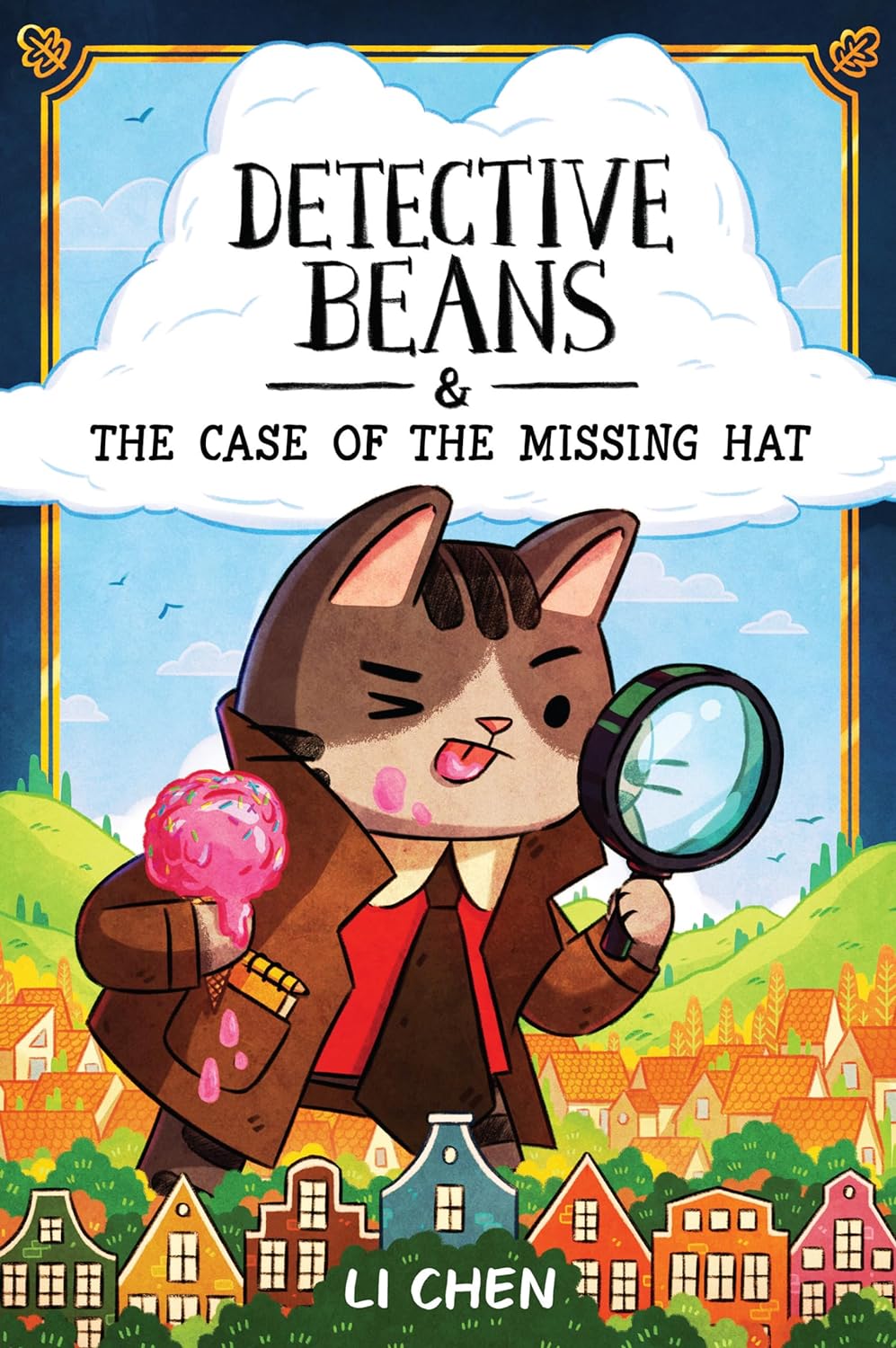 Detective Beans is a young cat obsessed with being a detective, even if that usually just takes the form of acting out his favorite movies for his mom and his best friend Biscuits. While he dreams of fighting crime and helping his community, his most pressing case at the moment is the mystery of whomever is leaving little post-it notes with sweet messages of encouragement on his belongings for him. The handwriting doesn’t match Biscuit’s, and Mom swears that it isn’t hers either.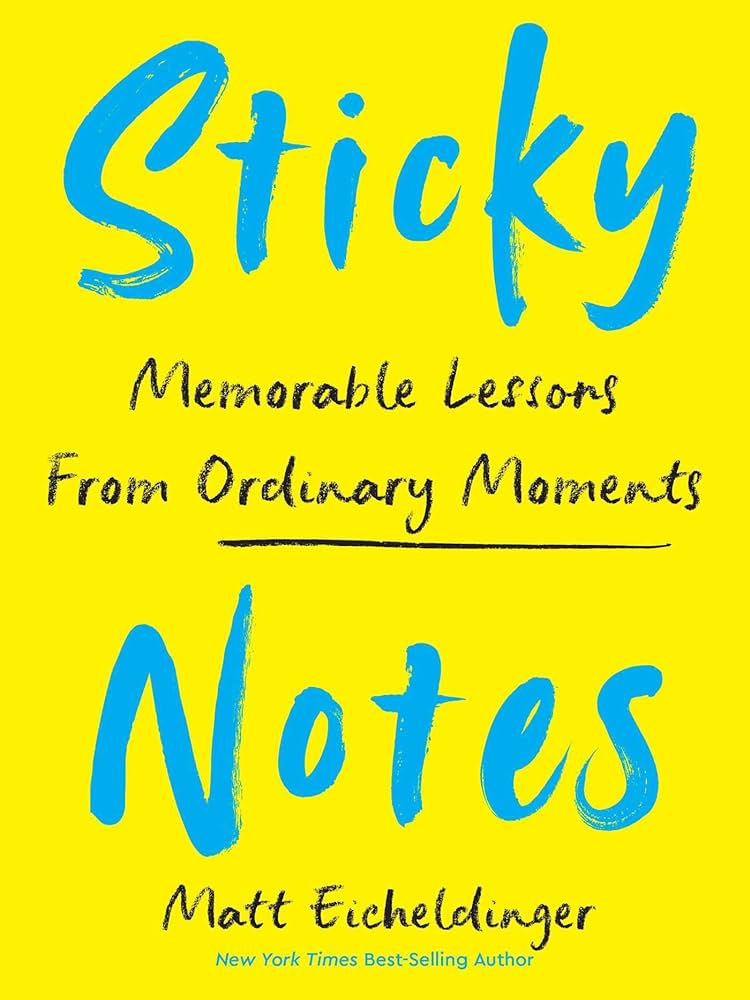
 Al Singh
 Doug Merrill
 Doreen Sheridan
 Emily Lauer
 John Pitzel
 Lars N. Goldschlager
 Laura Eilers
 Professor X
 Robert Maedgen
 Sylvere Ap Leanan
 The Shire