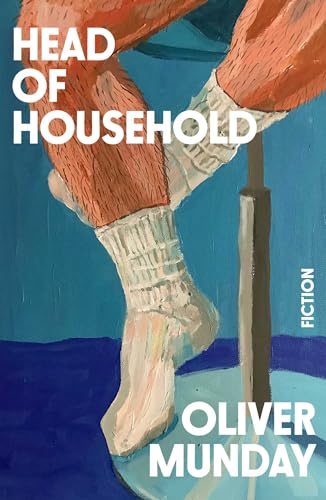
God bless short stories for how easily digestible they are, having stripped away so much extraneous matter to properly capture a mood and make a point, at least, tho not exclusively, in the literary genre.
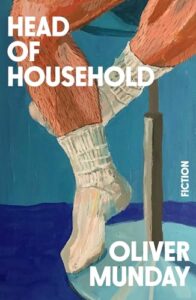 Oliver Munday’s new collection of ten short stories exemplify this, almost to the point where I wanted more from several of the stories and felt that those works would have been better served as longer pieces. This is, tbc, different from feeling that the story could serve as the basis for a novel despite feeling complete in and of itself: fortunately there are far more of this latter than the former kind here. The opening story Fists, for example, is perfect as a tone piece about a father not knowing how to deal with the loss of his own youth, as he and his teenage daughter go on one of their annual vacations together. Would I love to read more about what happens next? Yes. Was it perfectly satisfactory on its own? Also yes.
Sterling, on the other hand, was one of those stories with too much build up and not enough denouement. Perhaps I am biased in this, however, as a committed Washington DC-lover who wanted to know exactly what happened at the end of the story. I was also far more inclined to feel kindly towards the older heroes (yes, all men) of these pieces. I had a lot more sympathy for the destructive — self or otherwise — urges of the parents who’d been through a lot and were still trying to cope as best they could. For example, Tom, the protagonist of Pizza Party, has to go through a mortifying destruction of the ego before he can find grace, as does the unnamed narrator of the collection’s closing story Dependents, tho in a very different way. Their struggles felt far more earned to me than the thrashing about of most of the younger protagonists showcased here.
Continue reading
Permanent link to this article: https://www.thefrumiousconsortium.net/2026/03/09/head-of-household-by-oliver-munday/
Well I suppose that Jakob von Gunten is a bildungsroman because it follows its young and eponymous first-person narrator through his later school years and ends with his departure from the Institut Benjamenta. On the other hand, its 144 pages raise some doubts about whether it qualifies as a Roman, although the Süddeutsche Zeitung published it in the newspaper’s second set of great novels of the 20th century. I’m also not sure how much Bildung goes on. While most of the novel takes place inside the Benjamenta, I think it shows even less of classes and lessons than The Confusions of Young Törless, and that was precious little. Jakob’s progress shows mainly in his interactions with the school’s namesake director. It is a peculiar book, which is fair, because Walser led a peculiar life.

The novel is set more or less at the time of writing, which is to say 1909. Walser turned 31 that year. He had led a peripatetic life as a young man, leaving Biel, Switzerland where he grew up for Stuttgart, where he had a brother, and then later moving on to Zurich, where he worked irregularly in various office jobs. Following Zurich, he lived in Thun, Solothurn and Winterthur (all Swiss) and Munich; he did his mandatory military service, and then in 1905 he moved to Berlin, to which his brother had in the meantime moved. Walser had been publishing stories in various magazines, and in 1904 he published his first book, a collection of essays. This was a time when it was possible to make a living — sometimes modest, sometimes precarious, for a fortunate few quite tidy — writing for the numerous newspapers and periodicals in the big German-speaking cities. At its more esoteric end, this milieu shaded into the settings described in Herr Dame’s Notebooks; at its more carefree, the kinds of light adventures described in Castle Gripsholm by Kurt Tucholsky, who is counted as an admirer of Walser. In 1905 Walser attended a course to become a servant at an aristocratic castle. The years just after the turn of the 20th century were still a time when European nobility continued to openly wield power from castles large and small, and training such as Walser had could lead to an actual job. The school shared characteristics with the fictional Benjamenta, but Walser as a 27-year-old trainee would have been very different from teenaged Jakob von Gunten.
Continue reading
Permanent link to this article: https://www.thefrumiousconsortium.net/2026/03/08/jakob-von-gunten-by-robert-walser/
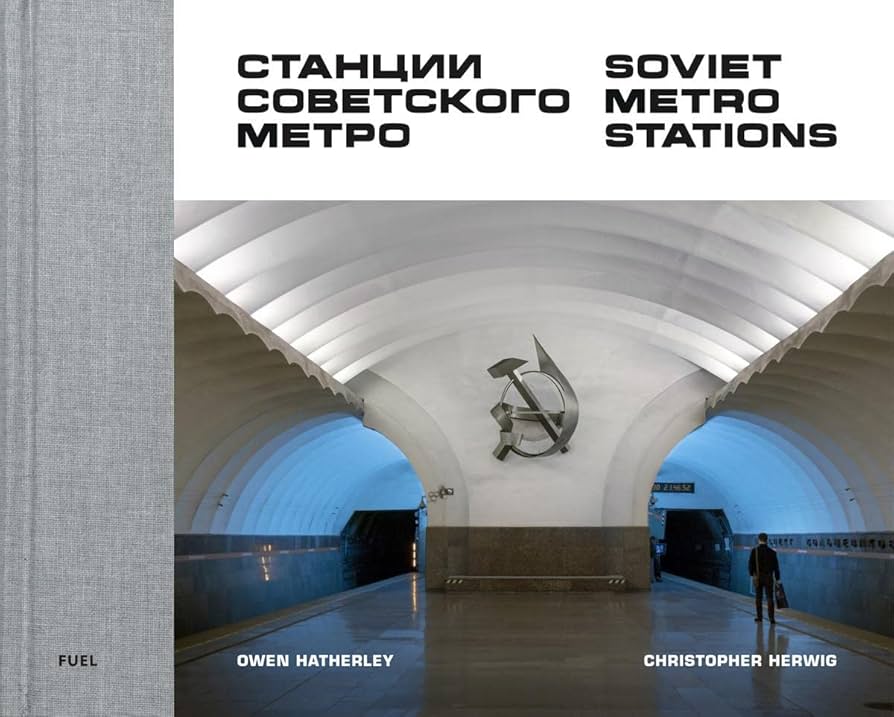
with an introductory essay by Owen Hatherley
After two books on Soviet bus stops, an eccentric topic from a world that’s receding into history, photographer Christopher Herwig turned his attention to a slightly more expected topic: stations of various metro systems across the former Soviet Union. This book echoes its predecessors in size and style. It has the proportions of a postcard, but it is a bit bigger in both height and width, and it runs about 250 pages, most of which are given over to full-page or almost-full-page photographs.

One nice aspect of the book is how much space it devotes to the systems outside of Moscow. The Moscow Metro is amazing, both monumental and functional — I used to commute on it — an epic achievement now within sight of its centennial and still growing. It is the longest system anywhere in the world outside of China; at some stations, trains arrive every 90 seconds. Moscow could fill the book with plenty of material left over, but Herwig and his essayist Hatherley have wisely chosen to look more widely, to consider Metros and their meanings across the full territory of the former USSR. Hatherley’s essay begins with Moscow, the first Metro and the model for all the others, and then proceeds across the former USSR in the order that the systems were built. The second section is on St Petersburg and Kyiv, both in cities that had different names when their metros were started. The stages of the systems’ development reflect first the state of the Soviet system that built them and then later the moods and capabilities of the post-Soviet era. For example, the oldest stations on St Petersburg’s Line 1 continue the epic and peculiar grandeur of the early Moscow lines: palaces for the people with art depicting heroic labor and the inevitable triumph of the communist system. Stations that were designed during the Khrushchev or Brezhnev eras are more prosaic, reflecting the larger shift from monumental constructions to improved material conditions for a larger share of the population.
Continue reading
Permanent link to this article: https://www.thefrumiousconsortium.net/2026/03/07/soviet-metro-stations-by-christopher-herwig/
Happy March, dear reader! Today we’ve got a terrific slate of upcoming books for you, as well as two novels I missed out on in 2025 that you should still definitely keep on your radar.
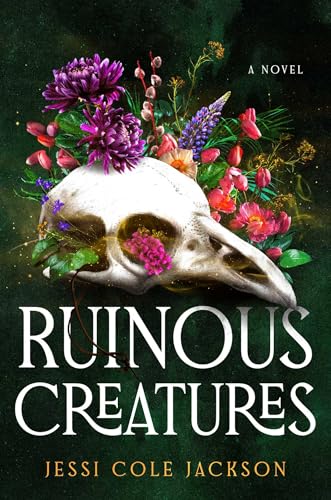
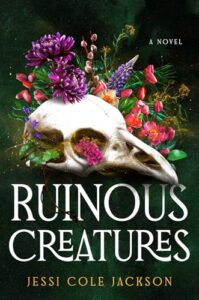 First up, we have Jessi Cole Jackson’s Ruinous Creatures, a standalone romantasy perfect for anyone wanting to dip their toes into the genre without getting sucked into a multi-book series that probably hasn’t even been completed yet (me, that’s me!)
Adela is a priestess whose sacred duty is to preserve the skulls of the magical creatures who perish in her valley sanctuary. Their bones are still laced with magic, and skulls can be matched with the privileged few who are able to wield the powers of the creatures whose skulls they wear.
Despite her long experience, Adela is surprised one day to discover a pair of phoenix skulls. Magical is one thing: phoenixes, otoh, are legendary. Her mentor warns her against it but Adela awakens the skulls anyway, unwittingly sending a shockwave of power through the valley that unleashes chaos.
Kian is a novitiate preparing for the upcoming matching ceremony. He has a secret tho: he blames his parents’ death on this tradition, and is looking for a way to end it and the magic of the skulls for good.
Fate has other plans, as an impulsive kiss between Adela and Kian seals them to each other and to each of the phoenix skulls. As they deal with the consequences of their connection, they discover that they’ll have to use the power that they now wield to either save The Valley or destroy it entirely.
Continue reading
Permanent link to this article: https://www.thefrumiousconsortium.net/2026/03/06/tantalizing-tales-march-2026-part-one/
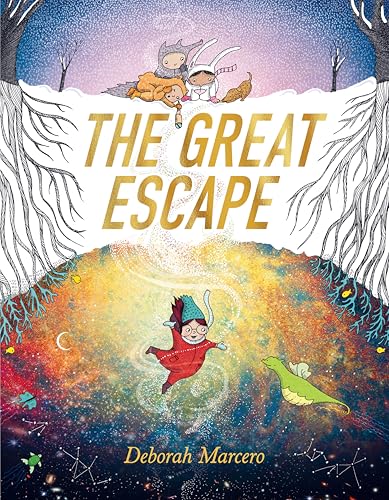
This picture book is extreeeeemely relatable to all older siblings. Idk what it is about younger sibs always wanting to get up in our business, but this book very accurately portrays that situation, then delightfully shows readers one way to resolve it.
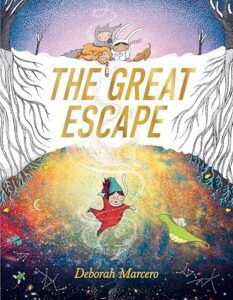 Evie is your average kid. She believes very much in magic, and wishes she had some sort of spell to help control her rambunctious younger siblings, Wolfie, Bunny and Teddy (who are all charmingly and conveniently dressed in onesies reminiscent of their names throughout this book.) They’re always bugging her to play loud and chaotic games with them when she just wants to read a book or have some quiet time alone.
One wintry day, she devises a plan to sneak out past her whirlwind of siblings and enjoy some solitary time out in nature. But with the hypervigilance of little kids, they easily track her down. Out of sheer desperation, she casts a spell that helps her plunge right into a snowdrift and emerge into a fantastical world of beauty.
Wolfie, Bunny and Teddy, however, are relentless. Can Evie figure out a way to evade them so she can fully enjoy her new surroundings and finally get a little peace and quiet?
Continue reading
Permanent link to this article: https://www.thefrumiousconsortium.net/2026/03/05/the-great-escape-by-deborah-marcero/
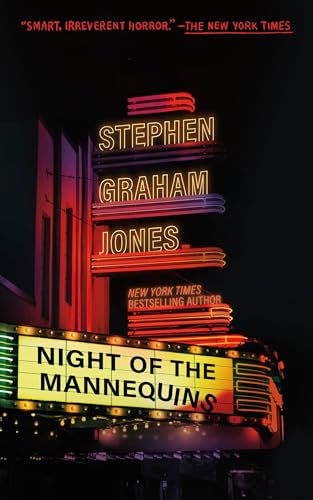
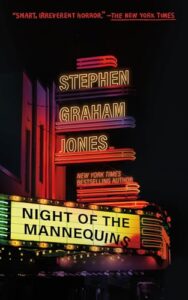 It feels weird to pretend that this horror novella is about the supernatural more than it is ultimately about the unraveling of an adolescent mind. I actually forgot in the lead up to writing this review that the title has mannequins in the plural as, if you go into this book without reading anything about it — which might actually be the best way to do it, so you can stop reading right here if you want absolutely zero spoilers, even tho pretty much everything I’m going to discuss is laid out in the first few pages of the novella — you might think this is about department store figures coming to life and terrorizing a bunch of people.
And there is a mannequin here, discovered by the narrator Sawyer and his friends as they’re growing up in small town Texas, in a creek that’s more mud than water behind JR’s house. They rescue the figure’s parts and use them for any number of games and pranks over the years.
But things are changing. The kids are getting older and taking on real responsibilities. Accidents happen and Shanna has to get a real job (well, as real as anyone still in high school can get) at the local movie theater. That’s when things get weird.
As a revenge prank against Shanna’s bosses, Sawyer, Danielle, Tim and JR decide to dress up the mannequin — which they’ve christened Manny — and prop him up in one of the theater seats during a movie. They’ll then call in management to handle a “disruptive” patron, hoping to jump scare whichever of the upper-level employees comes out and discovers Manny. But Sawyer, who’s watching while the assistant manager uses a discreet flashlight to methodically check everyone’s tickets, is surprised to get absolutely no reaction when the guy asks for and examines Manny’s ticket. Worse, at the end of the movie, the figure in Manny’s seat gets up and walks out of the theater.
Continue reading
Permanent link to this article: https://www.thefrumiousconsortium.net/2026/03/04/night-of-the-mannequins-by-stephen-graham-jones/
Hello, dear readers! I don’t usually do excerpts of Middle Grade books here, so I have a delightful treat for you today with this magic-tinged adventure novel.
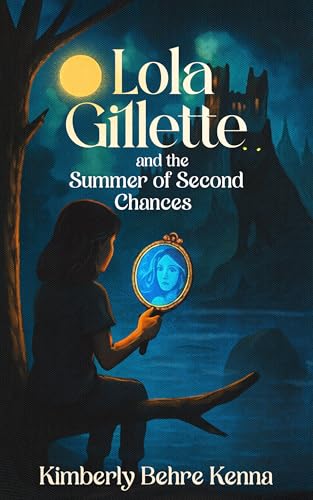
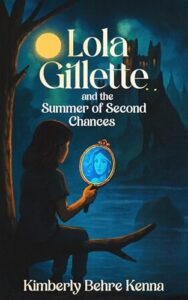 The third book in Kimberly Behre Kenna’s Brave Girls series is titled Lola Gillette And The Summer Of Second Chances. Our title heroine is so desperate to complete a Perfect Pairs Collection that she resorts to stealing… and gets caught. Out of frustration, her parents decide to send her to live with her “quirky” Uncle Milo in his ramshackle mansion on the banks of the Connecticut River for a month.
Once there, she becomes even more obsessed with her collection, convinced that if she can acquire a Lucky Baker’s Dozen of pairs, she’ll generate enough magic to avoid going to a boarding school for bad girls like herself. But misadventures with a Zen Garden, a glitchy projector that spits out holographic messages from her dead aunt, a beached houseboat and a displaced wolf soon have her reconsidering her relationship with magic and luck.
As this MG novel was partially inspired by Connecticut actor and inventor William Gillette (who’s perhaps best known for his iconic role as Sherlock Holmes in the early 1900s,) part of the proceeds from the book’s sales will be donated to Gillette Castle State Park.
Read on to get acquainted with Lola, her parents and her uncle!
Continue reading
Permanent link to this article: https://www.thefrumiousconsortium.net/2026/03/03/lola-gillette-and-the-summer-of-second-chances-by-kimberly-behre-kenna-excerpt/
I’m going to say something controversial but not unexpected given my reputation as a queer-friendly Muslim and rabid Arsenal fan: everyone in this book has terrible taste in football teams. I was somewhat mollified by the fact that the actual football-playing scenes are really rad, tho the conceit that losing a competition would reflect poorly on the star player is a convenient nonsense that, fortunately, is not brought to any illogical conclusions here.
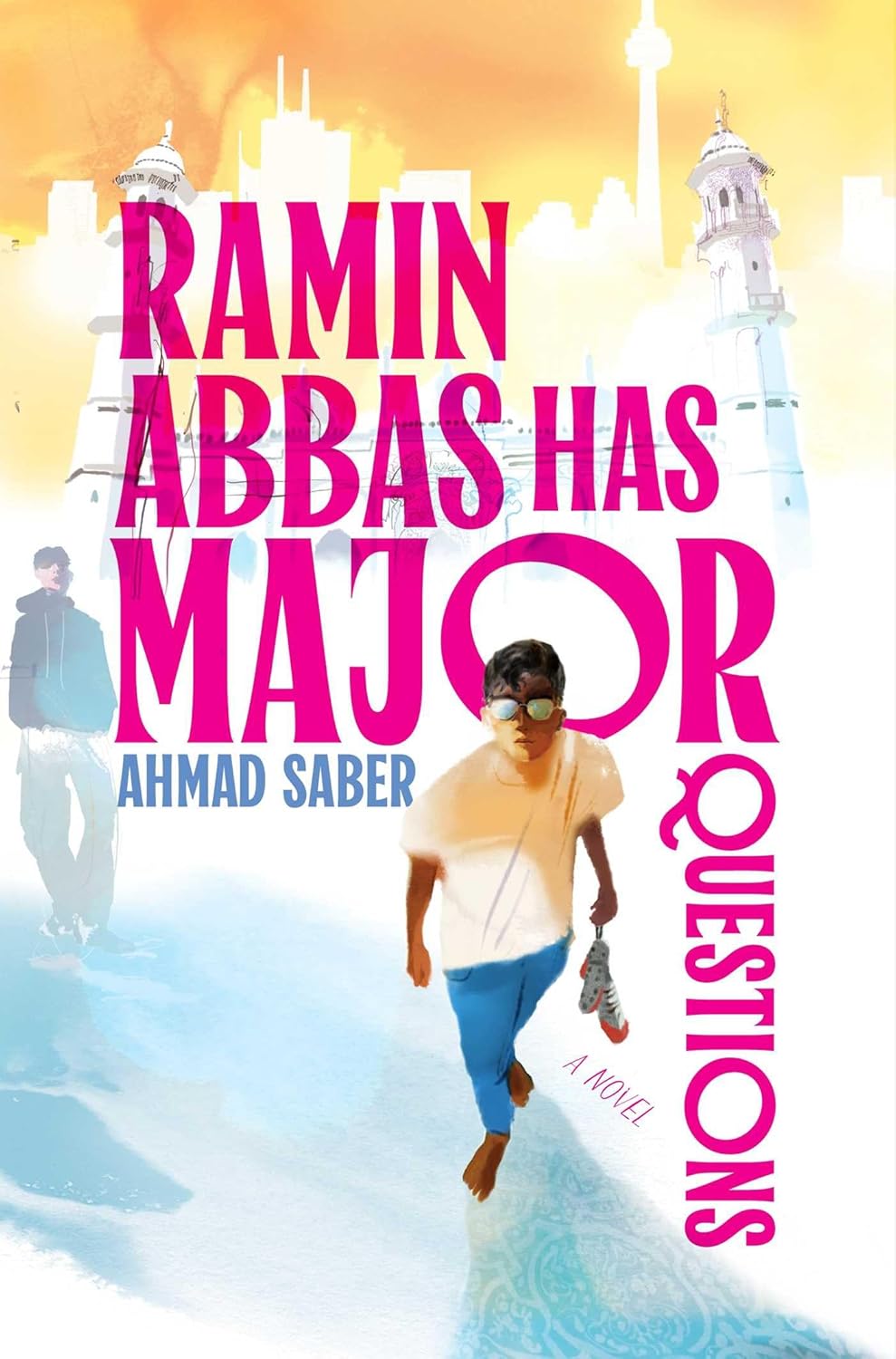
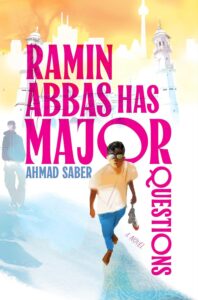 And that’s the genius of this excellent Young Adult novel about a Pakistani Canadian teenager struggling with his sexuality and faith: none of the conclusions feel glib or unrealistic or even overly dramatic. Everything in this book feels very real. And I’m saying that not only because this book was inspired by the author’s own life, but because I’ve lived through many similar experiences myself. I might not necessarily agree with everything our titular protagonist decides on (possibly because I come from a much less constipated school of jurisprudence than he does. Like, the prohibition on music and birthday parties made me lol, even tho I recognize that plenty of hardliners are against both,) but I do agree with him that Allah is the only one who can judge a person, and that it’s better to live and let live than to police those acts that don’t actually curtail others’ lives, liberties and pursuits of happiness.
Anyway, this novel tells the tale of Ramin Abbas, the eldest son of immigrant parents who’ve enrolled him in the conservative Muslim but academically rigorous Hikma High School. He’s dead set on getting into pre-med at NYU so that he can a) become a pediatrician, and b) check out shows on Broadway. His parents frown on music, and it’s probably best not to talk about the way his dad freaked out when Ramin tried on one of his mother’s hijabs and lipstick when he was much younger. Their family only eats halal and are all regulars at their (also) conservative mosque.
Continue reading
Permanent link to this article: https://www.thefrumiousconsortium.net/2026/03/02/ramin-abbas-has-major-questions-by-ahmad-saber/
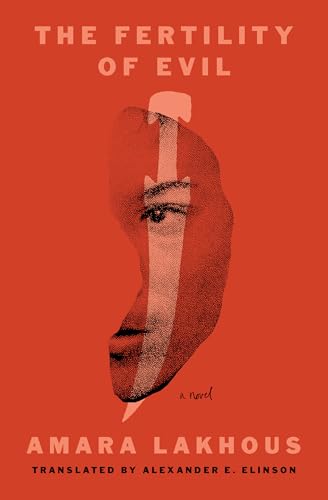
February is drawing to a close, the weather is getting nicer, and hopefully I will soon stop feeling ill so much of the time! In other cheery news, I have a slew of great books for you this week, beginning with Amara Lakhous’ critically acclaimed The Fertility Of Evil, translated from the original Arabic by Alexander E Elinson.
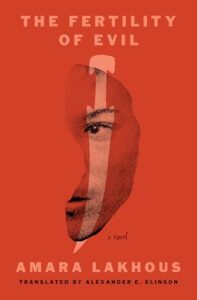 July 5th is Algerian Independence Day, a national holiday for a country still coming to terms with the insidious legacy of colonialism. Colonel Soltani of the anti-terrorist unit, however, will have to give up his day off in 2018 after his superior officer manages to track him down to his mistress’ home in the city of Oran.
A former National Liberation Front fighter and Algerian power broker has been found dead under remarkably gory circumstances. Soltani is put in charge of the case, with the clear message to close it quickly and cleanly. Despite this directive, the colonel and his team delve deep into the victim’s past, going all the way back to the 1950s in their pursuit of leads. Their investigations eventually bring them to a revolutionary cell founded long ago, whose three remaining members are all still very much viable suspects in this recent killing. Can Soltani sort through six decades of secrets and lies to uncover the truth and bring a murderer to justice?
Inspired by the author’s return to Oran after years spent living in Italy as a political refugee, this gripping novel balances psychological thriller with historical fiction. It presents a compelling portrait of post-colonial Algeria, its shadowy history and the long tail of corruption as religion and politics intertwine.
Continue reading
Permanent link to this article: https://www.thefrumiousconsortium.net/2026/02/27/tantalizing-tales-february-2026-part-four/
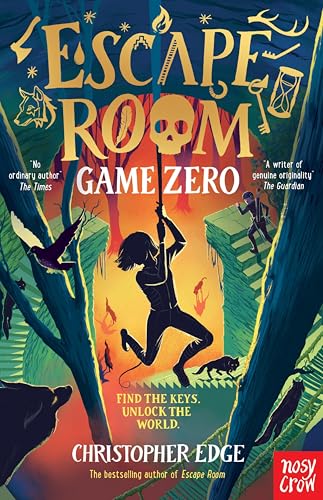
Lol, idk why I didn’t realize this was part of a series when I first picked it up. I do think that this is one of those books that very much benefits from readers going in already knowing the rest of the lore, if you’re an adult. Younger readers who are more ready to accept things at face value may not mind as much (as I’ve certainly discovered when going back to read old favorites after the span of decades.)
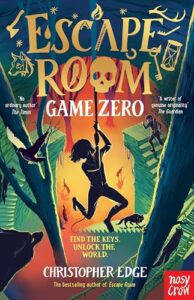 Escape Room: Game Zero begins with Eden, a young girl who’s solved a series of online riddles and is now going in search of what’s been touted as the ultimate Escape Room. Eden loves puzzles and riddles, so is excited about getting a key to an online game known only as The Escape. Fortunately, the place she has to go to claim it in person is only a short walk away from her own home.
But the key she intends to pick up turns out to be something very different from the physical pass she expected. Instead, she’s drawn into a disorienting fantasy realm where she quickly discovers she can get badly hurt, both if she isn’t careful and if she doesn’t complete the quest to escape in time.
Both helping and hindering her is Ted, a deeply annoying kid who’s accessed The Escape via an expensive VR headset and is convinced that Eden is a mere NPC. As they explore this strange new world together, they encounter all manner of peril, even as they slowly discover that the game is much more dangerous than either of them had ever anticipated.
Continue reading
Permanent link to this article: https://www.thefrumiousconsortium.net/2026/02/26/escape-room-game-zero-by-christopher-edge/
 Oliver Munday’s new collection of ten short stories exemplify this, almost to the point where I wanted more from several of the stories and felt that those works would have been better served as longer pieces. This is, tbc, different from feeling that the story could serve as the basis for a novel despite feeling complete in and of itself: fortunately there are far more of this latter than the former kind here. The opening story Fists, for example, is perfect as a tone piece about a father not knowing how to deal with the loss of his own youth, as he and his teenage daughter go on one of their annual vacations together. Would I love to read more about what happens next? Yes. Was it perfectly satisfactory on its own? Also yes.
 Al Singh
 Doug Merrill
 Doreen Sheridan
 Emily Lauer
 John Pitzel
 Lars N. Goldschlager
 Laura Eilers
 Professor X
 Robert Maedgen
 Sylvere Ap Leanan
 The Shire