Siiiigh.
In the year 2021, is describing a book as being like The Hunger Games even a good reference any longer? Especially since, if you’re really looking for an on-the-nose comparison, Highlander would be much more appropriate?
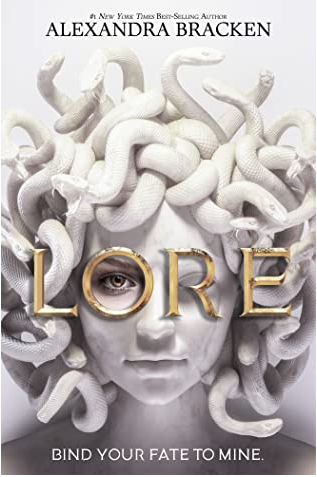 I suppose I’m focusing on the petty business of book marketing because I don’t want to address how disappointing this book was to me overall. It’s blurbed as being The Hunger Games (sigh) only with Greek gods in modern-day New York City, and if that isn’t a cool as Tartarus description, I don’t know what is! Especially since the heroine is essentially a cage fighting orphan who thought she’d gotten out of the world of the Agon, only to reluctantly get dragged back in again when old friend/flame Castor shows up at one of her matches with a cryptic message, swiftly followed by the appearance of the wounded goddess Athena herself, begging for help. Athena promises that she’ll get Lore, our titular heroine, out of the Agon for good, as long as Lore helps her survive this latest in the cycle, due to end in seven days. Lore grudgingly agrees, binding her fate to Athena’s for the duration. Hijinks ensue.
Really great premise, completely undermined by the fact that nothing about the Agon makes a lick of sense. Some distant time ago, nine of the Olympian deities rebelled against Zeus, and in retaliation he cursed them to be mortal for a week once every seven years, during which any non-god who killed them would gain their powers instead. The bloodlines of ancient heroes train for these hunts but also seek to protect their own immortals, should one of their (male) heroes slay a deity, as the powers of a god grant not only immortality but also mystical power and influence. In the 21st century, only a few of the original gods remain, the rest having been slain and their powers usurped by humans, who have not always survived being hunted by other bloodlines themselves. Apparently, tho, should a god kill another god, the slain deity’s powers dissipate into the aether.

 Al Singh
 Doug Merrill
 Doreen Sheridan
 Emily Lauer
 John Pitzel
 Lars N. Goldschlager
 Laura Eilers
 Professor X
 Robert Maedgen
 Sylvere Ap Leanan
 The Shire