A coming-of-age novel with a queer country girl narrator playing sports and learning to interrogate her internalized misogyny while embracing who she is despite the opposition of certain members of her small town, including her nearest and dearest? I was wholly on-board even before I started reading Britta Lundin’s terrific, lived-in prose, and now I want everyone to read this wonderful book!
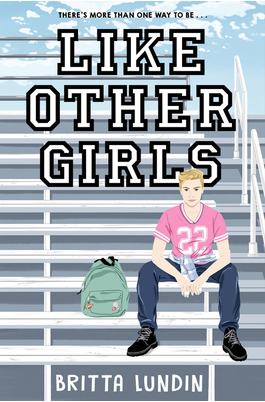 Mara Deeble has always been one of the boys. Her older brother Noah and her best friend Quinn are both big deals on the Elkhorn football team, but she’s always loved her place on the basketball team… until Coach Joyce benches her for punching a teammate. Now Coach refuses to reinstate her unless she can prove that she can go a full season on another team without getting into any fights. For girls at Elkhorn, the only other team sport is the (highly competitive) volleyball team. While it’s a good fit in terms of athletics, Mara doesn’t want to be one of those pretty volleyball girls who discusses make-up and clothes before games. So, egged on by Quinn, she decides to try out for football instead.
The Elkhorn football team is admittedly pretty dire, and while Coach Willis is initially flummoxed by the idea of a girl joining the team, he accedes to treating Mara like one of the boys when it becomes obvious that she has real talent. But when a group of other girls decides they want to play football too, and cite Mara as their inspiration, her already precarious social standing with the team goes downhill fast, especially when it becomes apparent that the other girls don’t actually know how to play. Mara certainly doesn’t want to be lumped in with them, and especially not with the deeply annoying Carly Nakata, who was the reason Mara got kicked off the basketball team in the first place. But another of the new players is the gorgeous Valentina Cortez, whom Mara has been crushing on since forever. Surely, it wouldn’t hurt her to give the girls a little coaching — especially since the male coaches seem entirely uninterested in teaching the newcomers any of the basics they need to succeed. As Mara gets closer to the other girls, she starts to question her own preconceptions and prejudices, even as she battles the same from the hostile people around her.



 Al Singh
 Doug Merrill
 Doreen Sheridan
 Emily Lauer
 John Pitzel
 Lars N. Goldschlager
 Laura Eilers
 Professor X
 Robert Maedgen
 Sylvere Ap Leanan
 The Shire