Seanan McGuire can be so hit or miss for me, and this one was, unfortunately, another miss. But it was a very near-miss, and one that could easily have been a hit, as I love Jack Wolcott and was panting to read this story of her continuing adventures.
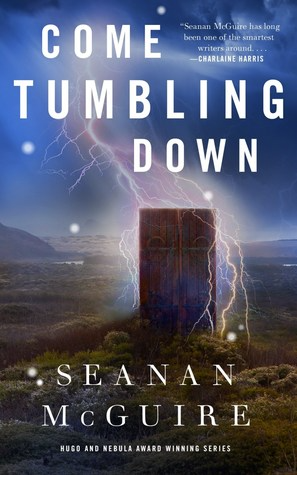 Last we’d seen, Jack had taken the corpse of her twin sister Jill back to The Moors to be resurrected. Christopher took over Jack’s old room in the basement of Eleanor West’s School for Wayward Children so is thus the only person on hand for the extravagant yet fleeting appearance of a new doorway there. Two people emerge from the lightning-generated door before it promptly disappears again. Astute readers will instantly recognize Alexis, Jack’s beloved. But who is the damaged burden she carries, swathed in one of the floaty dresses Jill loved so much as a disciple of her vampiric Master?
Turns out, mad scientist Jack did succeed in resurrecting her sister, for which good deed Jill has punished her by swapping their bodies and trying to kill her all over again. Jill has been pushed further into derangement by the knowledge that the body she was born into is no longer fit to be turned vampiric: as it’s already been killed, the vampire’s curse will no longer be able to turn it immortal. Her solution has been to steal Jack’s body for herself, leaving obsessive-compulsive Jack to suffer in a form that Jack knows has been stained with the blood of far too many innocents to ever be scrubbed truly clean.


 Al Singh
 Doug Merrill
 Doreen Sheridan
 Emily Lauer
 John Pitzel
 Lars N. Goldschlager
 Laura Eilers
 Professor X
 Robert Maedgen
 Sylvere Ap Leanan
 The Shire