It’s 1922 and the Ku Klux Klan is marching in Macon, Georgia. The Klan I know from history is bad enough, but the Klan in Ring Shout is supplemented by literal monsters that Clark’s first-person narrator Maryse Boudreaux and her friends Sadie and Chef can see through the human form that the Ku Kluxes have taken on as camouflage. The three can see the monsters, with an aim toward killing them. Sadie, youngest of the friends, has deadeye aim with her trusty Winchester rifle and almost preternatural speed in reloading. Chef is a dab hand with explosives, adding the bits of silver and iron that should banish the Kluxes from this world after the gunpowder or dynamite has scattered their bits. And Maryse has a song that sings — “a silver hilt joined to smoke that moves like black oil before dripping away. The flat, leaf-shaped blade it leaves behind is almost half my height, with designs cut into the dark iron. Visions dance in my head as they always do when the sword comes: a man pounding out silver with raw, cut-up feet in a mine in Peru; a woman screaming and pushing out birth blood in the bowels of a slave ship; a boy, wading to his chest in a rice field in the Carolinas. … People dead now for Lord knows how long. Their spirits are drawn to the sword, and I can hear them chanting—different tongues mixing into a harmony that washes over me, settling onto my skin. It’s them that compel the ones bound to the blade—the chiefs and kings who sold them away—to call on old African gods to rise up, and dance in time to the song.” (Ch. 1)

The three have set a trap for some Ku Kluxes, things that when they shed their human facade are “easily nine feet tall, with legs that bend back like the hindquarters of a beast, joined to a long torso twice as wide as most men. Arms of thick bone and muscle just from its shoulders, stretching to the ground. But it’s the head that stands out—long and curved to end in a sharp bony point. … Every bit of the thing is a pale bone white, down to claws like carved blades of ivory. The only part not white are the eyes. Should be six in all: beads of red on black in rows of threes on either side of that curving head.” (Ch. 1) They bait it with a dead dog, something they know from experience will draw the Kluxes. But the bomb inside the dog only maims the Kluxes, and they come after the threesome, leading to a desperate combat in the cotton warehouse where the three women had been observing events.
One thing leads to another, and the main story of Ring Shout is off to the races: the increasing number of Kluxes means that something greater than just a march and local racial oppression is afoot. The hate that the Klan lets in may open the world to domination by powers greater than human. Clark deftly weaves together his characters’ backgrounds, especially Maryse’s, the increasing threat that they are facing, the forms of magic present in the world, and the ways that people find joy in life amid all of the tribulations. His description is lush, the images striking and sometimes horrific. The Ku Kluxes are not the worst things taking an interest in human doings. Maryse has allies; while she wields the sword, she is not the most important person in the organized resistance to the Klan. That would be Nana Jean, a venerable Gullah woman who can call on many forms of magic, and who has also enlisted science on her side. Maryse also has periodic access to three Aunties, who live on another plane of existence and who first gave her the sword. They are powerful but enigmatic, and their ability to intervene directly is limited.
Continue reading
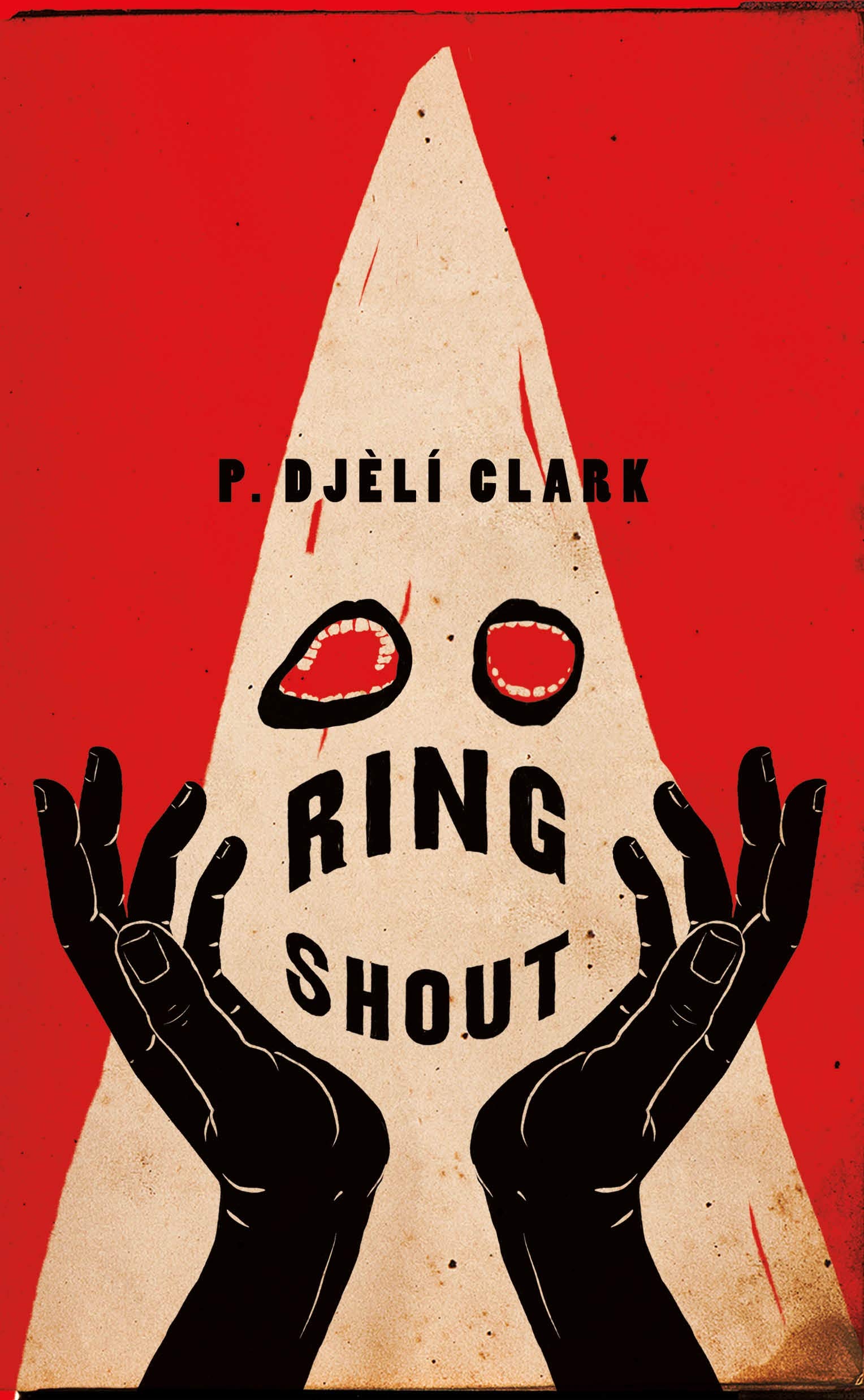 Ring Shout posits the idea that the Ku Klux Klan are made up of both your regular hate-filled Klansmen and demonic Ku Klux entities from another realm masquerading as human. Not everyone can see these Ku Klux in their demonic form, especially since most of them start out as your average Klansman before being turned. Maryse Boudreaux, however, can, and has turned her talent to hunting and destroying as many of these demons as possible, with the help of munitions expert Chef and sharpshooter Sadie. All three live under the protection of Nana Jean, an infamous Gullah bootlegger who works her own formidable magic in Macon, Georgia.



 Al Singh
 Doug Merrill
 Doreen Sheridan
 Emily Lauer
 John Pitzel
 Lars N. Goldschlager
 Laura Eilers
 Professor X
 Robert Maedgen
 Sylvere Ap Leanan
 The Shire