 translated from the original Czech by Martha Kuhlman.
Part of the problem with preferring to go in blind to books after I initially say yes to them (usually months and months ago) as a professional book critic is that I’m sometimes blindsided by topics that I didn’t think a book would cover to the extent that it does. Heartcore is a great example even tho, in fairness, the blurb makes it sound as if sexual violence is only tangential to Štěpánka Jislová’s story. It’s not. While a large part of the book talks about the author’s pursuit of love, the chapter of her life where she survived an unthinkable betrayal of trust is central to understanding her relationship with seeking a partner.
And I get it, it’s hard to talk about sexual assault. And no one wants to make that the centerpiece of a memoir, especially one that’s supposed to revolve around love. Ms Jislová admits in the first few pages that the structure of this story is non-linear: it isn’t hard to see that that’s a necessary defense mechanism common to non-fiction books like this one. I think it works well, honestly, particularly in the graphic novel format, with one significant exception which I’ll get to momentarily.
Heartcore travels back and forth in Ms Jislová’s life, exploring her romantic and sexual relationships throughout her teens and adulthood. It’s a modern exploration of dating which will be poignantly familiar to anyone who’s dated in the 21st century. Eventually, fed up of her relationship status, she hooks up with a fellow artist named Mike, and finds herself not exactly dating him for several years: a situationship, in the modern parlance. Frustrated by the ridiculousness of their situation, she begins exploring the concept of love and how it relates to her own life, and realizes that she needs far more than he’s given her so far.
While this is a pretty universal story, Ms Jislová grounds it in European and particularly Czech culture, as she explores her own upbringing, her relationship with her parents, and the devastating sexual abuse that caused her to lose trust in herself. Her writing on rape culture in Czechia is the sharpest and most harrowing of the book, possibly because it’s the inarguable villain of the piece. I wish that she’d written a little bit more here about her journey with therapy and healing, tho. I definitely wish she hadn’t deliberately made a step in her relationship with Mike segue into a letter from her abuser: I was genuinely shocked because I thought the words she was relating were from Mike, whom she’s considering reconciling with at that point in the story. It definitely makes the reader (or at least me) worry about her state of mind going forward, even if it’s impossible to wish her nothing but the best.
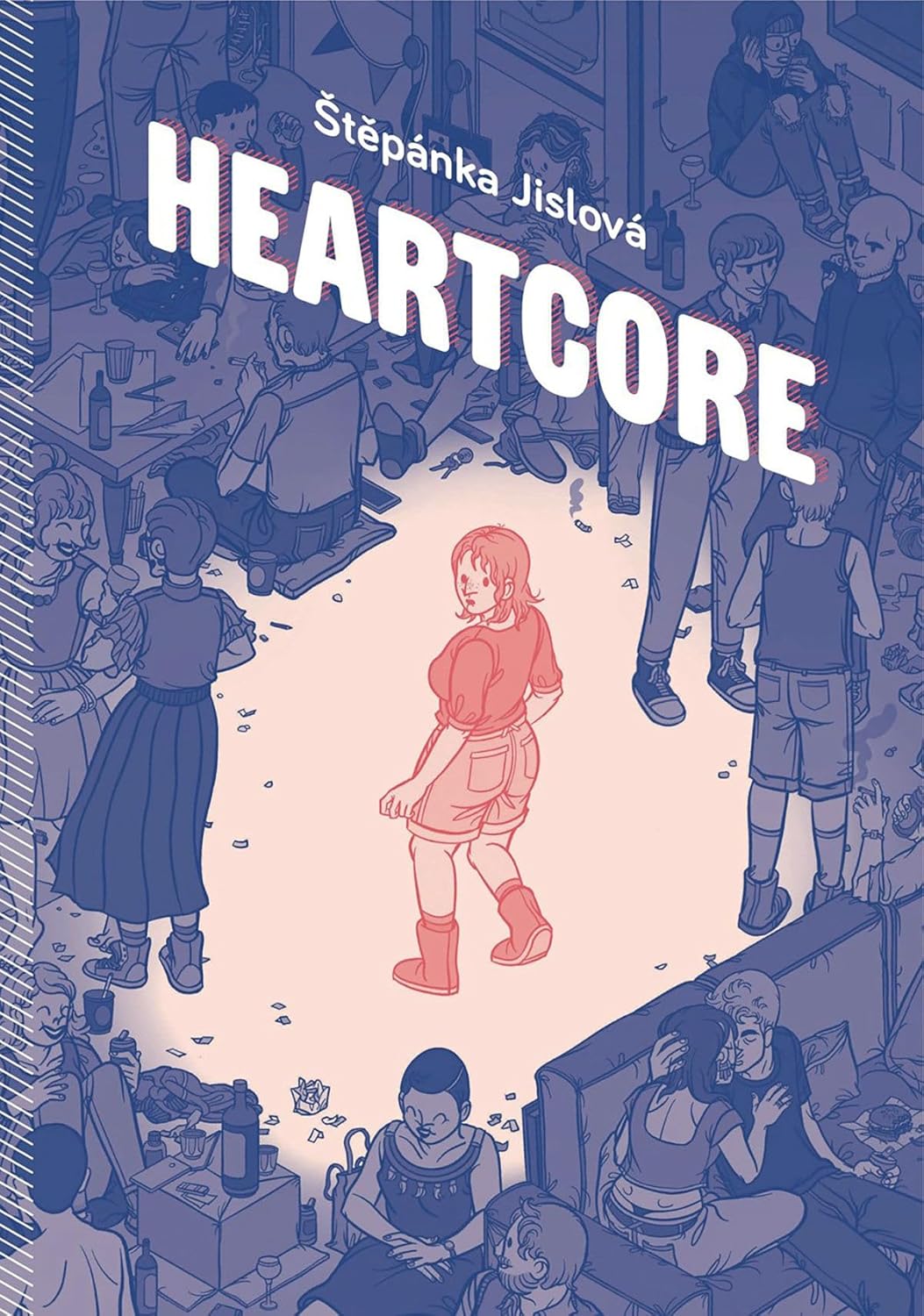
The interior art is greyscale with red highlights. The lines are clean, displaying both life and imagination. If the cast is large and occasionally confusing — if not outright interchangeable — Ms Jislová reminds readers that such is life. The photos at the end are a nice touch, even if I did think she could’ve included more photos of herself, given how it is her story and all. But overall Heartcore is a moving and heartfelt story that will resonate with so many readers looking for answers to the conundrums of love in the early 21st century.
Heartcore by Štěpánka Jislová was published May 13 2025 by Graphic Mundi and is available from all good booksellers, including

 Al Singh
 Doug Merrill
 Doreen Sheridan
 Emily Lauer
 John Pitzel
 Lars N. Goldschlager
 Laura Eilers
 Professor X
 Robert Maedgen
 Sylvere Ap Leanan
 The Shire