
S.A. Chakraborty spends the first fifty or so pages of The City of Brass creating an alternative fantasy Cairo that’s so multifaceted, so lively, so enthralling and exciting that I never really reconciled to the characters’ departure. Sure, Daevabad is the fabled City of Brass. It’s full of djinn in all of their different clans; it’s practically pulsing with magic; it’s monumental and gorgeous. But give me Cairo’s alleys and markets where Nahri plies her various trades of thieving and deceiving. Give me all the peoples that the Nile, history, and Cairo’s fabulous wealth have brought together. Give me her Jewish apothecary friend and teacher, though they exasperate each other. Give me gullible Turks, Nubian ceremonies, Franks as unseen rulers of the city whose authority clearly does not extend to much of the streets.
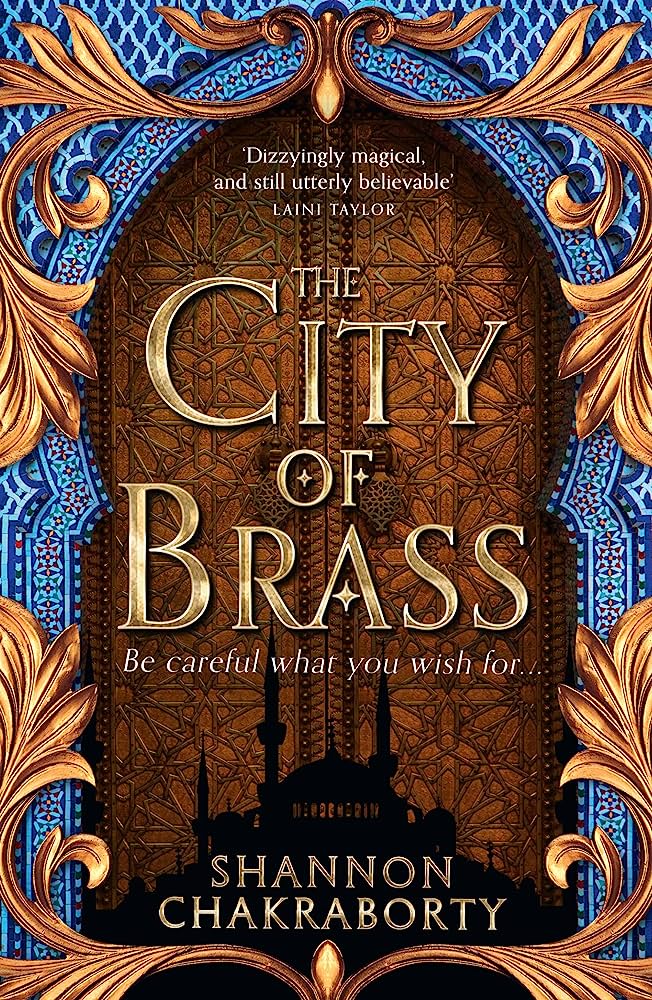
Nahri is a young woman of uncertain background — though she says “I am as Egyptian as the Nile” (p. 6) to a Turkish basha she is setting up for a burglary — who is making her way by her wits, healing talents, and convincing impressions of being a medium. She steals, of course, but it’s in the best traditions of the protagonist of a fantasy story. She does it with style and élan, mostly from people who can well afford it, and she aids people less fortunate than even her precarious self.
Until one day when she accidentally calls forth a real djinn mere hours after she said to her apothecary friend “There’s no magic, no djinn, no spirits waiting to eat us up.” (p. 27) By the time she regrets her words, she’s caught between a djinn, an ifrit, and grabbed by ghouls springing up from Cairo’s largest burial grounds. To say nothing of the flying carpet.








 Al Singh
 Doug Merrill
 Doreen Sheridan
 Emily Lauer
 John Pitzel
 Lars N. Goldschlager
 Laura Eilers
 Professor X
 Robert Maedgen
 Sylvere Ap Leanan
 The Shire