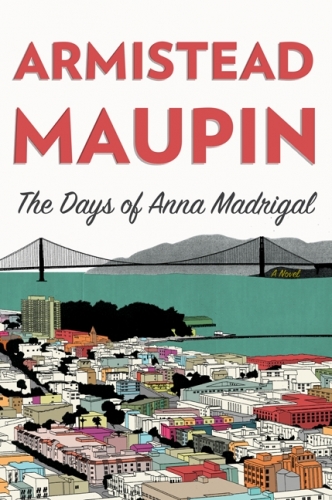
The author takes a thematic rather than a chronological approach to Italian history; I was skeptical at first, but he makes it work. The chief problem he attacks is why Italy never developed as a nation-state the way other European nations did. Italians have supposedly always lacked any sense of nationalism, but the author points out that Fascism is basically ultra-nationalism, and Italy was the first nation to have a Fascist movement and a Fascist regime. The family, the church, and the community rather than the nation however have always claimed the primary loyalty of Italians, and to this day they remain distrustful of the government and even the law enforcement services. There is a considerable outlining of sordid Italian politics in this book that helps one to understand this, but ultimately the book’s central question remains unanswered. This was not an exciting book, but it expanded my knowledge considerably.
Permanent link to this article: https://www.thefrumiousconsortium.net/2014/06/11/modern-italy-by-john-foot/
May 12 2014
For Reasons of State by Noam Chomsky
The first four chapters of this book deal with the perceived immorality and injustice of the Vietnam War. By now I am so used to Chomsky’s blame-America-first arguments that I tend to be dismissive of them, but his indictments in this book do make me stop and think. The rest of this book consists of rather abstract discussions of the nature of freedom and the relation of individual freedom to the state. Chapter Seven, which is a refutation of Skinner’s theory of behaviorism, is the most interesting chapter in the book, although it seems somewhat out of place. Chomsky is eloquent and logical but also a bit long-winded and tedious; he is clearly a product of the academic world, and his political ideas are well-intentioned but frankly pure fantasy. Orwell wrote about leftist intellectuals who are free to criticize the establishment and dream up utopias in the secure knowledge that they will never have any real power and therefore will never have any responsibility for governing. Yeah.
Permanent link to this article: https://www.thefrumiousconsortium.net/2014/05/12/for-reasons-of-state-by-noam-chomsky/
May 10 2014
On the Good Life by Cicero
Cicero, they say, was a principled and virtuous man who used his oratorical gifts for the good of the state. In these essays, however, I see not so much virtue as the vanity, self-love, and indulgence of an aristocratic gentleman who is highly pleased with his own accomplishments and evidently believes that his achievements and public standing make him an authority on everything. Some of his philosophical ideas are interesting, but they would be more impressive if one felt that Cicero actually practiced them rather than merely regarding them as interesting dinner table conversation. He insists, for instance, that morality is necessary for happiness, and that a good man cannot fail to be happy. His interlocutor asks if a virtuous philosopher being tortured on the rack can be happy. Cicero answers affirmatively, but he is not convincing. His essay on friendship is more praiseworthy, but in all Cicero’s discussion of the good and virtuous life one smells his hypocrisy. Veritas et vanitas.
Permanent link to this article: https://www.thefrumiousconsortium.net/2014/05/10/on-the-good-life-by-cicero/
May 07 2014
The Nicomachean Ethics by Aristotle
I am by now used to Aristotle’s inimitable dullness, but this is actually one of his more readable and engaging works. What constitutes the good life? Aristotle believes that a happy life is necessarily a virtuous life, something I myself have grave doubts about. Unlike most Americans, he believes virtue is best exercised in the field of politics. He believes virtue is something that should be taught at a young age, by the state if possible, otherwise by the parents. He believes anything in excess is a vice, including humility. Moderation is his formula for virtue in every aspect of life. However, as a true philosopher, he believes the greatest happiness lies in contemplation rather than action. Aristotle’s ethics are obviously not the ethics of a Christian saint; they are rather the code of an aristocratic gentleman who has the leisure to pursue the finer things in life. Yet in many way Aristotelean morality is both more practical and more practicable than Christian morality.
Permanent link to this article: https://www.thefrumiousconsortium.net/2014/05/07/the-nicomachean-ethics-by-aristotle/
Apr 18 2014
From Socrates to Sartre by T.Z. Lavine
A survey of six of the important figures of Western philosophy: Plato, Descartes, Hume, Hegel, Marx, and Sartre. This was a delightful book, far more interesting and readable than the works of the philosophers themselves. As anyone who has tried to read Aristotle or Heidegger can attest, concise summaries like this are a much more fruitful and less discouraging approach to studying philosophy than beginning directly with the writings of the great philosophers, many of whom seem perversely enamored of being tedious and impenetrable. The last few chapters on Sartre and existentialism were the most interesting, and the final chapter poses the question of whether analytical philosophy has closed the book on Western philosophy for good. I somehow doubt it.
Permanent link to this article: https://www.thefrumiousconsortium.net/2014/04/18/from-socrates-to-sartre-by-t-z-lavine/
Mar 24 2014
The Guns at Last Light by Rick Atkinson
This is a stirring account of the Western Allied invasion of Europe in World War II. It contains memorable quotes and character profiles, and riveting accounts of harrowing combat. But this book made me feel really bad. It was a stark reminder of what a hostile and dangerous place the world is, and also of the fragility and precariousness of human life. Seven hundred and sixty pages of non-stop violence and horror is a bit hard to take. It definitely cured me of any desire to be a hero or experience war myself. The world is a better place because of the young men who fought on the beaches of Normandy and beyond, but I don’t know how much consolation that is to the ones that didn’t make it back. War is a constant throughout history; this book is a useful antidote to mankind’s unfortunate appetite for it.
Permanent link to this article: https://www.thefrumiousconsortium.net/2014/03/24/the-guns-at-last-light-by-rick-atkinson/
Mar 12 2014
Rage of a Demon King by Raymond Feist
The writing was pedestrian, the story uninspired, the plot ludicrous, the characters one-dimensional, and the series overall reads like a D&D adventure. But what can I say? I really enjoyed this book! It is refreshing these days to read a heroic fantasy in which the good guys are unambiguously good and the ending is unambiguously happy, and in terms of providing escape, this is pretty much as far out as far out fantasy gets. Feist is not a master of his craft, but he knows how to keep you turning the pages. And you know, D&D really isn’t so bad; I kind of miss it.
Permanent link to this article: https://www.thefrumiousconsortium.net/2014/03/12/rage-of-a-demon-king-by-raymond-feist/
Mar 03 2014
The Roman Revolution by Ronald Syme
This is an outstanding work of historical scholarship. I am by now quite familiar with the history of the late republic and the ensuing Augustan Principate, but Syme’s meticulous analysis goes beyond anything I could ever attempt. Syme sees the the overthrow of the republic and the path to monarchy as a necessary evil, an expedient remedy to save a failed state, but the tragedy of the “revolution” was that its aftermath left no role for the aristocracy and no room for men of outstanding ability. Henceforth only one man needed to be wise and virtuous, while the upper classes were forced to look inward and follow pursuits like history and literature. My own viewpoint is, perhaps the fall of the republic was a tragedy, but for whom exactly? Only for the aristocrats, who were a distinct minority. I might argue that the common people were actually better off during the first two hundred years of the monarchy. This is an exceptional work, but it follows the theme of Tacitus too closely.
Permanent link to this article: https://www.thefrumiousconsortium.net/2014/03/03/the-roman-revolution-by-ronald-syme/
Feb 26 2014
The Age of Revolution: 1789-1848 by Eric Hobsbawm
The French Revolution is only a secondary theme in this book; the primary theme is the social upheaval and unrest caused by the Industrial Revolution. As a Marxist, Hobsbawm sees this as THE major turning point in history, which unfortunately did not lead to the world-wide revolution that Marxists believed would materialize. Nevertheless, even the conservatives and rulers and “bourgeoisie” sensed that some kind of cataclysmic event was on the horizon and could not be staved off forever. When the revolution did come in 1848, it fizzled out disappointingly, but the process of gradual and incremental reform that the radicals so despised did effectively create a more liberal society. Some of Hobsbawm’s other observations are a bit tendentious; as a true Marxist he sees the sole purpose of Christianity as being to keep the lower classes in their place, and he gives to much credit to early developments in social science. But this was still a memorable tour through an important period.
Permanent link to this article: https://www.thefrumiousconsortium.net/2014/02/26/the-age-of-revolution-1789-1848-by-eric-hobsbawm/
Feb 01 2014
The Rise and Fall of the Third Reich by William Shirer
This is an outstanding book. Why do journalists invariably write history better than professional historians? Many treatments of Nazi Germany treat their subject with a sterile and bloodless lack of feeling; not this book. Shirer gives the criminals their due. Yet through it all there is the almost supernatural phenomenon of Hitler, this nobody from nowhere who who rose to absolute power and shook the foundations of the world. Not even Shirer is adequate to explain this phenomenon. This is a long book, weighing in at nearly 1200 pages, but there is much in it that should not be forgotten, even now as Germany seems to have settled into a phase of permanent peace. As the generation that lived through this era is now almost gone, books like this are all we have to keep the memories alive, and future generations would do well to read them.
Permanent link to this article: https://www.thefrumiousconsortium.net/2014/02/01/the-rise-and-fall-of-the-third-reich-by-william-shirer/