Shortly after the end of the events in A Surfeit of Guns, Sir Robert Carey receives a letter from his father, commanding him to come to London post-haste. More than filial piety is at stake, for Lord Hunsdon, as Henry Carey is called throughout the novel, is also Lord Chamberlain to the Queen herself. Sir Robert, along with Land Sergeant Dodd, Robert’s faithful but disreputable servant Barnabus, and Barnabus’ nephew Simon make good time from Carlisle on the Scottish border down to London, sleeping little and changing horses at post stops along the route, though it often leaves them on low-quality mounts. Their last stage to London had been slowed by Carey’s horse throwing a shoe, and it is late afternoon before they approach from the northwest. “You could always tell when you were near a town from the bodies hanging on the gibbets by the main road, thought Sergeant Dodd. London was no different from anywhere else they had passed on their interminable way south.” (p. 9)
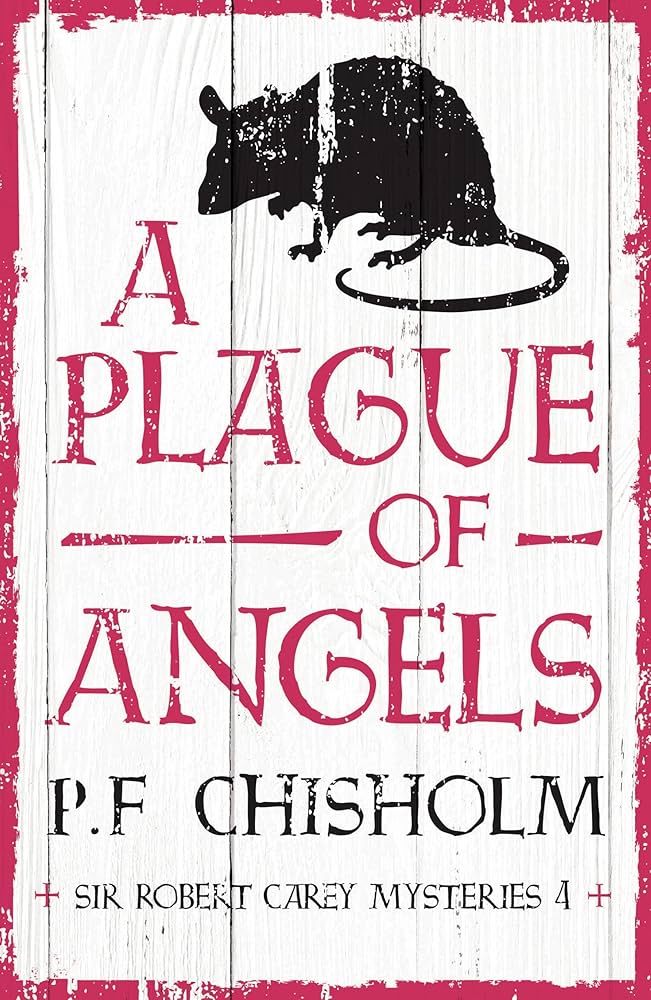
The delay turns out to be fortuitous. The very next turn in the road is deeply cut on both sides and is sharp enough that it was impossible to see around. Dodd has his suspicions and dismounts to send his mare running into the curve ahead of the party.
As she galloped up the road through the Cut, whinnying and shaking her head, Dodd heard the unmistakeable whip-chunk! of a crossbow being fired.
“Och,” he said to himself as he instantly changed direction and sprinted softly up the narrow path he had spotted on the right side of the Cut. “Ah might have guessed.” (p. 10)
A well-laid ambush.
Dodd had been storing up an awful lot of rage on the journey south from Carlisle. He gave an inarticulate roar at the sight [of another crossbowman], hopped like a goat down the high crumbling earthbank and cut down on the man with his sword.
The footpad had heard something coming, turned just in time to see his death, dropped the crossbow and reflexively put up his hands to defend himself. He took Dodd’s swordblade straight down through his armbone and the middle of his face. Dodd slashed sideways to finish the job, then turned at another man who was lungeing out of a bramble bush waving the biggest sword Dodd had ever seen in his life, a great long monster of a thing that the robber was wielding two-handed, his face purple with effort. (pp. 10–11)
The rest of the party catches up, and Sir Robert shoots another robber with a wheellock pistol (called a “dag” throughout the book) while Barnabas uses a throwing knife to kill the man with the gigantic sword, who had temporarily gained the upper hand when some of the road’s bank gave way beneath Dodd. After those losses, the other robbers take to their heels and flee the scene. But was it just the usual hazard of highway robbery, or did someone know they were coming?
Sir Robert has plenty of enemies in London. That was one of the reasons that he regarded the dangerous life he had been leading on the Borders as a godsend: It was a comparative breather. With the speed that they had headed south, however, no one should have known in time that he was on his way. The operative word in that sentence is of course “should.” His father’s involvement opened up whole new dimensions of possible enmity. For one of the highest-ranking officers in England Court intrigue was a constant, and someone ill-disposed toward Lord Hunsdon might have caught sight of the correspondence.
Much of the danger to Sir Robert comes from his creditors. He is by nature spendthrift, and the courtier life he had previously lived in the capital gave him plenty of opportunity to spend, gamble and otherwise lose track of sums that make Dodd’s head spin. If his creditors can serve him with warrants, they can clap him into a debtor’s prison until someone agrees to pay his bills. One of the great joys of A Plague of Angels is seeing London and courtly life through the eyes of Sergeant Dodd, who is smart and crafty, but is also rough and ready, experienced in stealing cattle but not in city crimes. When Carey starts making plans about how to avoid the bailiffs and warrants, Dodd is nonplussed.
“Och,” said Dodd and considered. “Have ye kin in London? Yer father’s there, is he no’?”
“I hope so, since he’s forced me to ride a couple of hundred miles just to talk to him face to face and do business that could be perfectly well done by letter.”
“Ay. It’s no’ difficult, then. They willnae ken ma face as one o’ yourn, so ye tell me the lie of the land and where your father’s castle, I can ride hell for leather intae it, he calls out yer kin and comes out to meet ye and none o’ yer enemies can do a thing about it.”
A short silence greeted this excellent plan which Dodd realised was not the silence of admiration. Carey cleared his throat in a way which Dodd knew meant he was trying hard not to laugh and Simon sniggered behind his hand.
“Well?” demanded Dodd truculently. “What’s wrong with that idea?” He could feel his neck reddening.
“Among other things, the fact that Somerset House is only one of the palaces on the Strand and I doubt you could find it,” said Carey. “Not to mention the fact that the Queen is highly averse to pitched battles being fought on the streets of London.”
“You could let ’em take you, we talk to your dad and he bails you out tomorrow,” suggested Barnabus. “You’d only need to spend one night inside…”
“Absolutely not,” snapped Carey, and his face was pale.
Dodd thought he was being overdramatic and called his bluff. “Ye can allus change clothes wi’ me, sir, if ye’re so feart o’ being seen, none will know you in my clothes,” he offered. Perhaps it was cruel to tease the Courtier; Dodd knew perfectly well that Carey would probably rather die than enter even London’s suburbs wearing Dodd’s sturdy best suit of homespun russet. Certainly he would hang before going into his father’s house like that.
Carey’s blue glare narrowed again but it seemed he was learning to know when Dodd was pulling his leg. He coughed.
“Thank you for your offer, Dodd,” he said… (pp. 21–22)
While the first three Carey books were mysteries, with the questions established early on, much of A Plague of Angels is spent figuring out which of several tasks is most important, and which of many dangers is most pressing. That hardly matters, though, as Chisholm continues the breakneck pace that she set in the previous novels. She introduces a whole new cast of characters, not least William Shakespeare, called Will in most of the novel. In history, about two years after the time of A Plague of Angels, Shakespeare’s company came under the patronage of Carey’s father. Henry VI had already been performed on the London stage, but the book is set right at the end of the years when scholars know little about Shakespeare’s activity, so the surprising things that he does in Chisholm’s novel are at least plausible.
Eventually, readers learn that the letter from Lord Hunsdon that set off the journey was a summons to require Robert to look for his brother Edmund, who has disappeared into London. Neither Lord Hunsdon nor Robert think very highly of Edmund’s intelligence, but that does not mean they will simply leave him to his fate. Besides, action taken against Edmund might be part of a larger plot against the Chamberlain, a plot to bring him into disfavor with the Queen, or possibly even against the Queen herself. Chisolm manages the large cast of her novel adroitly, but she also simplifies what history offers: Carey’s mother is off-stage throughout the novel; by the time of the story, thirteen children had been born in the family, and although several of them died young, none besides Robert and Edmund play a role in A Plague of Angels.
Numerous other intrigues swirl around Sir Robert and company. He is to some degree involved with his father’s primary mistress; Shakespeare also competes for her affections. Mistress Bassano plays various games of her own, whether from malice, for amusement, or with some other purpose is not immediately clear. Kit Marlowe is engaged on the Queen’s secret business, and may be playing a game separate from the official spymaster Thomas Heneage. Robert Greene, a famous writer at the time of the novel’s beginning, needles Shakespeare mercilessly.
The novel’s title comes from the common usage of calling gold coins “angels.” Someone has been making very convincing angels by plating pewter with gold, but the Queen takes counterfeiting very seriously. Coining, as it is called, is a hanging offense, no matter the rank of the coiner. Having a large number of them circulating would be a plague on the economy. Plague itself is endemic in London, but there are hints that a larger outbreak is beginning and the powers-that-be want to keep it quiet.
Through it all, Dodd is amazed by London’s wealth, and he often thinks of how he could take some of it home with him to Scotland. From the fat cattle at the city’s gates to the astonishing jewelry in the ironically named Cheapside, he could be set for life if he could just liberate a small share of what he lays eyes on. He’s also at odds with London’s customs, and his those interactions are some of the most consistently funny throughout the novel, from his incredulity as being required to bathe, and it not yet being Christmas after his bath in June, to his stolid refusal to give any information to Heneage despite what the Vice Chamberlain thinks are subtle threats. The series may be named for Sir Robert Carey, but in A Plague of Angels at least, Dodd steals the show.
This first of three books set in the south of England delivered everything I wanted and expected, and I am very happy to read more about Carey and company.
+++
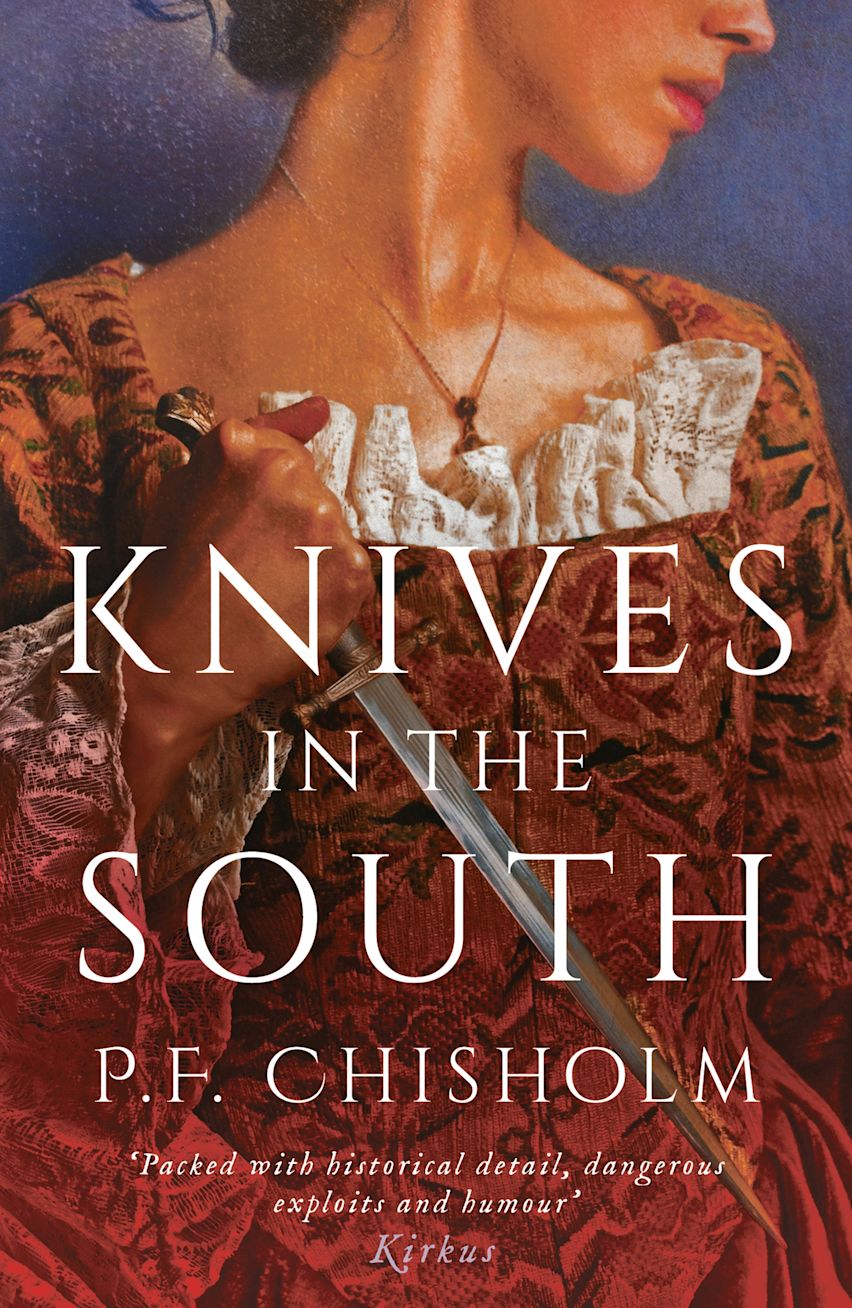
I read A Plague of Angels as part of the omnibus volume Knives in the South, which is more readily available these days. The next book in Sir Robert Carey’s story is An Air of Treason, and it starts eight whole days after the end of the volume’s first book. I suppose it would not be terribly difficult to follow A Plague of Angels without having read Chisholm’s first three books about Sir Robert, but it would be a lot less fun. Begin at the beginning if at all possible.

 Al Singh
 Doug Merrill
 Doreen Sheridan
 Emily Lauer
 John Pitzel
 Lars N. Goldschlager
 Laura Eilers
 Professor X
 Robert Maedgen
 Sylvere Ap Leanan
 The Shire