Combining two volumes of the original series, translated from the French, this volume follows middle-schooler Chloe Blin as she navigates two very of-the-moment issues: environmental friendliness and cyber-bullying.
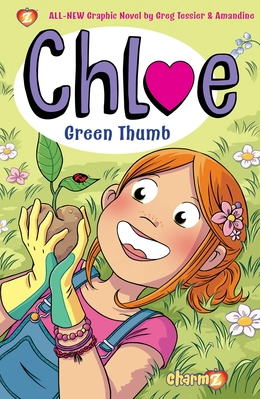 The first half of this book sees Chloe and her friend Mark roped into helping start an eco-friendly vegetable garden at school by their far more enthusiastic best friend Fatouma. While Fatouma is totally gung ho about everything to do with setting up the garden, Chloe is more half-hearted, especially when she realizes exactly how much work it entails. It doesn’t help that her nemesis Anissa has also been recruited for the project, and seems alternately more intent on making catty comments about everyone else or positioning herself the star of the show. But as Chloe slowly gets more into gardening, she also gets super bossy in the way only self-righteous middle schoolers can be. When an attempt to shame Anissa backfires, her school principal cancels the project and declares the garden off-limits. Can Chloe and her friends figure out a way to get him to change his mind?
The second story involves Chloe turning cyber-detective to figure out who’s harassing her classmate Miriam. When a video of Miriam slipping down the steps goes viral, she quickly becomes the target of mean jokes in real life and awful comments on social media. Kind-hearted Chloe leaps to Miriam’s defense but soon finds herself in the crosshairs of the main troll, who goes by the name LOL. Efforts to solve the issue on her own cause her to become secretive and start doing poorly in school. Will Chloe be able to overcome her own paranoia in order to unite a group of unlikely allies for the purpose of taking down this vicious internet bully?

 Al Singh
 Doug Merrill
 Doreen Sheridan
 Emily Lauer
 John Pitzel
 Lars N. Goldschlager
 Laura Eilers
 Professor X
 Robert Maedgen
 Sylvere Ap Leanan
 The Shire