This Spring two of my favorite space opera series will be getting new books: the next book in the Murderbot Diaries by Martha Wells, and the next book set in the universe of the Imperial Radch, by Ann Leckie! For me personally, either of these is a major event, and while I’ve already read them to write this review, I look forward to rereading them when they come out, in order to share the reading experience with pals.
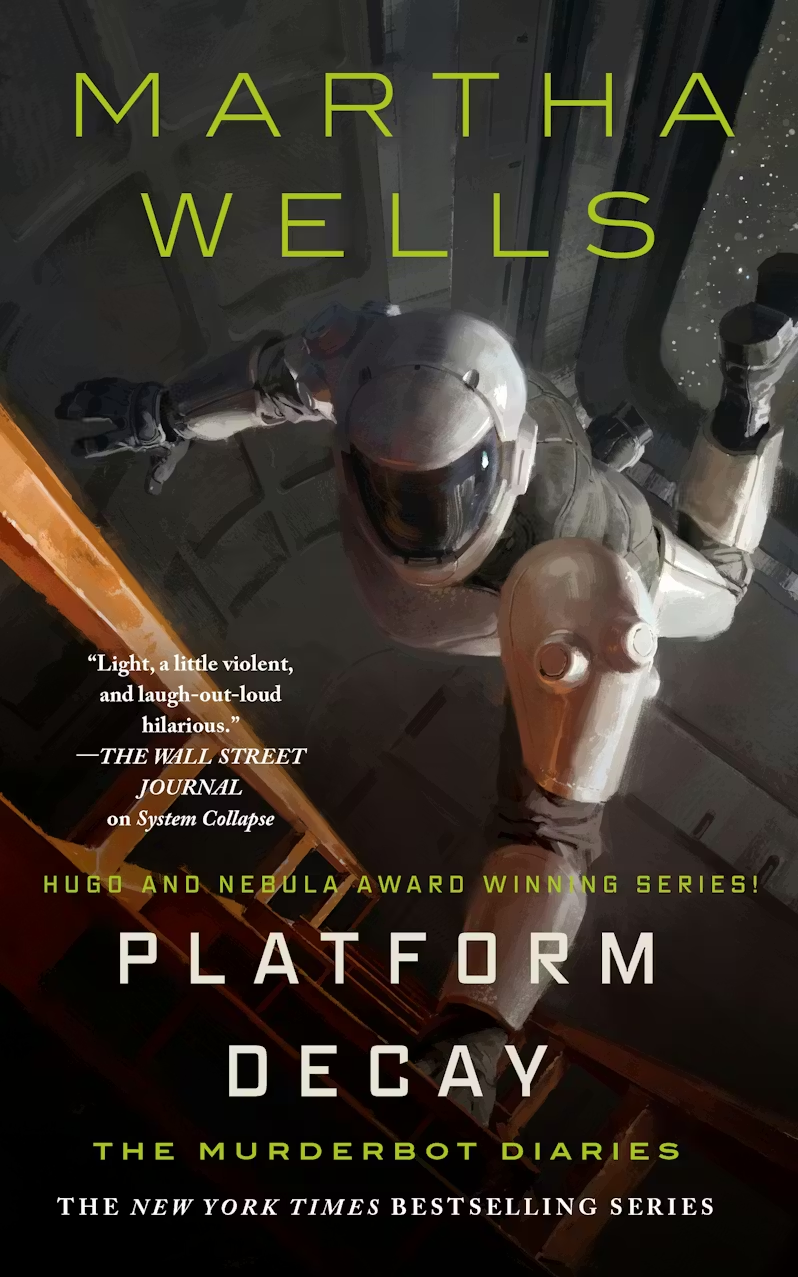 Platform Decay, the eighth book in the Murderbot Diaries series by Martha Wells, will be released May 5th from Tor Books. In it, Murderbot is on a rescue mission, extracting a group of humans from a terrible situation on a ring-shaped station that offers a lot of peril. The group includes both people who already know Murderbot, and new humans it needs to win over – and includes children. Murderbot interacting with children is one of my favorite scenarios, so I am super into that part.
At 256 pages, Platform Decay is technically a novel, but in pacing and scope it feels more like the novellas of the series. For me, Network Effect, the fifth book in the series, is still an outlier with its much more novelistic scope and expansive page count.
Platform Decay offers one adventure with some dips into Murderbot’s recent past to catch us up since the events of the seventh book, System Collapse. If you don’t remember what happened back in System Collapse, I suggest a quick reread before reading Platform Decay. Not because the plot or even the setting continues, but because there are casual mentions of previous events that it is nice to understand effortlessly.
Platform Decay is the first new Murderbot book since the TV show on Apple+ launched and I imagine there are now a whole slew of new fans of Alexander Skarsbot who are curious about the books. To you, new fans, I say: read the books in order! They are all very good and you will appreciate the context as you go forward.
And then a week later, we get Radiant Star by Ann Leckie!
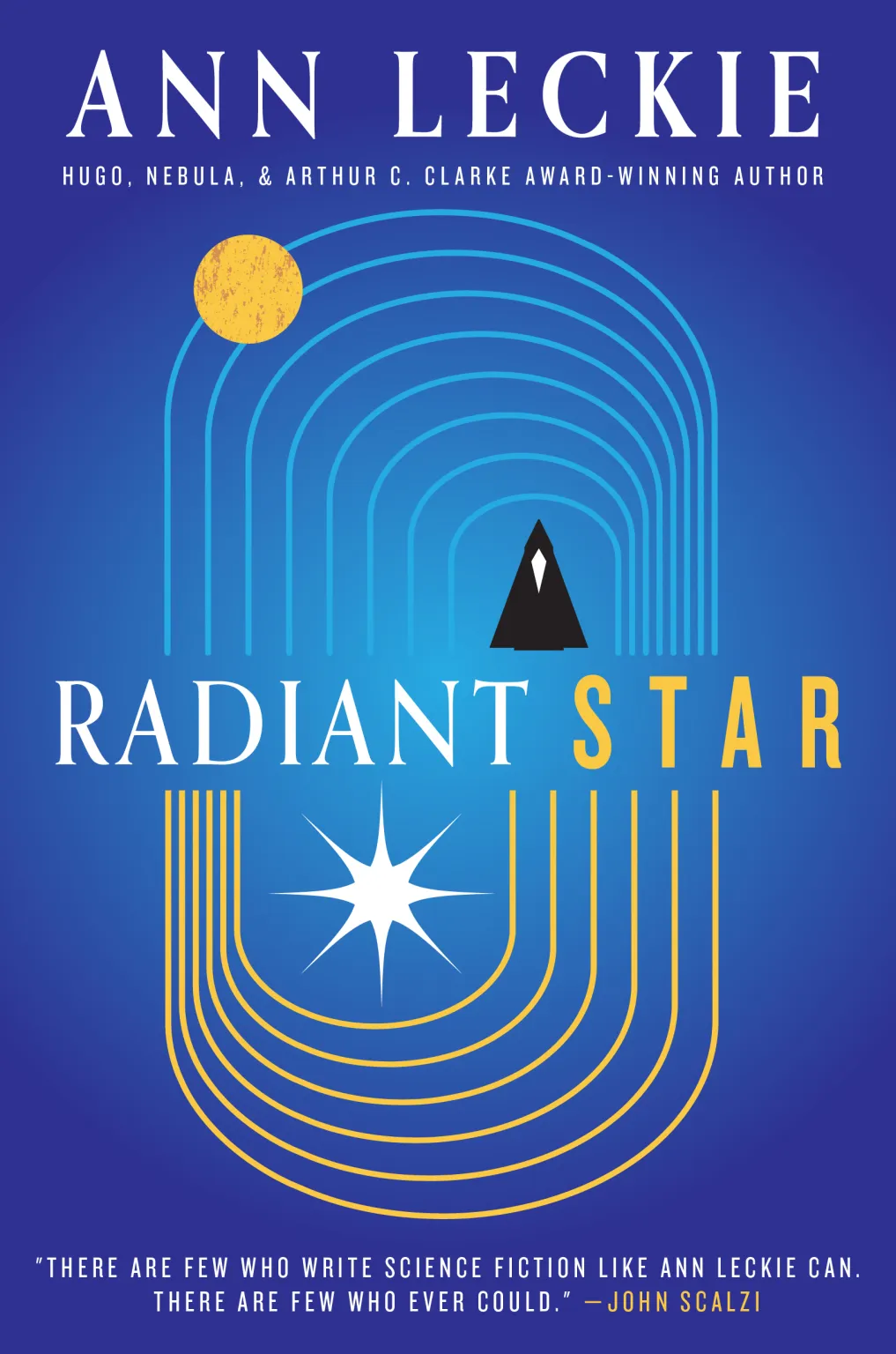 In Radiant Star, we are presented with the fairly isolated underground city of Ooioiaa. Ooioiaa is alone on its planet, where it houses the seat of the system’s dominant religion, the Temporal Location of the Radiant Star. When a representative of the Radch shows up to annex the system into the Radch Empire, she and her tea-drinking team of colonizers get embroiled in generations of local politics. Several seemingly disparate storylines are woven together as an untenable situation in the city, which cannot feed itself, worsens.
Radiant Star is coming out from Orbit on May 12, and while it is technically a standalone, it takes place in the same universe as The Imperial Radch trilogy. And its main events mostly happen after the events of the trilogy, in the same era as her other technical standalones in that universe, Provenance and Translation State.
The narrator, however, who has a terrific voice and sometimes tantalizingly uses first person, seems to be telling us this story from a couple hundred years later. Leckie’s writing is a masterclass in point of view, for instance with Breq’s first person narration in the Imperial Radch trilogy and the first and second person narration in Leckie’s fantasy novel The Raven Tower. I would probably read any story at all if I was guaranteed that the Radiant Star narrator would be telling it to me.
Just as I have been pleasantly surprised to learn that some people have read Provenance without reading the Imperial Radch trilogy first and loved it, I imagine there will also be people who read Radiant Star as their first Ann Leckie book and love it. I do think Radiant Star could be a fabulous entrypoint into this universe, though knowledge of the Radch culture (and knowledge of the events of the trilogy) both enhance the satisfaction of a reading experience. Therefore for anyone who reads this one first, I bet it would be a really enjoyable reread after you read all the others as well.
I’m declaring May of 2026 to be Space Opera Month!

 Al Singh
 Doug Merrill
 Doreen Sheridan
 Emily Lauer
 John Pitzel
 Lars N. Goldschlager
 Laura Eilers
 Professor X
 Robert Maedgen
 Sylvere Ap Leanan
 The Shire