
Originally begun as a letter to his sons, Craig Yorke’s deeply thoughtful autobiography is a startlingly honest look at what it was like to grow up as a Black man of whom much was expected in the 20th century.
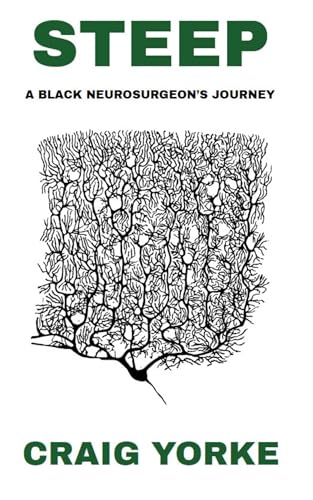 Subtitled A Black Neurosurgeon’s Story, this is a book that advertises from the start that it’s the tale of a high achiever. But it’s also the story of someone who, as he writes in his reader’s note at the beginning, seeks a friendship with his past in order to make space for his future. It’s a perhaps deeply unfashionable approach to the idea of truth and reconciliation — restorative justice is much messier than retributive justice, after all — but it works really well at an individual level. The author not only makes sense of his own life and purpose using this lens, but can translate his experiences into an inspirational story for the reader. And I’m not talking about the usual “up by his bootstraps despite poverty and racism” memoir, tho there are certainly elements of that. This is more of a “how do I reconcile my achievements with what I was forced to give up, in a way that allows me to embrace joy while still satisfying the doubts that haunt me?”
If you don’t have any idea what that means, then count yourself blessed. If you want to know what it’s like tho, to have grown up this way and to have come out of it with both grace and meaning, then you should definitely read this book.
As with most autobiographies, Craig Yorke’s story begins with that of his parents, who struggled for years before finally having a child. Their only son was born with a club foot, asthma and the weight of his parents’ unrelenting dreams for him. Craig Yorke Sr grew up in an orphanage despite having parents who lived in the area and only occasionally visited. At the age of 12, he was thrust into adulthood on the mean streets of Boston, forced to fend for himself while searching for legitimate success. In his late 20s, he met the woman he would marry. Dorothy Britt Reid had similar ambitions to Craig Sr’s, a likely result of their shared intelligence bumping up hard against the constraints of racism and poverty. World War II had opened up the job market and loosened up social restrictions, however, and the couple were determined to ensure that their son — born in 1948 after seven years of childlessness — would become, as problematic as this might sound to readers today, a paragon of their race.
And so the Yorkes raised Craig Jr to pursue excellence. Their diligence would help cure his club foot, ensure his graduation from Boston Latin School and admittance to Harvard, and pave the way for him to gain renown as a teen violinist who performed as a soloist with the Boston Pops. Their childrearing was fueled by the slights of racism, even as Craig Jr grew up knowing that what he wanted for himself was much less important than what his parents wanted for him.
It’s a hard way to grow up, and an easy way for a kid to turn their back entirely on caring about other people in selfish pursuit of (what they think are) their own goals. But Craig Jr never walled off his empathy or sensitivity to the feelings of others. These qualities served him in very good stead as he entered medical school and rose to become a prominent neurosurgeon, moving to Kansas with his wife Mary and raising their two sons in Topeka. Tho he retired from surgery at the age of 54, he stayed on as a consultant at the practice he’d built with trusted partners. And he subsequently had lots of time to think about his own life and history, with so much less career pressure on him.
This slender volume is one result of that, a remarkable testament to an individual’s ability to process everything, good and bad, that’s led them to where they are today. Dr Yorke’s grace and ability to forgive are likely helped by his comfortable financial footing, but it’s also clear that money was only a means to security, not an end to itself. His introspection as to his own parenting and family life is a welcome contrast with how he was raised, especially for those of us who still struggle with the same issues. The medical chapters are incredibly engrossing too, tho I do think they could have used a little more hand-holding for the layperson unfamiliar with neurosurgery. Dr Yorke’s thoughts on not only medicine but the ecosystem around how Americans are forced to engage with healthcare are also refreshing.
Steep wouldn’t have been anywhere near as enjoyable as it is were it not for Dr Yorke’s remarkable capacity for self-awareness. My only real complaint is in how the chronology occasionally shifts abruptly within topics, lending confusion to what’s otherwise smooth and thoughtful writing. This is, however, an excellent debut, and hopefully the good neurosurgeon’s first book of many.
Steep by Craig Yorke was published April 28 2025 by Flint Hills Publishing and is available from all good booksellers, including

 Al Singh
 Doug Merrill
 Doreen Sheridan
 Emily Lauer
 John Pitzel
 Lars N. Goldschlager
 Laura Eilers
 Professor X
 Robert Maedgen
 Sylvere Ap Leanan
 The Shire
2 comments
This sounds lovely!
Author
I definitely had a lot of feels reading it!